

By Adrian Furnham
Although you may feel that monitoring your employees is a valid precaution, not only may they strongly disagree, but that disagreement can carry a heavy price for your business.
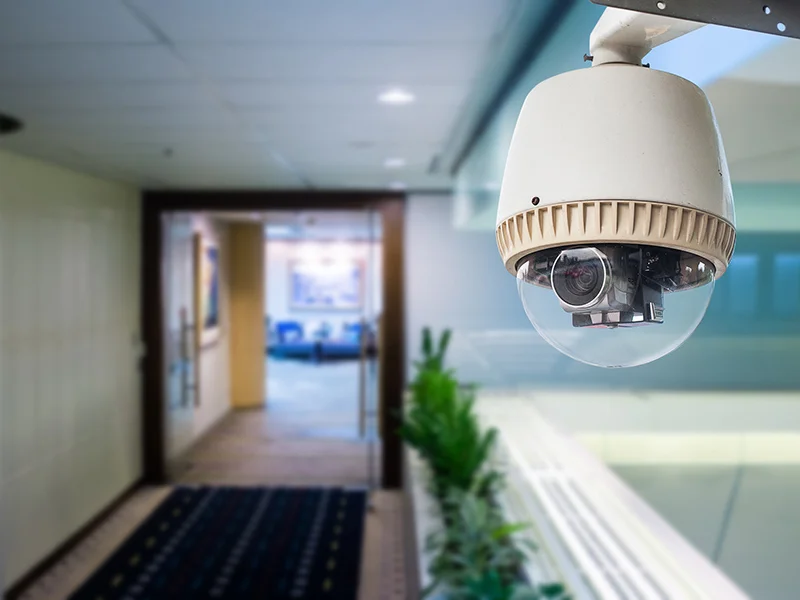
It is quite probable that you are under surveillance for a large part of your journey to and from work, as well as when you are at work. Cameras are ubiquitous and getting more sophisticated.
Your behaviour is being monitored by a range of technologies from cameras and heat sensors to facial-recognition devices and computer tracking. You may or may not be aware of this, been informed about it, or given your permission. New technology has produced many cost-effective and easily available ways of monitoring employees and putting them under overt and covert surveillance.
Heat or weight sensors can reveal precisely how long you sit in your office chair. Further, there are now a very large number of devices that can track, in detail, precisely how you use your computer from simple key depressions to the websites you scan and the frequency of words that you deploy.
Electronic monitoring is now essentially a very common workplace practice where data are collected to observe, record, and analyze employee behaviour in the workplace. Rapid advances in technology have made it easier and cheaper to gather, store, and analyze data.
Your behaviour is being monitored by a range of technologies from cameras and heat sensors to facial-recognition devices and computer tracking.
As Siegal et al. (2025) have noted: “In fact, present-day electronic monitoring of employees may not even be a deliberate managerial decision but rather a built-in function within machines or software products. Moreover, in some areas, leadership has transitioned to ‘algorithmic management’, where algorithms distribute tasks, regulate work processes, evaluate performance, and make hiring or lay-off decisions. … [T]here are findings that electronic monitoring decreases job satisfaction, increases employee turnover, reduces organizational citizenship behavior, and increases stress. On the other hand, electronic monitoring is often justified on the grounds that it maintains organizational and individual performance, prevents theft, and fulfills legal liability.”
Surveillance – the growth industry
Twenty years ago, researchers listed eight methods of computer-assisted electronic monitoring at work: video cameras (such as CCTV), computer sampling, email interception, access codes, expert systems, transaction audits, phone taps, and hidden microphones. The growth in surveillance has ignited controversy over ethical and legal issues involved in surveillance at work.
Traditionally, (electronic) surveillance has been used by civic authorities mainly for crime prevention, but developments in the field have led to its widespread use. Estimates are that there may be over 500 million surveillance cameras worldwide. Previously they were sometimes manned, which is an expensive business. But now face-recognition technology has made a very big difference to how they can be used. How would you feel if the security people or indeed front-desk staff were replaced by 24-hour-surveillance face-recognition cameras? It may have already happened without your awareness. Indeed, there are a number of celebrated court cases where employees have taken their employers to court on matters of surveillance. This will no doubt increase.
As a consequence, there are people interested in counter-surveillance and inverse surveillance. This amounts to attempts to avoid surveillance or actually spying on those who are spying on you. It is the equivalent of buying and using devices in your car that detect speed cameras ahead or other public monitoring devices.
There are concerns with privacy and the violation of rights. Many people refute the “for your own protection” argument by which they are filmed in buildings and public transport. They feel uncomfortable that “Big Brother” is always watching. Most of us have things we would not necessarily want others to know about: perhaps where we shop or go for entertainment. We might not tell our boss that we are actively looking for a new job.
Indeed, it has been argued that, with the growth of online technology, we are all watching each other. That is, there is now as much horizontal (peer-to-peer), as opposed to vertical, surveillance. For some, it seems like the old East German Stasi philosophy and methodology is alive and well and operating in your area. All sorts of organisations try to assure you that all this monitoring is (only) for your safety and security.
Perhaps the most common is automated internet surveillance through computers. These work by signalling certain trigger words or phrases, visiting particular websites, or communicating via email or online chat with individuals or groups. Thus, it is possible to install software, both directly and remotely, to monitor many aspects of a person’s computer usage. The same can be done with telephones that can be programmed to search for words, phrases, or codes that are deemed to be interesting to those who monitor them. We have long been able to trace calls; now we can gather the location data of speakers very easily. This used to be called wire-tapping.

Spies and spying
Of course, the secret services are masters at this activity and have been for years. There are stories of British agents in their own (very skillfully bugged) Moscow flats sitting under blankets writing notes to each other as the only way of communicating without being overheard or monitored.
In our book on The Psychology of Spies and Spying, we (Furnham & Taylor, 2022) noted that the Soviet Union had no qualms about installing microphones and video in private flats and hotel rooms. Oleg Kalugin described it thus: “I was one of three KGB officials in Leningrad with the power to authorize wiretapping in the city. As I spent more time on the job, I marvelled at the extent of our bugging, surveillance and mail interception efforts. In the Big House, nearly one thousand KGB employees working in a warren of rooms were involved around the clock in monitoring and recording wiretaps and other bugs. … Sitting in the Big House, we had the capacity, through special hook-ups with the central Leningrad phone station, to record any conversation in the city. … Foreign diplomats, businessmen, and journalists were subjected to nearly constant bugging of their flats and hotel rooms. Other cities would have similar facilities and Moscow would be many times that size.”
Reactions
Naturally, lawyers and trade unions have become interested in the area.
In Britain there is a website. “Being monitored at work: workers’ rights”. It notes: “Employers might monitor workers. This could be done in various ways, like: CCTV, drug testing, bag searches, checking a worker’s emails or the websites they look at. Data protection law covers any monitoring that involves taking data, images or drug testing. If workers are unhappy about being monitored, they can check their staff handbook or contract to see if the employer is allowed to do this. If they’re not, the worker might be able to resign and claim unfair (‘constructive’) dismissal. But this is a last resort – they should try to sort the problem out first.”
Disgruntled employees may monitor very carefully the “official” version of what their organisation says it does, and why. This makes it all the more important for any business to decide what surveillance they need to put in place, and why.
Types of surveillance
- Social network analysis: This usually requires a worker wearing a badge at work which has (whether they know it or not) the technology to track who they contact on a daily or monthly basis. That is, the badges alert each other, when in a certain range. This surveillance method builds up a very interesting picture of the whole organisation. The technology has been used in tracing viruses.
- Biometrics: These include fingerprints, facial patterns, walking gait, DNA, and voice patterns. This is now used widely at airports, malls, and well known public places to detect unusual behaviour such as signs of nervousness or having unusual interest in particular things. Facial recognition technology has zoomed ahead and is now used in many settings, though there remain very serious concerns about inaccuracies and misidentifications.
- Data mining and profiling: This involves forming a profile of an individual through data concerning credit card usage, email and telephone calls, and, most commonly, social media. It is not so much a paper trail as an electronic trail.
- Mail and place surveillance: It has been estimated that more than 40 per cent of companies monitor the email traffic of their workers. We read about people being fired following “inappropriate or offensive language” and “viewing, downloading, or uploading inappropriate / offensive content”. There are cameras in the public areas and car parks. Heat and light detectors can determine whether anybody is in a particular space.
- Spies and detectives: Some organisations employ private detectives or those who can infiltrate organisations and obtain unique / special data. This is rare and expensive but has been done many times to infiltrate certain political groups, or in business to identify those who belong to societies or “shadowy” organisations with very specific goals (like world domination!).
- Satellite imagery: This can be used to detect when people move outdoors and is being supplemented by much cheaper drones. People in the security world and business can offer a wide range of very expensive technologies which can track any individual’s movements outside.
- Machine-readable identification: One of the simplest forms of identification is the carrying of documents (passports), cards, and other identification symbols. Some nations have an identity card system to aid identification, whilst others are considering it but face public opposition. Other documents, such as passports, driver’s licences, travel cards, banking or credit cards are also used to verify identity, particularly if there are photographs attached.
- Mobile phones: Mobile phones are also commonly used to collect geolocation data. The geographical location of a powered mobile phone (and thus the person carrying it) can be determined easily (whether it is being used or not). It is not unusual for staff at airports to (legally) demand to see your mobile phone with all the details of who you have recently contacted.
- Human microchips: A microchip can be implanted in the human body containing a unique ID number that can be linked to information stored in an external database to monitor medical issues or certain types of people, such as criminals.
- Bugs and devices: Covert listening devices and video devices, or “bugs”, are hidden electronic devices which are used to capture, record, and / or transmit data to a receiving party, such as a law enforcement agency.
Attitudes and reactions to surveillance
Various studies have examined people’s attitudes to being monitored at work. They have looked at such things as differences between the attitudes of supervisors and their subordinates, and also for any gender differences. Supervisors and women were more likely to support the idea of electronic monitoring, while also suggesting that it would be a good tool in reducing theft.
One early study found that job satisfaction was positively correlated with those workers who had a positive opinion of electronic monitoring. This supports the idea that monitoring is fair, unbiased, and provides a fuller image of the employee. However, it did also show that the greater the perception of invasion of privacy, the lower the job satisfaction was, and this was also true in those that felt that monitoring made their work more complex.
Furnham and Swami (2015) asked a large British sample to complete a new 16-item surveillance at work measure which factored into two clear indicators that reflected positive and negative attitudes to surveillance. Higher scores on Negative Aspects of Surveillance were significantly associated with lower job satisfaction, lower job autonomy, greater perceived discrimination at work, more negative attitudes to authority, and greater left-wing orientation, while higher scores on Positive Aspects of Surveillance were significantly associated with greater job satisfaction and more positive attitudes toward authority.
A very similar result was found by Jacobs et al. (2019), who asked 1,273 American workers their experience of, and beliefs about, wearables and their willingness to wear them. They found that if people were told that the aim was to improve safety, they were more happy than if they thought they were simply to provide tracking information for someone at work.
The results from many studies suggest three things: people remain sceptical and suspicious about surveillance at work; the more alienated, disenchanted, and unhappy people are in general, the more negative they are about surveillance; and the more thoroughly, honestly, and clearly an organisation communicates about the nature and purpose of surveillance, the better it is received.
The more alienated, disenchanted, and unhappy people are in general, the more negative they are about surveillance.
In their extensive review of the area, Jacobs et al. (2019) came to four conclusions: “First, we caution organizations against investing in Electronic Performance Managing (EPM) with the expectation of guaranteed worker performance improvement. Many EPM systems represent a significant financial investment with an expectation that these costs will translate to quick improvements in performance. Our study found no such effects. Second, we recommend that organizations that choose to electronically monitor workers do so in ways that are minimally invasive. We found that more invasive monitoring was associated with a number of negative attitudinal outcomes, as well as increased reports of CWBs (counter-work behaviors) and stress, without any evidence for performance improvement. … Third, individuals find monitoring to be stressful. As such, EPM should be considered a work demand that requires effort expenditure and corresponding opportunities for recovery. Just as individuals benefit from formal and informal breaks (e.g., lunch breaks, coffee breaks) from other work demands, individuals are likely to benefit from breaks from monitoring. Fourth, maximizing transparency when using EPM is essential (e.g., informing workers how and when monitoring will occur, what data will be collected, and who will have access to them) to minimize negative work attitudes in monitored individuals. …
[B]eliefs about monitoring purpose often differ from what is officially communicated.
So
We cannot escape increasing monitoring in all aspects of our lives. Most of us agree that this can help in crime prevention and social justice. But equally we are sceptical about institutions admitting that they monitor us and why they are doing it. And we still don’t know what role AI will play in all this.
There is, and will remain, an “arms race” in all aspects of surveillance. Business people would do well to determine the trade-off between (serious) employee discontent and gathering information about their workplace behaviour through new technology.
About the Author
 Adrian Furnham works mainly from home, where he is closely monitored by his wife and cat. He is a professor at the Norwegian Business School.