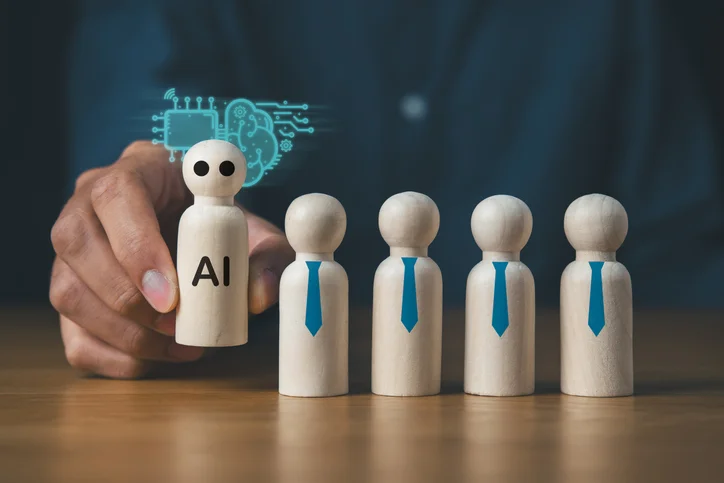

As AI transforms organisations, leaders who build trust through transparency, governance, and human judgment will create more lasting value than those focused on technology alone.
As generative AI reshapes the workplace, the biggest challenge facing leaders is no longer just adopting new technology, it’s earning and maintaining trust. Drawing on leadership experience at Amazon, Visa, and Microsoft, Alice Sesay Pope explains why successful AI transformation starts with people, governance, and judgment, not technology alone.
Having led customer experience and operations at some of the world’s largest companies, including Amazon, Visa, and Microsoft, you have experienced several waves of business transformation. What makes the AI era different, and what should today’s leaders understand about leading through this moment?
I have lived through the shift from call centers to digital self-service, from on-premise systems to the cloud, and now from automation to generative AI. Every one of those waves changed how work got done. This one is different because it changes who, or what, is doing the thinking.
Leaders need to understand that this is not an IT rollout. It is an identity shift for associates who have built careers on expertise that AI can now approximate in seconds.
What I saw firsthand is that generative AI does not just speed up a task, it can reason, draft, and recommend in ways that used to require a trained human. That is a fundamentally different kind of change management.
Leaders need to understand that this is not an IT rollout. It is an identity shift for associates who have built careers on expertise that AI can now approximate in seconds. The leaders who succeed will be the ones who treat this as a people transformation first and a technology transformation second.
Many organisations are moving quickly to adopt AI. What separates companies that are creating lasting value from those that are simply following the trend?
The companies creating lasting value start with a business problem and a measurable outcome, not with the technology itself. They can tell you exactly which metric moves, whether it is handling time, resolution rate, retention, or revenue, and they can tell you how they will know if it worked.
The companies chasing the trend tend to announce AI initiatives before they have decided what problem they are solving. I have sat in enough steering committees to recognize the pattern. There is a pilot, there is a press release, and eighteen months later there is very little to show for it because the use case was never anchored to value.
The other differentiator is governance. The organizations building lasting value have already answered the hard questions about data, bias, and accountability before they scale. That discipline is exactly what why I wrote The Trust Algorithm: How Leaders Build Trust With Generative AI. When Ethical AI and Accessibility governance work, it is the difference between a demo and a durable capability.
AI is changing how people work across every level of an organisation. How should leaders help their teams adapt while keeping people engaged and motivated?
Start by naming the fear directly. Associates are not worried about a new tool. They are worried about whether they will have a job in two years. If leaders skip past that and go straight to training on features, they lose the room.
I have found the most effective approach is to redefine roles around judgment rather than task execution. When I led support operations, we moved associates from repetitive troubleshooting into roles focused on complex problem solving and customer relationships, with AI handling the routine volume. That gave people a clear answer to “where do I fit now,” which is the question underneath every adaptation conversation.
Engagement also depends on including associates in the redesign of their own work. People support what they help build. The teams that ran their own pilots, gave feedback, and shaped how AI showed up in their workflow adapted faster and with far less resistance than teams who had a system handed to them.
Trust has become increasingly important as businesses introduce AI into everyday work. What can leaders do to maintain the confidence of both employees and customers during periods of rapid change?
Trust is the subject of my book, The Trust Algorithm, because I believe it is the single asset leaders are most at risk of spending down during this transition. Trust is built in small, consistent moments and lost in one visible failure.
With employees, the most powerful thing a leader can do is be honest about what AI will and will not change, including honest answers about roles and timelines. Vague reassurance erodes trust faster than difficult truth. I have delivered hard messages about workforce change, and what associates remember is not the message, it is whether I was straight with them.
With customers, trust depends on transparency about when they are interacting with AI, how their data is used, and what recourse they have when something goes wrong.
As AI takes over more routine tasks, which leadership skills do you believe will become even more important in the years ahead?
Judgment rises in value as automation rises in capability. When AI can generate the first draft, the analysis, or the recommendation, the leader’s job becomes knowing which of those outputs to trust, which to challenge, and which to override.
Emotional intelligence becomes non-negotiable. As routine work disappears, what remains is the work that requires empathy, negotiation, and the ability to read a room, none of which AI replicates well. Leaders who rely on process and hierarchy rather than genuine connection will find their teams disengaging.
I would also point to intellectual humility. Leaders who came up through functional expertise, finance, operations, engineering, are now managing systems that outperform them on the very tasks that built their reputations. The ability to say, “I do not fully understand this yet” and still lead with confidence is a skill most executives were never trained to use.
Some leaders see AI as an opportunity, while others remain cautious. What mindset do you think distinguishes leaders who are prepared for the future?
The leaders who are prepared hold both views at once. They see the opportunity and the risk without letting either one dominate their decision making. Leaders who are purely enthusiastic tend to under-invest in governance. Leaders who are purely cautious tend to fall behind competitors and slow down innovation.
Leaders who protect their own workflow from scrutiny while asking everyone else to transform are the ones I watch most closely, because that inconsistency shows up in business outcomes.
What I look for is curiosity paired with rigor. Prepared leaders spend time in the tools themselves rather than delegating that learning entirely to their teams. They ask pointed questions about accuracy, bias, and accountability, and they expect answers grounded in evidence rather than enthusiasm. They also spend time understanding the risks, method to detect the risk and robust plans to mitigate the risks.
The other marker is a willingness to change their own operating model, not just their organizations’. Leaders who protect their own workflow from scrutiny while asking everyone else to transform are the ones I watch most closely, because that inconsistency shows up in business outcomes.
Looking across industries, what challenges do you believe business leaders are still underestimating as AI continues to reshape the workplace?
The middle layer of the organization is underestimated. Most transformation attention goes to frontline automation and executive strategy, but the managers in between, the ones responsible for performance, coaching, and culture, are the group least prepared and least supported. No matter how advanced technology is, the whole transformation stalls if that layer breaks down.
Leaders also underestimate how quickly institutional knowledge erodes when experienced associates leave roles that AI has automated. I have seen organizations celebrate efficiency gains without accounting for the expertise that walked out the door with the people those gains displaced.
Across banking, retail, and technology, I still see leaders underestimating the reputational exposure of getting AI wrong with customers. A single mishandled data or bias incident can undo years of brand trust, and few organizations have crisis plans built specifically for that scenario.
If you were advising a CEO preparing for the next five years, what would be the single most important leadership priority to focus on today?
Treat trust as a revenue engine, not a risk function.
Every CEO is racing to deploy AI faster than the competition. But speed without trust doesn’t scale, it stalls. Customers pay more and stay longer when they trust the systems making decisions about them. Employees move faster when they trust leadership’s judgment. Boards fund bigger bets when they trust the governance behind them.
The priority for the next five years: build trust as designed infrastructure, before a breach or a bad AI decision forces your hand.
When Gen AI is built with trust from the start, companies don’t just earn trust, they build a differentiator that compounds into real profit growth. The CEOs who get this right won’t just avoid crisis. They’ll out-grow everyone else.