
By Dr. Jamika Bivens
As disruption becomes permanent, leaders who sustain trust, adaptability, and human development are better positioned to guide organizations through uncertainty.
In today’s business environment, disruption is no longer an occasional challenge—it is the operating reality. Technological advancement, artificial intelligence, shifting workforce expectations, economic volatility, and geopolitical uncertainty continue to reshape organizations at an unprecedented pace. As a result, executives face a fundamental question: What does enduring leadership look like when change never stops?
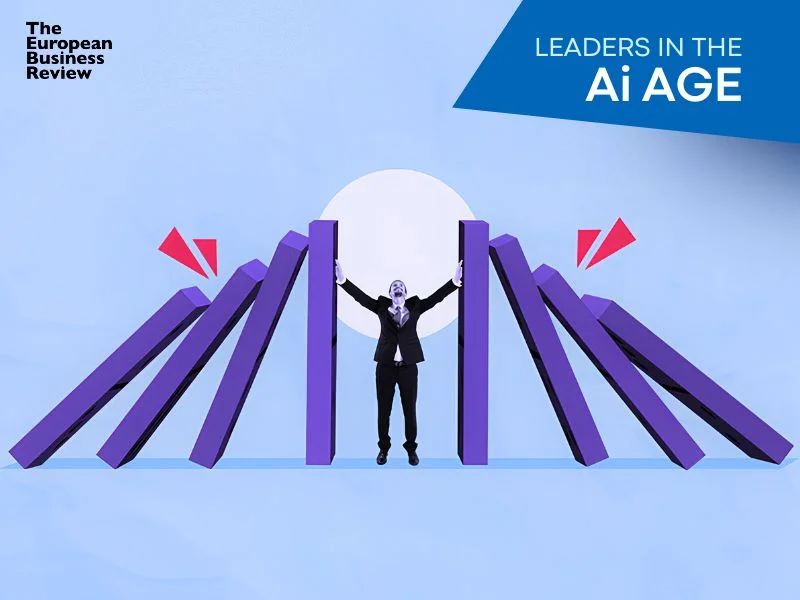
The answer lies in a leadership approach that balances strategic execution with human-centered influence. Enduring leaders create stability without resisting transformation. They build trust, adapt continuously, develop people intentionally, and remain anchored to their values even during uncertainty. These capabilities enable organizations to remain resilient while navigating constant disruption.
Why Are Traditional Leadership Models Becoming Less Effective?
Many leadership systems were designed for environments characterized by predictability and gradual change. Organizations operated within relatively stable markets, career paths were more linear, and strategic planning often relied on assumptions that remained relevant for years.
That reality has changed.
Today, leaders must respond to evolving workforce demographics, emerging technologies, changing customer expectations, and increasingly complex global markets. According to research from McKinsey & Company, organizations that adapt quickly to changing conditions consistently outperform those that struggle to evolve.
This environment has exposed weaknesses in leadership models built primarily on authority, hierarchy, and control.
When uncertainty increases, positional power alone becomes insufficient. Employees increasingly seek transparency, purpose, development opportunities, and authentic leadership. Organizations that rely exclusively on command-and-control approaches often experience:
- Higher employee disengagement
- Increased turnover
- Reduced innovation
- Greater resistance to change
- Lower organizational trust
Sustainable leadership requires more than authority.
It requires relational credibility.
How Do Enduring Leaders Create Stability During Uncertainty?
One of the defining characteristics of enduring leaders is their ability to create clarity when answers are incomplete.
Employees do not expect leaders to predict every outcome. They expect leaders to provide direction.
During periods of uncertainty, effective leaders communicate consistently, transparently, and with purpose. Rather than allowing ambiguity to dominate the organizational narrative, they establish clear priorities and explain how current decisions support long-term objectives.
Research from the Center for Creative Leadership emphasizes that adaptive leaders maintain influence by helping employees make sense of changing conditions while preserving confidence in the future.
This approach strengthens trust because employees feel informed rather than excluded.
Enduring leaders understand a simple reality:
Silence creates instability.
Communication creates confidence.
Why Is Adaptability Now a Core Leadership Competency?
Disruption rewards leaders who are willing to challenge assumptions and rethink established practices.
Unfortunately, many executives become attached to systems, processes, and leadership identities that once produced success. What worked five years ago may no longer produce the same outcomes today.
Adaptive leaders demonstrate intellectual humility. They remain open to new information and continuously evaluate whether current strategies remain aligned with organizational needs.
The distinction is significant:
| Reactive Leadership | Adaptive Leadership |
| Defends existing systems | Evaluates systems objectively |
| Resists change | Anticipates change |
| Prioritizes certainty | Embraces learning |
| Focuses on maintaining control | Focuses on building capacity |
| Relies on historical success | Responds to current realities |
Adaptability is not a sign of inconsistency.
It is evidence of strategic maturity.
Leaders who remain flexible while preserving organizational purpose position their organizations to respond effectively to future challenges.
How Does Emotional Intelligence Strengthen Organizational Resilience?
Disruption affects more than operations.
It affects people.
Periods of rapid change often increase anxiety, uncertainty, conflict, and emotional fatigue throughout organizations. Leaders who ignore these realities frequently create additional instability through poor communication, reactive decision-making, or diminished empathy.
Emotional intelligence enables leaders to recognize these dynamics before they become organizational problems.
Research consistently demonstrates that emotionally intelligent leaders improve decision-making, strengthen employee engagement, reduce workplace stress, and increase team effectiveness.
Organizations are human systems before they are operational systems.
Employees who feel heard, valued, and understood are more likely to remain engaged during difficult transitions. Conversely, employees who feel ignored often disengage emotionally long before they leave physically.
Emotional intelligence allows leaders to balance performance expectations with human needs—a capability that becomes increasingly valuable during disruption.
Why Must Leaders Invest in People During Times of Change?
Technology can improve efficiency, but people ultimately determine whether change succeeds.
Organizations frequently invest significant resources into systems, platforms, and operational improvements while underinvesting in leadership development and succession planning.
This creates a dangerous dependency on a small number of decision-makers.
Enduring leaders recognize that organizational sustainability depends on developing future leaders. They prioritize:
- Coaching and mentorship
- Leadership development programs
- Knowledge transfer
- Succession planning
- Continuous learning opportunities
Strong leadership pipelines create organizational resilience because leadership capacity becomes distributed rather than concentrated.
When disruption occurs, organizations with developed leaders throughout the enterprise adapt more effectively than those dependent upon a few executives.
Leadership development is not a future investment.
It is a present risk-management strategy.
How Do Values Sustain Trust During Disruption?
Trust is often built slowly and lost quickly.
During periods of uncertainty, employees pay close attention to leadership behavior. They evaluate whether leaders remain committed to stated values when difficult decisions must be made.
This is where leadership credibility is either strengthened or diminished.
Enduring leaders anchor decisions in principles such as integrity, accountability, honesty, service, and transparency. These values guide decision-making regardless of external pressure.
Employees may not always agree with difficult decisions, but they are significantly more likely to support change when they believe leadership is acting consistently and ethically.
Values become especially important during disruption because they provide organizational stability when external conditions remain unstable.
Culture, therefore, becomes a strategic asset rather than merely an organizational characteristic.
Organizations with strong cultures typically experience:
- Higher employee trust
- Greater adaptability
- Stronger collaboration
- Increased innovation
- Lower turnover
- More effective execution
Culture influences how people respond when uncertainty arrives.
Conclusion
The future of leadership will not belong to those who simply manage systems more efficiently. It will belong to those who successfully integrate strategy, adaptability, emotional intelligence, ethical decision-making, communication, and human development into a cohesive leadership approach.
Disruption is unlikely to slow in the years ahead. Artificial intelligence, workforce transformation, and global uncertainty will continue reshaping how organizations operate. Leaders who endure will not be those who avoid change. They will be those who build organizations capable of moving through change without sacrificing trust, culture, or purpose.
Enduring leadership is not defined by control.
It is defined by the ability to guide people through uncertainty while preserving organizational integrity, adaptability, and human connection.
About the Author
 Dr. Jamika Bivens is a leadership strategist, educator, and author specializing in holistic, values-based leadership and long-term impact. She holds a Doctorate in Strategic Leadership (DSL), an MBA, and professional certifications including SHRM-SCP and ATD, bringing deep expertise across leadership development, organizational strategy, and human capital. Her work bridges academic rigor with real-world application, equipping leaders and professionals to make principled decisions that endure beyond titles and achievements.
Relevant links
-
Center for Creative Leadership – Adaptive Leadership Resources: https://www.ccl.org/articles/leading-effectively-articles/adaptive-leadership
-
Harvard Business Review – Leading Through Uncertainty: https://hbr.org/topic/managing-uncertainty
-
McKinsey & Company – Future of Leadership: https://www.mckinsey.com/capabilities/people-and-organizational-performance/our-insights
-
Deloitte Insights – The Social Enterprise and Leadership: https://www2.deloitte.com/us/en/insights/topics/leadership.html