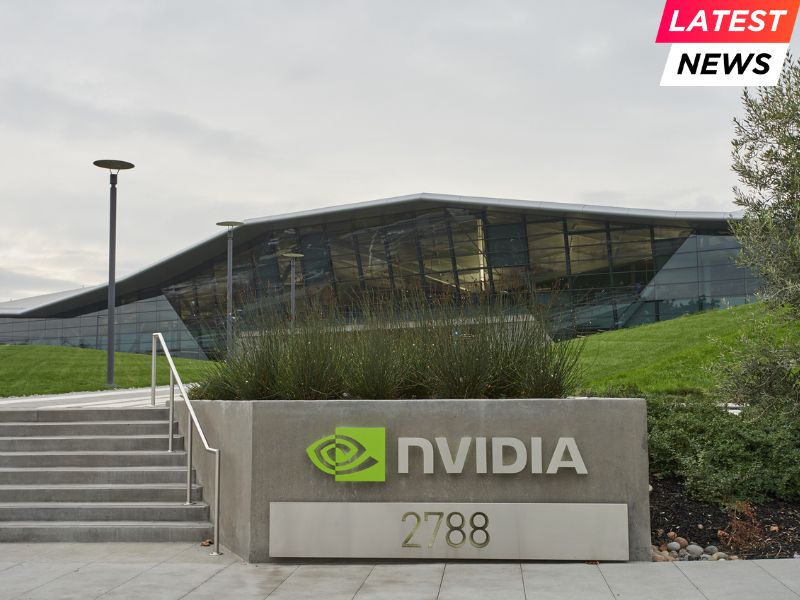
President Donald Trump announced Monday that Nvidia will be allowed to ship its H200 artificial intelligence processors to “approved customers” in China and other regions, as long as the United States receives a 25 percent share of the revenue. He said Chinese President Xi Jinping “responded positively” to the proposal in recent discussions.
Trump emphasized in a Truth Social post that the plan “will support American Jobs, strengthen U.S. Manufacturing, and benefit American Taxpayers.” He added that “The Department of Commerce is finalizing the details, and the same approach will apply to AMD, Intel, and other GREAT American Companies.”
Nvidia shares jumped earlier in the day on expectations that federal officials would clear the China shipments, before giving up part of those gains. The stock still advanced roughly 2 percent in after-hours trading. The company welcomed the decision.
“We applaud President Trump’s decision to allow America’s chip industry to compete to support high paying jobs and manufacturing in America,” a spokesman told CNBC. “Offering H200 to approved commercial customers, vetted by the Department of Commerce, strikes a thoughtful balance that is great for America.”
Both Nvidia and rival AMD reached an agreement with Washington in August to remit 15 percent of their China chip sales to the U.S. government. That arrangement unfolded as Beijing reportedly warned domestic firms not to use the H20, a tailored Nvidia model created for the Chinese market. The H200, now approved for conditional export, is more advanced than the H20 but still not Nvidia’s highest-tier product.
The semiconductor sector functions as the backbone of nearly every major electronic device and remains central to the accelerating AI competition between the United States and China. It has also become a flashpoint in the strained commercial ties between the two countries.
When Beijing imposed export controls on rare-earth minerals used in sophisticated chip manufacturing, the Trump administration threatened steep tariff hikes on Chinese imports. Tensions eased when Trump and Xi met in South Korea in late October and reached a preliminary trade pause in which China agreed to end “retaliation” against U.S. chipmakers, according to the White House.
Trump later said that Nvidia’s export situation was part of his conversations with Xi during that meeting.
Related Readings: