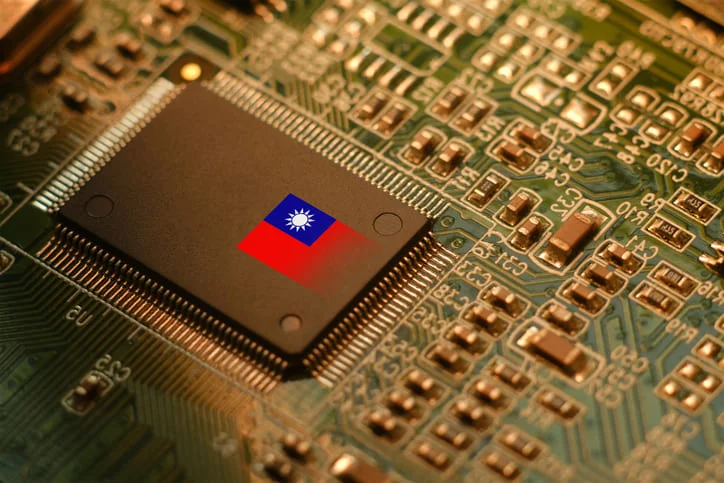
Taiwan Semiconductor Manufacturing Company builds chips for customers that include Apple, Nvidia, AMD, and Qualcomm, at a scale no rival has reached. The company served 534 customers and produced 12,682 distinct products in 2025, with annual capacity across its fabs above 17 million 12-inch equivalent wafers. What keeps those accounts committed has less to do with any single technology than with a quality the company calls manufacturing excellence: consistent high yield, fast cycle time, and accurate delivery, repeated across every site it runs.
A standard, not a slogan
TSMC frames the term as a set of measurable outcomes rather than a marketing line. Yield, the share of working chips on each wafer, governs both cost and supply. Cycle time sets how quickly a design moves from wafer start to finished part. Delivery accuracy decides whether a customer can plan a product launch around a shipment date. TSMC counts these qualities, taken together, among its core strengths, and it has engineered its production system to hold them steady no matter where a wafer runs.
The node that tests the system
Process leadership gives that system its hardest exam. TSMC rolled out two-nanometer (N2) mass production in the fourth quarter of 2025, setting the stage for the industry’s largest-scale rollout of gate-all-around nanosheet transistors to date. Moving a new transistor architecture into volume without a prolonged yield slump is the result that the company cites when it describes its production record. Advanced nodes of 7 nanometers and below supplied 74% of wafer revenue for full-year 2025, up from 69% a year earlier, according to the company’s reported node mix.
Customer demand sits behind the ramp. “The demand for AI remains very strong, driving overall chip demand across the entire server industry,” Counterpoint Research senior analyst Jake Lai said, predicting another strong year for AI server orders.
One company, several addresses
The production system now spans four countries under one engineering playbook. TSMC concentrates its largest fabs in Taiwan and operates subsidiaries in the United States, Japan, and Europe that follow the same methods. Its first Arizona fab reached high-volume production, and a second Arizona plant, built for 3-nanometer work, is set to begin volume output in the second half of 2027. Japan’s Kumamoto operation, run through majority-owned Japan Advanced Semiconductor Manufacturing (JASM), turned a quarterly profit for the first time since production began at the end of 2024, with a second fab under construction and now slated for 3-nanometer technology. European Semiconductor Manufacturing Company (ESMC), a joint venture in Dresden, Germany, majority-owned by TSMC, remains under construction.
The point of the network is uniformity. TSMC moves wafers through its fabs on automated material handling systems that link multiple mega-fabs, and it applies machine learning to process control and equipment upkeep to protect yield and shorten the learning curve on each new node. The goal is the same output everywhere, so a customer receives consistent quality regardless of which plant fills the order.
Cash flow funds the network
Financial results give the expansion its cover. TSMC posted its April results showing first-quarter 2026 revenue of $35.9 billion, up 40.6% from a year earlier, with a gross margin of 66.2% and net income higher by 58%. The company logged eight consecutive quarters of year-over-year profit growth through the end of 2025 and set a record 2026 capital budget of $52 billion to $56 billion, against $40.9 billion spent in 2025. Ahead of 2026, finance chief Wendell Huang told analysts he expected the business to be “supported by continued strong demand for our leading-edge process technologies.”
That spending flows almost entirely into the qualities the company markets as its competitive edge. Capital goes toward 2-nanometer and 3-nanometer capacity, specialty processes and advanced packaging, the areas where yield and throughput translate most directly into pricing power. A gross margin above 66% gives TSMC room to absorb the higher cost of running fabs across several geographies while holding its quality standard.
What the lead depends on
The test ahead is replication. Bringing every overseas site to the yield and cycle-time standards the company is known for will determine how much of its most demanding work can run beyond its home base. Kumamoto’s swing to profit offers an early signal that the model travels; Arizona’s first fab clearing high-volume production offers another. TSMC has put the capital, the customers, and the process in place, and the next several years of qualification will show how evenly its production standard holds from one country to the next.