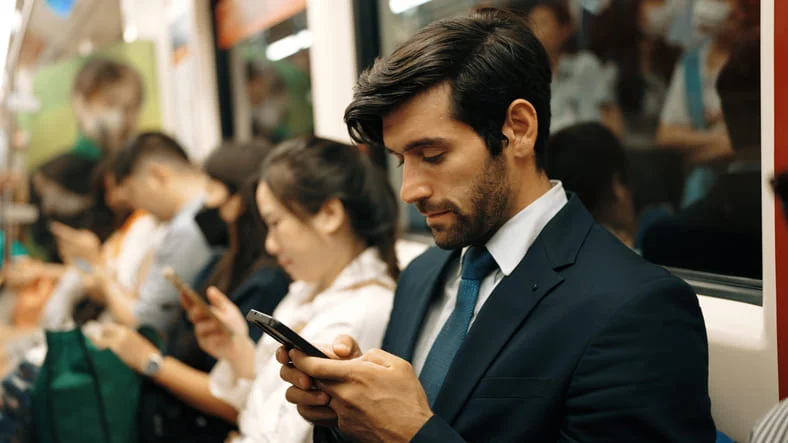
The MRT platform at Ayala station on a Friday evening is a study in blue light. The train is late, the heat is stubborn, and almost nobody seems to mind. One commuter is three episodes into a K-drama with the subtitles doing the work over the station noise. The woman beside him is duetting a TikTok sound on mute, saving her performance for later. Two students are locked into a Mobile Legends match that will not survive the tunnel. This is digital leisure as the Philippines actually practises it: constant, casual and squeezed into every spare minute the day offers.
It did not happen by accident, and the numbers behind it are startling even by Southeast Asian standards.
A Country That Streams Together
The scale is easiest to grasp through the data. DataReportal’s Digital 2026 country report counted 98 million internet users in the Philippines at the end of 2025, or 83.8 percent of the population, alongside 95.8 million active social media identities and 137 million mobile connections in a country of 117 million people. That last figure matters: many Filipinos carry two SIMs, one for calls and one hunting the cheapest data promo.
What they do with that data is mostly watch. The Philippine Star reported in October 2025 that monthly YouTube use had reached 85 percent of Filipino internet users, one of the highest shares recorded anywhere, while Statista counted 62.3 million adult TikTok users in the country by early 2025. Netflix originals get dissected in group chats within hours of release. With a median age of just 26, the Philippines is a young country whose evenings increasingly play out on a six-inch screen.
Why Digital Leisure Fits Filipino Life
Part of the answer is infrastructure history. The Philippines largely skipped the desktop era and went straight to smartphones, so digital leisure grew up mobile-first, built around prepaid load and data promos, with apps designed to run on mid-range handsets. Entertainment is bought the way shampoo is bought here: in sachets. A few pesos of data, an episode on the commute, a match while waiting for a ride.
Family geography plays a role too. With millions of Filipinos working overseas, the same phones that carry video calls home double as entertainment hubs, and shared viewing habits stretch across time zones. Meanwhile the living room is catching up, as smart TV apps turn the family television into one more screen on the household’s streaming account.
Payment friction has all but disappeared as well. E-wallets such as GCash, which reported more than 90 million users in early 2025, made topping up a game or a streaming subscription a ten-second job. When paying for fun is that easy, fun gets consumed in smaller, more frequent doses.
Where Gaming Fits In
If streaming is the background hum of Filipino digital life, gaming is its competitive streak. Mobile Legends: Bang Bang is less a game here than a shared language, consistently the country’s top-grossing title according to app trackers like 42matters, with packed arenas whenever the national esports squads play. Call of Duty: Mobile and Roblox fill out the daily rotation, and clips from all of them feed straight back into TikTok and YouTube.
There is an adults-only strand to this, too. Casual casino-style play has moved online under the eye of PAGCOR, the state regulator, and the licensed side of online gambling in the Philippines has grown to dozens of platforms competing for attention alongside the streaming apps. The framing that has taken hold locally is telling: this is entertainment spending, a night-out substitute measured in pesos of fun rather than anything more ambitious. The guardrails reflect that. Access is restricted to players 21 and over, and in 2025 the central bank ordered e-wallets to remove direct links to gaming sites, keeping the habit deliberately separate from everyday payments.
Taken together, the picture is of a country that treats its phone as an arcade, a cinema and a card table, and moves between the three without ceremony. A single evening might hold twenty minutes of ranked matches, half an episode of a drama and a few spins of a slot game before dinner, all on the same device and often on the same peso budget.
The Old Pastimes Never Really Left
Here is the detail outsiders tend to miss: none of this displaced Filipino leisure culture. It absorbed it. Karaoke was always about performing for the room; TikTok simply made the room bigger. Tambay culture, the art of pleasant loitering with friends, migrated into Discord servers and Mobile Legends lobbies. Even the teleserye habit survived intact, just time-shifted onto Netflix and YouTube replays that the whole household can queue up on its own schedule.
The pisonet era tells the same story in miniature. A decade ago, neighbourhood computer shops rented internet time coin by coin, five pesos at a stretch, and children lined up after school for their turn. Those shops have mostly gone quiet now, not because the appetite faded but because the arcade moved into everyone’s pocket and the coin slot became an e-wallet top-up.
That continuity is probably why the shift feels so complete. Digital leisure won in the Philippines not by offering something foreign but by taking what Filipinos already loved doing together and putting it in their pockets. Back on the Ayala platform, the train finally arrives. Nobody looks up. The next episode has eleven minutes left, and the commute home is exactly that long.
Disclaimer: This article contains sponsored marketing content. It is intended for promotional purposes and should not be considered as an endorsement or recommendation by our website. Readers are encouraged to conduct their own research and exercise their own judgment before making any decisions based on the information provided in this article.