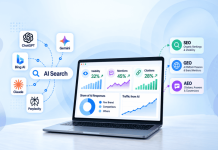
Digital transformation has fundamentally changed how businesses compete, making online visibility a critical driver of sustainable growth. Whether operating in B2B, financial services, manufacturing, or technology, organizations increasingly depend on search engines to connect with decision-makers during the earliest stages of the buying journey. As a result, search engine optimization (SEO) has evolved from a marketing tactic into a strategic business investment.
Organizations that prioritize organic search often benefit from lower customer acquisition costs, stronger brand authority, and more consistent lead generation over time. Forbes has frequently examined how long-term digital strategies contribute to sustainable business growth, highlighting the importance of investing in channels that continue delivering value beyond short-term advertising campaigns.
For businesses seeking measurable online growth, SEO services by Xedea combine technical expertise, data-driven optimization, and AI-powered insights to improve search visibility, attract qualified prospects, and increase conversion opportunities. Rather than focusing solely on rankings, modern SEO strategies emphasize business outcomes that align with broader organizational objectives.
Why Organic Search Matters to Business Leaders
Today’s purchasing decisions often begin long before a prospective customer contacts a sales representative. Executives, procurement teams, and consumers alike rely on search engines to research products, compare providers, and evaluate potential business partners.
A strong organic search presence helps organizations:
- Increase brand credibility
- Generate qualified inbound leads
- Reduce reliance on paid advertising
- Improve customer acquisition efficiency
- Support long-term revenue growth
Unlike short-term promotional campaigns, SEO continues delivering value long after optimization efforts have been implemented.
SEO as a Competitive Business Strategy
Search optimization should no longer be viewed solely as a marketing function. Instead, it contributes directly to broader business objectives including revenue growth, market expansion, and digital resilience.
Building Sustainable Lead Generation
Organic traffic attracts users who are actively searching for solutions, making them more likely to convert into qualified leads. Unlike interruptive advertising, SEO captures existing demand by positioning businesses where purchasing decisions begin.
Benefits include:
- Higher-quality website visitors
- Improved lead conversion potential
- Greater customer trust
- Lower long-term acquisition costs
When combined with strong content and user experience, SEO becomes a reliable source of business development.
Supporting Executive Decision-Making with Data
Modern SEO relies heavily on analytics rather than assumptions. Businesses can evaluate customer behavior throughout the buying journey using measurable performance indicators.
Common metrics include:
- Organic traffic growth
- Keyword visibility
- Conversion rates
- Customer engagement
- Bounce rates
- Revenue attribution
These insights allow leadership teams to allocate marketing investments more effectively while identifying new opportunities for growth.
Comparing Paid Advertising and Organic SEO
| Business Objective | Paid Advertising | SEO |
| Immediate visibility | Excellent | Gradual |
| Long-term value | Limited after budget ends | Continues over time |
| Brand credibility | Moderate | High |
| Customer acquisition cost | Ongoing expense | Improves over time |
| Scalability | Budget dependent | Content and authority driven |
Most successful organizations recognize that SEO and paid advertising are complementary rather than competing strategies.
The Role of AI in Modern Search Optimization
Artificial intelligence is changing how businesses develop and execute SEO strategies. AI-powered tools help marketing teams process large volumes of data, identify search trends, optimize content, and uncover technical improvements more efficiently than traditional manual methods.
Organizations increasingly use AI to:
- Analyze competitor performance
- Identify keyword opportunities
- Improve content optimization
- Detect technical website issues
- Forecast search trends
- Enhance user experience
While technology accelerates analysis, experienced professionals remain essential for developing strategy, interpreting data, and maintaining high-quality content.
Aligning SEO With Business Objectives
The most effective SEO initiatives begin with business goals rather than keyword rankings. Executive teams should evaluate how search visibility supports broader organizational priorities.
Important considerations include:
- Target customer segments
- Geographic expansion
- Industry competitiveness
- Revenue objectives
- Digital maturity
- Available internal resources
This strategic approach ensures that optimization efforts contribute directly to measurable business outcomes instead of isolated marketing metrics.
Preparing for the Future of Digital Competition
Search engines continue evolving alongside changing customer expectations and advances in artificial intelligence. Businesses that invest in high-quality content, technical excellence, and user-focused digital experiences will be better positioned to adapt as search algorithms become increasingly sophisticated.
BBC News has extensively reported on the growing influence of artificial intelligence across industries, illustrating how businesses are rapidly adopting intelligent technologies to improve productivity, customer engagement, and decision-making. As digital transformation accelerates, organizations that integrate AI responsibly while maintaining valuable, trustworthy content will strengthen their long-term competitive advantage.
Sustainable business growth increasingly depends on being visible when customers are actively searching for solutions. Organizations that view SEO as a strategic business capability rather than a standalone marketing activity are better positioned to build authority, generate qualified leads, and create lasting competitive value in an increasingly digital economy.