How accurate is “close enough” when it comes to measuring the cervical spine?
The answer to that question distinguishes an average clinician from one who truly understands the importance of precision in assessment.
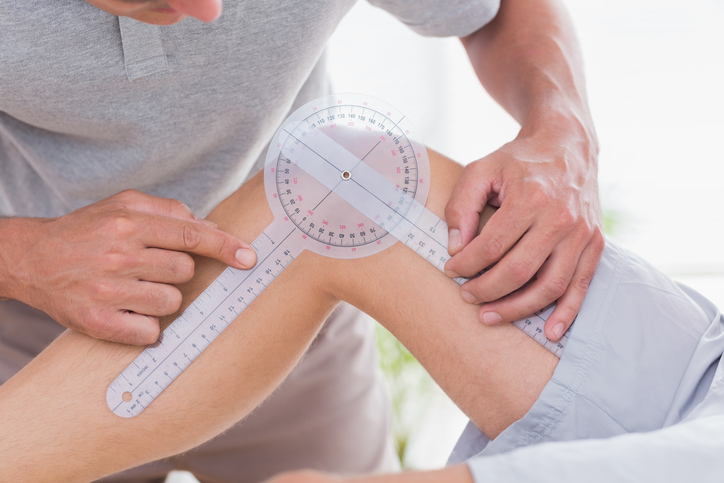
For years, the goniometer has been the standard for assessing cervical movement. It is simple, familiar, and functional. But now we have an upgrade, state-of-the-art technology. This upgrade was essential for achieving more reliable and data-driven measurements.
A digital cervical range of motion system redefines accuracy and brings confidence back into clinical assessment.
The limitations of manual goniometry
Most clinicians have used a goniometer often enough to know its routine: align, estimate, record. While this method is effective, it comes with compromises.
The main challenge is achieving consistency. What one clinician measures as “60 degrees” might be interpreted as “68 degrees” by another. Although this discrepancy may seem minor, it significantly impacts how progress is tracked, treatments are justified, and outcomes are communicated.
Even small deviations can have a broader influence on the recovery process. A patient’s range of motion may appear improved in documentation, but they may not feel any actual change in practice.
The subjectivity problem
Goniometry relies heavily on technique and visual judgment. Even experienced clinicians can differ in how they read and record angles. Lighting, positioning, or even a patient’s posture that day can alter results. Over time, those variations accumulate, and your ability to make accurate comparisons weakens.
The documentation dilemma
Manual readings make record-keeping more challenging for clinicians. The process of transcribing values, verifying accuracy, and re-entering data is time-consuming and susceptible to human error. When discrepancies arise later, it can be difficult to identify the cause. As a result, objective measurement tools are a more effective solution. They do not replace human expertise; rather, they enhance it by providing consistency and improved repeatability.
Data precision as clinical confidence
A cervical range of motion instrument equipped with digital sensors provides you with certainty in your measurements. Every movement is recorded in real-time, eliminating the need for human estimation. You will achieve consistent results regardless of whether it’s morning or evening, or if two different clinicians are making the assessments.
This level of precision enhances confidence in documentation. Reports are now objective, transparent, and defensible. In cases of insurance reviews or audits, you can present data that withstands scrutiny, eliminating the need to explain discrepancies between readings.
Moreover, accurate data enhances clinical insight. Subtle asymmetries, compensations, or patterns of stiffness become apparent through consistent tracking. With a solid foundation of precise information, your decisions become more decisive and deliberate.
Trend tracking and longitudinal insights
Manual tools provide snapshots, while digital systems present timelines. Each measurement becomes part of a larger narrative that demonstrates how the cervical spine responds to therapy over time.
Patterns that speak volumes
With digital tracking, you can clearly observe the progress curve. Improvements, slowdowns, and regressions are all visible in trend graphs without requiring calculations or guesses. These patterns make your assessments more informed and your decisions more proactive.
Better communication with patients
Visually displaying progress transforms the tone of consultations. Instead of just stating, “You’ve improved by 5 degrees,” you can visually show the difference across sessions. Patients appreciate this tangible proof. They feel seen, understood, and motivated to remain consistent with your care plan.
Integration with EMR and workflow efficiency
Efficiency involves streamlining daily routines by eliminating unnecessary friction.
Digital cervical motion systems can directly connect to electronic medical record (EMR) platforms, automatically uploading readings, charts, and session data. This process eliminates redundant typing, reduces the risk of transcription errors, and prevents lost clinical notes.
This integration eases the administrative burden for both clinicians and their assistants. Reports are generated instantly, formatted for compliance, and made accessible to the entire care team. By removing unnecessary manual tasks, healthcare providers can focus more on patient care rather than paperwork.
Objective measurement as a marketing edge
Data strengthens reputation. In a profession reliant on results, measurable outcomes serve as your most convincing proof of quality.
When patients see reports that clearly display their progress, their trust in your clinic grows. They recognize that you are actively measuring improvements. This confidence leads to higher retention rates and more referrals.
For clinics, objective data acts as a subtle form of marketing. It communicates to potential clients that you prioritize accuracy and transparency. It indicates that your methods are modern, measurable, and accountable—qualities that patients notice right away.
Conclusion
Measurement is the foundation of every musculoskeletal treatment or care plan. When this foundation is weak, everything built upon it loses its stability. Traditional goniometry has served its purpose well, but its limitations have become increasingly evident in today’s clinical environment.
Digital cervical motion systems provide a higher level of reliability based on accuracy, consistency, and clarity. They simplify documentation, enhance trust, and transform each session into measurable progress.
In a field where every degree counts, it is a professional responsibility to move beyond the goniometer. Patients deserve precision as the standard of care.
Disclaimer: This article contains sponsored marketing content. It is intended for promotional purposes and should not be considered as an endorsement or recommendation by our website. Readers are encouraged to conduct their own research and exercise their own judgment before making any decisions based on the information provided in this article.