
By Anna Pietraszek and Jerry Haar
Europe is likely to see a slight erosion or, at best, stabilization of its captured luxury spend share in 2026. Against that background, as this article reveals, leading European megabrands LVMH, Hermès, Richemont, Chanel, and Kering are well positioned to gain global share.
Modern leadership is often associated with visibility, constant communication, and strong personal presence. Yet some of the most influential leaders operate very differently: they lead without constantly seeking attention
The Bible asserts that “the poor will always be with you”. Well, so will the rich. The global population of high-net-worth individuals (HNWIs) grew by 2.6 percent in 2024, driven heavily by a 7.3 percent surge in North America, while ultra-high-net-worth individuals (UHNWIs) increased by 6.2 percent.
The growth in high-income groups is largely fueled by strong stock market performance, AI optimism, and increased adoption of alternative investments like private equity and cryptocurrencies.
In terms of the luxury market, the cohort comprises HNWI (58 to 62.5 million, with a net worth exceeding $1M) and upper-middle-tier individuals (628 million, with a net worth of 100K to $1M).
European companies occupy most of the top global positions in luxury goods by revenue.
As Europe is synonymous with luxury and has always had “first mover advantage”, the continent (plus the UK) is a harbinger for luxury in general. European luxury goods are dominated by a small set of European conglomerates, with LVMH clearly first by both sales and market share, followed by a tier of Hermès, Richemont, Kering, Chanel, and a long tail of smaller houses. European companies occupy most of the top global positions in luxury goods by revenue. In that ranking, LVMH is number one globally and alone accounts for about 31 percent of total sales of the top 10 luxury goods companies, underlining its disproportionate scale.
In personal luxury goods, Europe generated about €110 billion in 2024, growing 3–4 percent at current exchange rates, mainly on the back of tourism and tax free-shopping recovery. Globally, personal luxury goods reached roughly €363–4 billion in 2024.
By category, jewelry, beauty and fragrances, fashion and leather show significant growth. Gen X currently holds the largest spending share, while affluent millennials and Gen Z drive incremental demand in apparel and accessories. Distribution remains mixed: wholesale still dominates luxury fashion in Europe, but online channels and mono brand stores are gaining share as brands push for more control and margin.
In terms of major players, European champions LVMH, Kering, Hermès, Richemont, and others still anchor global luxury capitalization and profitability. Not surprisingly, European luxury remains highly competitive globally due to brand heritage, craftsmanship, and clustering of savoir faire in hubs like Paris, Milan, Geneva, and the Vallée de Joux.
However, at the same time, competition is intensifying from US lifestyle brands, Asian “local giants,” and digital native players, especially in jewelry and fashion categories where barriers to entry are lower than in haute horlogerie.
Several forces are driving the European luxury market’s current trajectory. To begin with, there is a significant uptick in tourism along with the global demographic expansion of luxury consumers. Bain estimates that more than 300 million new addressable luxury consumers will emerge globally in the next five years, primarily in China and other emerging markets, supporting long term growth for European maisons with global reach.1 However, China, representing about one third of global luxury, has experienced contraction and then partial stabilization; 2025 saw its personal luxury market decline 3–5 percent, but there are early signs of a recovery. Digitalization is another major driver as online luxury revenue is growing above 9 percent annually.13 Finally, the rise of resale and circular models is most notable, as well. The European secondhand luxury market is growing rapidly, supported by AI, blockchain, and machine learning enabled authentication, and increasingly by collaborations between brands and certified resale platforms. By 2024, over 30 percent of top European luxury brands had either partnered with or launched their own resale initiatives.
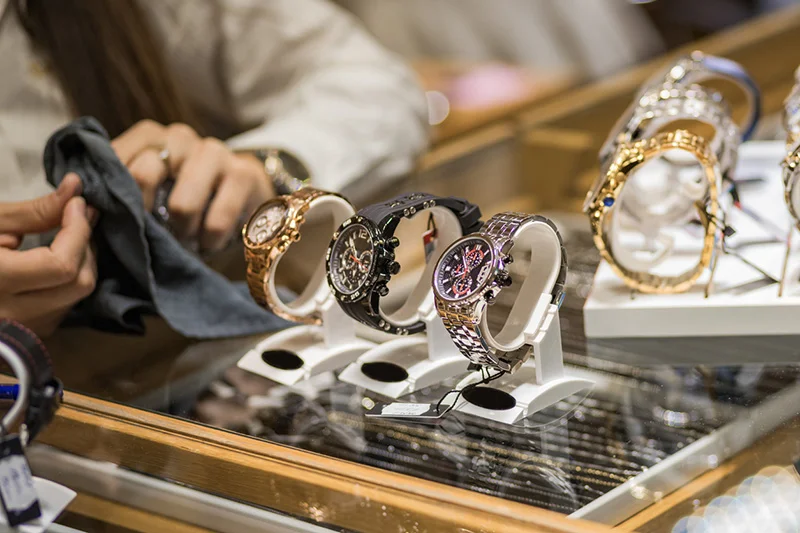
The most promising categories in luxury in the present and near term are jewelry and watches; beauty, skincare, and fragrances; women’s luxury fashion and leather goods; and e commerce models. Jewelry and watches have outperformed other core categories, fueled by high jewelry and entry pieces aligned with “value driven” luxury. Richemont’s jewelry maisons’ >€14 billion revenue and >33 percent operating margin illustrate enduring profitability in this space. Beauty, skincare, and fragrances remains a gateway category for new luxury consumers, especially in Europe, where L’Oréal’s luxury division and others leverage scale and innovation. This dynamic is particularly visible in luxury grooming, where authenticity, heritage, and craftsmanship increasingly drive consumer loyalty and long-term brand equity. As Eric Malka, co-founder of The Art of Shaving, observes: “Luxury men’s grooming in Europe — much like in America — is accelerating, but what ultimately wins is authenticity. ‘Made in Italy,’ for example, sits at the heart of Barberino’s strategy. Craftsmanship is what transforms a service into a ritual and a brand into a long-term asset.”
Women’s luxury fashion and leather goods hold the largest product share, and are well positioned for steady growth. Finally, Luxury e commerce is rapidly expanding, as brands that blend heritage with advanced digital experiences (AR try on, AI curation, community driven content) are poised to outperform.
The strategic imperative for European luxury firms should focus on six key areas. The first is to refine desirability and pricing architecture and deepen the focus on VIP customers. Omnichannel attention and digital excellence are priorities, as well. With online expected to represent one sixth of European luxury revenue by 2027 and luxury e commerce growing at >9 percent annually, firms must treat digital channels as core brand theaters rather than mere transactional outlets. As Tatiana Ferreira, CEO of HarmoniIQ and former VP at Louis Vuitton, emphasizes: “Luxury is a long game. You cannot shortcut your way to exclusivity and you cannot discount your way back to desirability. The European brands that stay disciplined now will emerge stronger. The ones that compromise will spend years rebuilding trust.”
To continue, luxury firms must systematically embrace resale and circular models and rebalance geographic exposure and tourist mix. As Chinese spending partially repatriates and remains volatile, European groups should hedge by deepening presence in the US, Middle East, and Southeast Asia. Finally, luxury firms must address skills, craftsmanship, and innovation talent needs.
High end manufacturing in Europe faces skills bottlenecks, especially in specialized métiers (watchmaking, leatherworking, jewelry setting) and in advanced digital functions. The implications for the 2026 European luxury market are threefold:
Europe as a region is likely to see a slight erosion or, at best, stabilization of its captured luxury spend share in 2026, given its soft 2025 and stronger relative growth in the Middle East and new frontier markets.
Leading European megabrands (LVMH, Hermès, Richemont, Chanel, Kering) are positioned to gain global share if they continue to deliver strong desirability, localized China strategies, and experience rich retail, since the environment rewards scale and clarity of value.
Smaller and mid tier European brands face the greatest risk of share loss, squeezed between ultra high end resilience, affordable luxury, domestic Asian brands, and the pull of experiences and resale; their 2026 outcomes will depend on how fast they adapt product, pricing, and digital engagement to this “earned luxury” paradigm.
Luxury industry gurus expect the trends this year to focus on tactile finishes, modern tailoring, bold and chunky accessories, tech wearable and “accessible” luxury, such as Coach and Ralph Lauren brands. For the European luxury industry, the challenges are great but the prospects even greater!
About the Authors
 Anna Pietraszek is Director of the Eugenio Pino and Family Global Entrepreneurship Center and an Associate Teaching Professor at Florida International University.
 Jerry Haar is a professor of international business at Florida International University and a visiting faculty fellow at Georgetown University’s Baratta Center for Global Business Education.