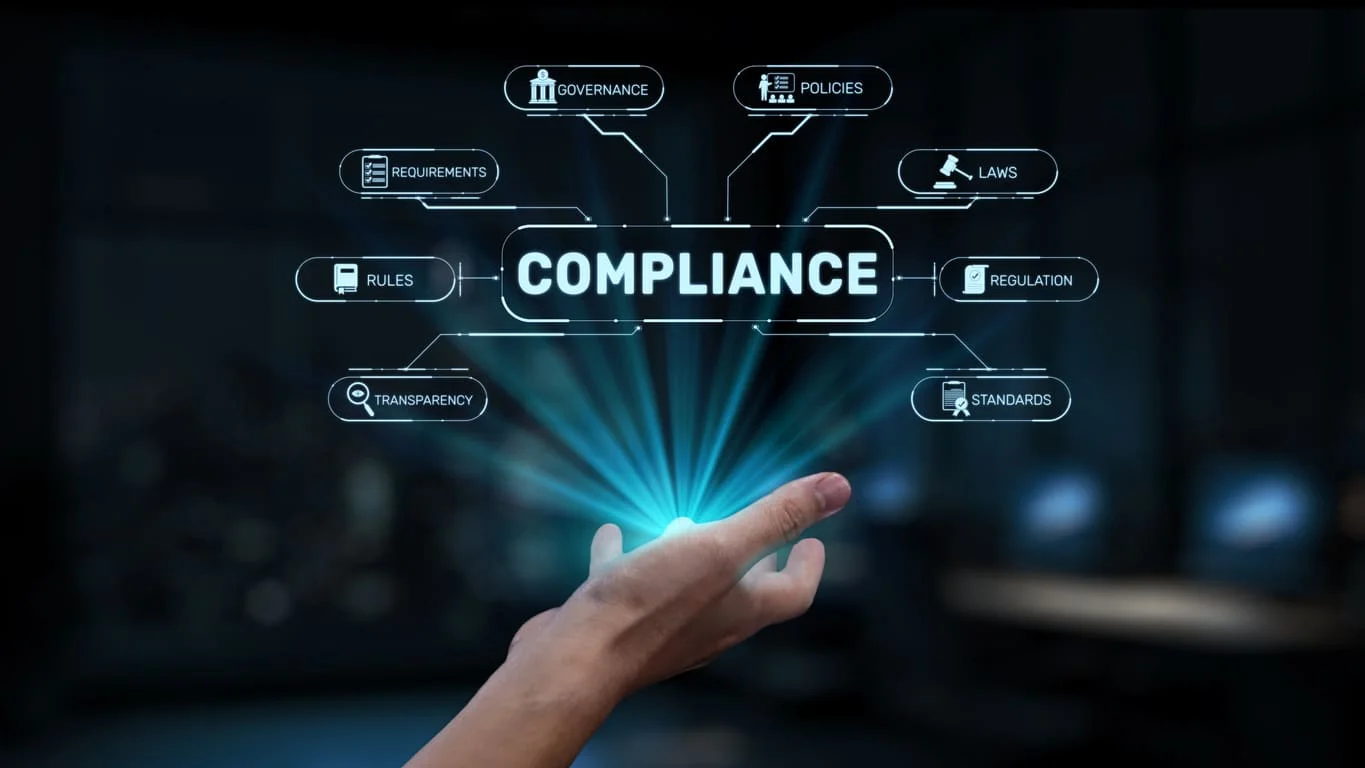
In today’s regulatory environment, organizations are increasingly turning to technology that streamlines compliance duties to navigate the growing maze of rules and regulations effectively.
In turn, compliance is no longer regarded as a pure regulatory tick-the-box exercise, but also as an important driver of trust, risk management, and operational excellence.
Stronger compliance processes are eased through innovative compliance technology solutions that improve accuracy, efficiency, and responsiveness.
The Urgent Need for Streamlined Compliance
As compliance regulations multiply and grow more complex, organizations across industries and geographies can no longer rely on human checks, spreadsheets, and paper documentation to meet their compliance goals.
Businesses can combat these challenges by using technology to automate repetitive tasks, prevent human error, and provide better oversight so that compliance teams can focus on more valuable and planned tasks.
Failing to adopt the best compliance technology increases the risk of breaches and fines and increases waste, inefficiency, and the loss of public trust in the organization.
How Technology Revolutionizes Compliance Workflows
Modern compliance technology solutions focus on automation, centralized data, real-time compliance monitoring, and artificial intelligence (AI) as key improvements in compliance management efficiency.
Prominent developments include:
Automation of Repetitive Tasks
Automation performs data gathering, report generation, documentation generation, compliance checking, and other tasks with little human intervention, and can do so with greater speed and accuracy than manual effort.
Workflow automation helps ensure compliance activities are completed efficiently and on time to avoid bottlenecks from approvals, documentation, or other issues.
Centralized Compliance Management
The main benefit of modern compliance technology is the ability to bring all such information, policies, procedures , and audit trails into a single platform across the organization.
Centralizing all information in one place helps improve transparency and auditing, and enables different departments to collaborate and more easily implement regulatory changes.
Real-Time Monitoring and Reporting
With continuous compliance monitoring, organizations can quickly identify and fix issues.
The dashboards provided by technology platforms raise alerts that provide an up-to-the-minute overview of compliance and risk.
Alerts allow remediation before expensive fines and reputational harm occur.
AI-Driven Predictive Compliance
Artificial intelligence can be used to identify patterns and predict risks in compliance programs.
It can also scan huge amounts of data to isolate anomalies and create compliance programs that adjust to the changing risk landscape.
This helps organizations stay aware of regulatory changes and adjust their controls accordingly.
Enhanced Security and Data Integrity
Regulatory compliance involves data protection.
Vendors implement security engineering principles such as encryption schemes for sensitive data and tamper-obvious audit trails to show compliance.
This helps to protect against data breaches while maintaining the integrity and confidentiality of compliance records.
Business Benefits of Compliance Technology
The transition to technology-enabled compliance delivers tangible business advantages beyond just meeting regulatory demands.
- Cost Efficiency: Automation and digitization reduce labor costs associated with manual compliance tasks and minimize expensive penalties stemming from non-compliance. Fewer manual errors and streamlined processes require fewer resources for oversight and rework.
- Operational Agility: A scalable, tech-driven compliance framework allows organizations to adapt rapidly to new regulations and expanding geographic reach without overhauling entire compliance programs.
- Improved Risk Management: Early detection of compliance gaps and continuous performance tracking significantly reduces organizational risk and improves governance.
- Enhanced Stakeholder Confidence: Transparent, timely reporting and proven adherence to evolving regulations cultivate trust among regulators, customers, and partners.
Embracing Technology for Continuous Compliance
Today’s modern compliance embraces technology to further improve business processes and create a dynamic, continuous compliance solution.
Cloud-based compliance simplifies compliance on-the-go, wherever employees are located, allowing remote teams to stay up to date.
Automated workflows and built-in AI drive an agile compliance culture, moving on from customary, reactive processes.
Advanced compliance technology solutions, such as Luthor.ai, cleverly enabling the automation of data analysis and process optimization, allow compliance professionals to move from being just administrative compliance operatives to becoming value drivers by enabling the organization to be resilient and grow.
Conclusion
Customary compliance models require great attention to detail from humans.
New compliance practices often use clever systems to automate many tedious and complex tasks.
Such practices allow organizations to meet their compliance goals while creating a more efficient system of compliance.
These technology-enabled approaches to compliance should be adopted in the service of a culture of compliance excellence.
With the evolution of regulations, the adoption of advanced technology in compliance is now a matter of ensuring not just efficiency, but sustainable long-term practices and integrity.