
By H.E. Mr. Yousef Khalawi
Why European business leaders are turning to alternative finance models to fuel their growth
A growing number of European business leaders are re-evaluating how growth is financed, looking beyond traditional debt finance models and towards alternative models rooted in risk-sharing, ethics and impact. His Excellency Mr. Yousef Khalawi, Secretary General of the AlBaraka Forum, explores what’s driving this shift and what the EU must do to seize the opportunity.
European business investment is in a state of flux. The traditional systems that have underpinned growth for decades are being reassessed in boardrooms across the continent. High borrowing costs, widening SME funding gaps, ESG fatigue and the decentralisation of capital flows are forcing business leaders to rethink how they fund the next round of growth.
Across Europe, business leaders are increasingly exploring alternative finance models from revenue-sharing and impact investment to Shariah-compliant structures. This marks not a religious shift, but a broader commercial realignment in non-Muslim majority markets.
The appetite for alternative investment models exists, the infrastructure is maturing, but for alternative finance to scale, three barriers must be addressed: education, regulation and narrative.
The Funding Squeeze: A Structural Wake-Up Call
When speaking with owners of SMEs, social enterprises or faith-led businesses that sit outside the conventional funding mould, the popular belief is that alternative finance models are still not reaching those who need them.
The mainstream debt finance model, with its rigid structures, often doesn’t suit the growth profiles or governance values of these businesses. Venture capital, meanwhile, remains narrowly focused on high-growth tech with very few incentives to back long-term, steady-yield operations.
Faith-led or ethics-based finance models offer a third option, which is rising in its appeal with more conscientious business leaders. Its structures, such as mudarabah (profit-sharing) or musharakah (joint ventures), shift the focus from collateral and debt service to shared enterprise and value creation. These principles resonate strongly in today’s economy, especially as business leaders seek funding models that align with their mission, vision and values and mitigate risk in volatile markets.
Accessing ethical capital without compromise
Several European markets, including the UK, Luxembourg and Germany, are actively positioning themselves as global leaders in ethical and Islamic finance. This reflects growing investor appetite for financial models grounded in transparency and long-term impact. However, investors, especially institutional allocators and sovereign funds, are becoming increasingly sceptical of ESG as it exists today.
EY reported in 2024 that 85% of institutional investors believe greenwashing is a worsening problem. The concern is that ESG is becoming a checklist item on the moral compass of many European businesses, rather than a guiding principle.
Here, models like Tayyib-inspired investing – an Islamic finance concept that layers positive impact and ethical intent over Shariah compliance – offer an alternative option. These frameworks ask not only “what are we excluding?” but “how are we improving people’s lives, our environment, and our economy?”
Islamic finance is, by nature, asset-backed, transparent, and designed to prevent harm. These principles make it uniquely suited to underpin a more credible and values-driven sustainable finance ecosystem in the UK and globally.
Unlocking the opportunity to access alternative finance models
Despite growing interest, there are still structural hurdles to overcome. Business leaders cite a lack of education around alternative finance, unclear government policy and more evidence on ROI before committing. This is not a call for wholesale reinvention, but rather recalibration. For example, policymakers can act immediately by:
- Clarifying tax treatment for Islamic finance products to level the playing field.
- Working with European financial regulators and capital market authorities to issue guidance and promote Islamic or values-based listings.
- Supporting professional bodies and universities to scale Islamic finance education and qualifications.
- Creating blended finance pilots for ethical or Shariah-compliant SME lending.
Regulators and capital markets need to recognise that this is not fringe finance. Islamic finance assets globally are projected to exceed $9.7 trillion by 2029 and major non-Muslim economies – from Germany to Australia – are already innovating in this space.
A strategic moment for European businesses
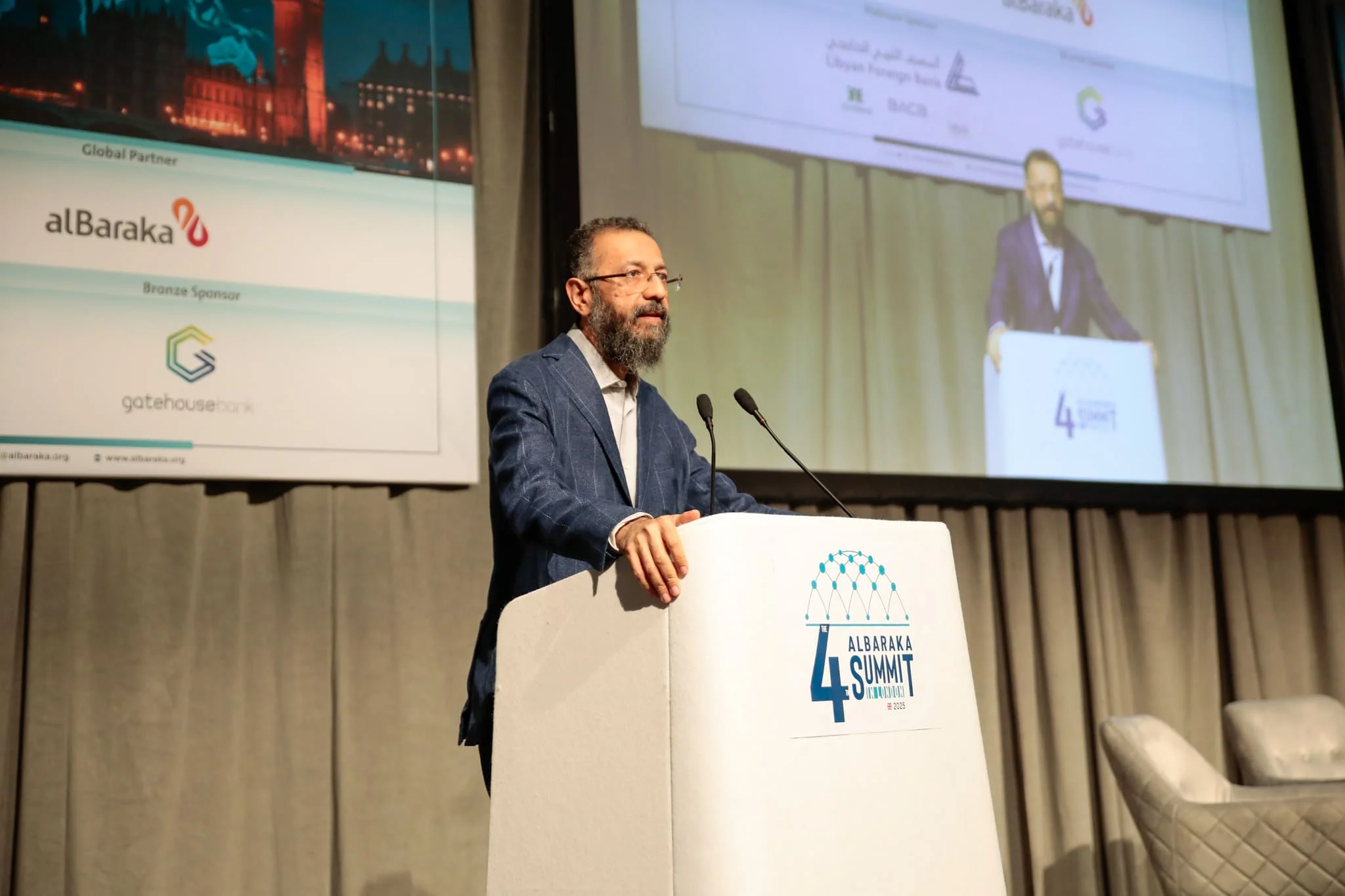
At the 4th AlBaraka Summit in London, economists, regulators and business leaders from over 30 countries came together to discuss how to access alternative finance models. Luxembourg has long hosted Shariah-compliant funds and became the first Eurozone country to issue a sovereign sukuk, and in early 2025, Germany licensed its first Islamic bank. These moves show clear momentum across the continent
The message is becoming clear – Islamic finance and the wider spectrum of values-based capital is not a niche finance model, it is a growing, global market responding to a deeper demand for integrity in capital.
With five Islamic banks, more than 50 Islamic fintech startups, and two sovereign sukuk issuances already under its belt, the UK is certainly in a strong position to lead this transformation, and its European counterparts should be looking on intently to understand how businesses access alternative finance. London is the world’s centre for sukuk listings and can serve as a launchpad for global Islamic finance initiatives.
But time is of the essence. The UK and European countries must accelerate the adoption of these models and encourage their leadership to embrace this shift, not merely as a symbolic public gesture, but as a commercial, regulatory and educational priority.
Inclusive growth needs inclusive finance models
Europe’s economic future cannot be built on narrow, restrictive finance models; it must be underpinned by a financial system that is resilient, inclusive and aligned with the values of modern society. That means welcoming new approaches, not as replacements, but as reinforcements to what already exists. Alternative finance is not ‘alternative’ any longer – it is becoming mainstream, and the UK and Europe should act like it.
 H.E. Mr. Yousef Khalawi