

By Fernanda Arreola and Dan Hammond
As leadership roles move from merely directorial to creating great conditions for team success, leaders should employ the three Cs framework— a structured and effective way to get the best out of teams.
Abstract
In an increasingly complex and fast-paced work environment, the role of the leader has evolved beyond directing tasks to enabling the conditions necessary for team success. This article explores the foundational responsibilities of leaders and introduces a practical and validated leadership framework known as the 3Cs—or Conditions for Success™—which provides a structured approach to managing and developing teams. Grounded in insights from The Leadership Pipeline and supported by research conducted by the London School of Economics, the 3Cs framework emphasizes the importance of Clarity, Climate, and Competence as the three essential pillars leaders must foster. Clarity refers to the team’s purpose and collective direction; Climate encompasses the structural and relational environment; and Competence highlights the skills and behaviors required for high performance. By diagnosing and addressing each of these conditions, leaders can prioritize effectively, align team efforts, and significantly improve both engagement and results.
What is the role of a leader? The role of a leader is to create the conditions necessary for the success of his or her teams. However, in today’s environment, many leaders wonder how these conditions may become an accessible reality. What makes everything more complex is that there is an overload of information and many daily decisions need to be made.
Leaders must question what they need to stop doing so they may be able to concretize what they should do.
In a book called The Leadership Pipeline, the authors suggest that to face these challenges, leaders must question what they need to stop doing so they may be able to concretize what they should do. To decide where to focus, leaders must start by defining their principles,which will help them establish how they allocate their time while putting their values to work.
But once a leader has “cleaned house,” they require tools to consciously assess and coordinate what their teams should be focusing on. In other words, they require a framework. This is where the 3Cs come into play. The 3Cs or the “3 Conditions for Success™” is a leadership framework that has been used for more than 30 years and validated in academic studies developed by the London School of Economics. The 3Cs bring simplicity to the role of the leader, giving them the organizational skills and tools to help their team and team members achieve their goals.
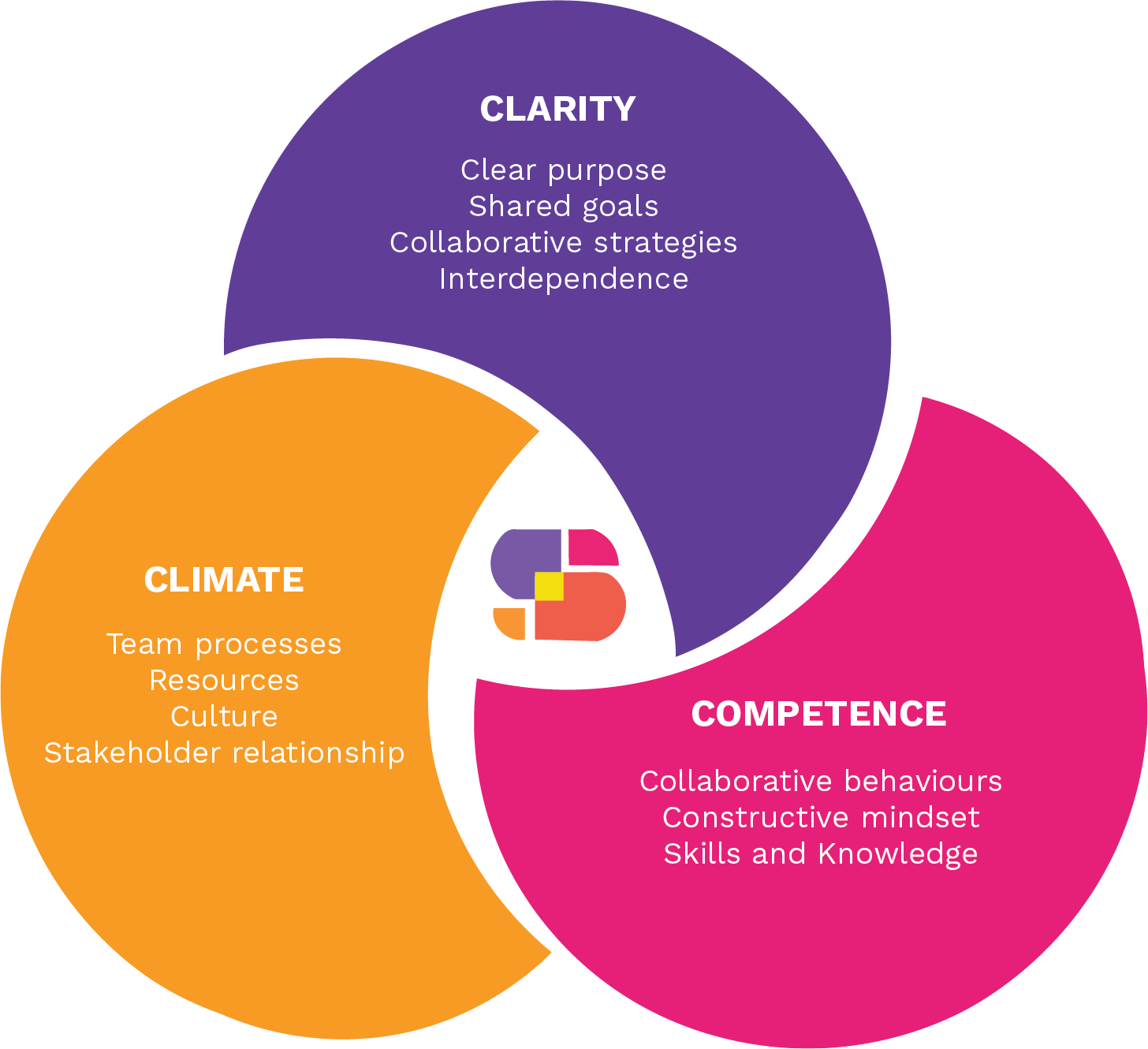
The first C is Clarity. Why are we doing what we are doing? What are we trying to achieve? And how are we going to get there? Clarity states why a team exists, what they are doing together, what role individuals play, and, crucially, how the team members interconnect.
The second C is Climate. Climate splits into a soft and hard side. The hard side includes the structure that defines the organization and the processes that underline the day-to-day routines inside of the team. The soft side is the relationships with stakeholders and the culture.
The final C is Competence. This relates to the behaviors, attitudes, knowledge, and skills of team members. These competencies can be below or above a desired performance level, and it is observing this and working with team members to possess the abilities and expertise necessary (this can be done through coaching, training, feedback, and motivational actions). The competencies will build the Climate, and ultimately, the Climate will deliver Clarity. The role of the leader is to create all three conditions.
As we begin planning for next year’s objectives, we suggest you test this tool with your team members. A simple way to do this is to have a discussion with your team members about each condition or use a diagnostic tool to identify the biggest gaps so that targeted action can be taken. The use of the 3Cs has yielded double-digit improvements in both engagement and performance.
 Fernanda Arreola
 Dan Hammond