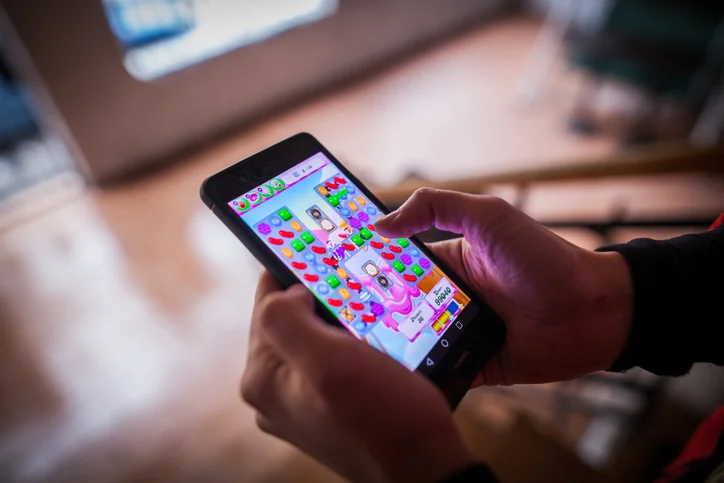
Take a look at almost any list of popular mobile games and sooner or later you’ll see Game Crush Candy. For a lot of people it was the first puzzle they ever installed on a phone. Sometimes it started with simple curiosity — “let’s see what this is” — and somehow the game stayed there for years.
The idea is incredibly simple. You swap two candies, line up three of the same color, and they disappear. That’s it. No complicated rules, no long explanations. But once you start playing, you quickly realize that the game is built much more carefully than it first appears.
One of the things that works so well is how quickly you get into it. There’s no long tutorial to read through. After a few moves you already understand what’s going on. From that moment every level feels like a tiny puzzle you want to figure out.
People who get curious about the mechanics usually start exploring the basics of candy crush gameplay and how the board reacts to different combinations.
Even though the game looks playful and light, its structure is surprisingly thoughtful. The early levels are easy, almost relaxing. Later on the puzzles become trickier, new obstacles appear, and suddenly you find yourself thinking a few moves ahead instead of just swapping candies randomly. That gradual shift is one of the main reasons the game has stayed popular for so long.
Sweet Puzzle Phenomenon: What Is Game Crush Candy and Why Millions Play It
When Game Crush Candy appeared in 2012, puzzle games were already everywhere. The “match-three” idea had been used many times before. Still, this particular game managed to grab attention almost immediately.
A big part of that success was simply how it looked. Instead of plain shapes or blocks, the board was filled with bright candies and playful animations. The whole game felt cheerful and inviting.
Another reason players stayed was the pacing. The first levels are extremely simple. They give you time to experiment and understand how the board behaves. Only later do things start getting more complicated — blockers appear, moves become limited, and the puzzles demand a bit more thought.
Because the difficulty grows gradually, beginners don’t feel overwhelmed. At the same time, players who stick with the game still find plenty of challenges later on.
There’s also the question of convenience. Most levels take only a couple of minutes. That makes the game perfect for small breaks during the day. Someone might open it for one quick round… and suddenly realize they’ve played ten levels in a row.
Another reason people keep coming back is that the game never really stands still. Over the years the developers added new levels, fresh mechanics, and occasional themed events. So even players who have been around for a long time often discover something new when they open the game again.
How the Gameplay Works in Game Crush Candy
At its core, Game Crush Candy is built around a simple grid filled with candies of different colors. Players swap two candies next to each other in order to create a row or column of three identical pieces.
When that happens, the candies disappear and new ones fall down to fill the empty spaces. Sometimes this creates another match right away, which leads to a chain reaction across the board.
Those chain reactions are often the most satisfying moments in the game. One move can suddenly clear a surprising amount of space.
Bigger combinations unlock special candies with stronger effects. For example, lining up four candies creates a striped candy that clears an entire row or column when it activates.
Even though the controls are simple, many levels require careful thinking. The number of moves is limited, so each decision matters more than it first seems.
The basic gameplay revolves around a few core ideas.
Core mechanics of the game
- matching three or more candies of the same color
- creating special candies through larger combinations
- removing obstacles that block parts of the board
- completing the level objective before the moves run out
Since the shape of the board and the obstacles change from level to level, players often have to adjust their approach instead of relying on the same strategy every time.
Game Objectives and Level Types
Another reason the game stays interesting is that the goal of each level can be different. Even though the mechanics stay the same, the objective often changes.
In some stages the task is simply to reach a certain score. In others, players have to clear special tiles or move ingredients down to the bottom of the board.
These changing objectives influence how you approach the puzzle. When the goal is scoring points, large combinations are the best strategy. But if the level involves clearing specific tiles, careful and precise moves become more important.
Below are some of the most common types of levels.
| Level Type | Main Goal | Typical Difficulty |
| Jelly Levels | Remove all jelly tiles | Medium |
| Ingredient Levels | Bring ingredients to the bottom | Medium–Hard |
| Score Levels | Reach the target score | Easy |
| Timed Levels | Score points before time runs out | Hard |
Because the goals and layouts keep changing, the puzzles rarely feel repetitive. Even after many hours, players still encounter boards that require a new approach.
What is Jelly in Candy Crush: One of the Key Mechanics
Sooner or later most players run into levels where some squares seem to have a transparent layer under the candies. At that point many newcomers start wondering: what is jelly in Candy Crush?
Jelly is simply a layer that covers certain tiles on the board. To remove it, you need to make a match directly on that square. When the match happens, the jelly disappears.
In later levels things become a bit trickier. Some tiles contain double jelly, which means they have to be cleared twice before they are gone completely.
Placement also makes a difference. Jelly tiles are often located in corners or behind obstacles, where it’s harder to reach them with normal matches. In those situations players usually rely on special candies or chain reactions to finish the job.
The game includes several variations of jelly.
Types of jelly in the game
- regular jelly that disappears after one match
- double jelly that needs two matches
- jelly placed in awkward or hard-to-reach parts of the board
Because every jelly tile has to be cleared to finish the level, players need to keep an eye on the entire board. Many fans actually enjoy these stages the most, since removing the final hidden jelly tile can feel surprisingly satisfying.
Why Candy Crush Became a Global Mobile Gaming Hit
When Game Crush Candy started spreading across smartphones, its success surprised even people inside the industry. Puzzle games had existed for years, and the match-three formula was nothing new. Yet this particular title somehow broke through to a much wider audience.
One explanation lies in how naturally the game fits into everyday routines. A level usually lasts just a few minutes. That makes it perfect for small gaps in the day: waiting for a bus, standing in line at a store, or relaxing on the couch before bed. Many players never planned to spend hours with it. They simply opened the game for a quick round and kept coming back later.
Another factor is the learning curve. The rules are obvious almost immediately. Swap candies, make a match, watch them disappear. There is no complicated system to memorize. But the longer someone plays, the more they begin to notice small tactical details: how cascades form, how special candies interact, and how board layout changes the strategy.
Several elements quietly helped the game spread across the world.
- Levels that take only a few minutes to complete
- A visual style that feels friendly rather than competitive
- New stages added regularly so the map keeps growing
- Simple controls that work equally well on phones and tablets
Word of mouth played its role as well. Friends recommended the puzzle to each other, sometimes joking about how frustrating a certain level could be. In a strange way, those shared frustrations made the experience more social. People compared progress, swapped tips, and celebrated finally beating a stubborn stage.
Over time the candy-filled board became instantly recognizable. Even people who had never installed the game could identify it after seeing someone else play.
Expert Insight: What Makes the Game So Addictive
Game designers often talk about the difficulty of building a puzzle that stays interesting for years. Many titles rely on constant novelty, adding new systems or mechanics to keep players engaged. The philosophy behind Game Crush Candy turned out to be much simpler.
Todd Green, President of King, once explained this idea during an interview with El País:
“Although the rules are simple, the potential is infinite.”
That sentence captures the essence of the puzzle. The rules barely change, yet every board feels a little different because of the way candies fall and interact.
Players often experience moments where the board suddenly clears in unexpected ways. A single move might trigger several matches in a row. These little surprises create a sense that something exciting could happen at any moment.
There is also a delicate balance between planning and chance. Careful moves certainly help, but new candies drop randomly. Because of that, even a difficult level can turn around unexpectedly if the board aligns in the right way.
Those unpredictable moments are often what keep players tapping the screen for “just one more attempt.”
The Evolution of the Candy Crush Franchise
The popularity of the original puzzle eventually encouraged the developers to expand the idea. Instead of replacing the game with a sequel, they experimented with new variations that kept the same candy theme.
Over time several spin-offs appeared, each introducing its own twist on the familiar formula.
Among the most recognizable are:
- Candy Crush Soda Saga, which changes the way candies move once soda fills the board
- Candy Crush Jelly Saga, where players compete against a spreading jelly mechanic
- Candy Crush Friends Saga, adding character abilities that affect the puzzle
These versions kept the core idea intact but adjusted the rules just enough to make the experience feel fresh.
Meanwhile the original puzzle continued to grow. New levels were added regularly, extending the map far beyond what early players could have imagined. Someone who left the game for a year could return and discover hundreds of new stages waiting.
Because of that steady expansion, the franchise began to feel less like a single game and more like an ongoing puzzle universe.
Conclusion: Why Game Crush Candy Still Dominates Mobile Puzzle Games
Many mobile hits fade quickly once the novelty disappears. Game Crush Candy avoided that fate by focusing on something much more durable: approachable design.
The puzzle is easy to start, yet it still rewards players who pay attention to strategy. Levels are short enough to fit into a busy day, but varied enough that they rarely feel repetitive.
Perhaps the most remarkable thing about the game is the audience it reached. People who had never touched a console game ended up playing it regularly. For some, it became a daily habit; for others, simply a relaxing distraction.
Either way, the colorful board of candies has secured a permanent place in the history of mobile games.
FAQ
What is Game Crush Candy?
Game Crush Candy is a mobile puzzle where players swap candies on a grid to create matches of three or more identical pieces. When a match is made, those candies disappear and new ones fall from above. Each level sets a specific task — for example reaching a score, clearing tiles, or removing obstacles — before the number of moves runs out.
Why did the game become so popular?
A large part of the success comes from how easy the game is to start. The rules are clear after a few moves, and the levels are short enough to play during small breaks. Many people first tried it out of curiosity and kept returning because the puzzles were relaxing but still challenging.
What is jelly in Candy Crush and how does it work?
Players often ask what is jelly in Candy Crush when they first see transparent layers under the candies. Jelly covers certain tiles on the board. To remove it, you need to make a match directly on that square. In some levels the jelly has two layers, so it takes two matches to clear it completely.
Can the game be played without spending money?
Yes, many players go through the game without paying anything. Boosters and extra moves are offered as optional purchases, but they are not required. If a level feels too difficult, players usually repeat it a few times until they find a better sequence of moves.
How many levels are in the game now?
The exact number keeps changing because new levels are added regularly. The developers expand the map from time to time, so the total count grows every year. Someone who returns after a long break will usually find many new stages waiting.
Disclaimer: This article contains sponsored marketing content. It is intended for promotional purposes and should not be considered as an endorsement or recommendation by our website. Readers are encouraged to conduct their own research and exercise their own judgment before making any decisions based on the information provided in this article.