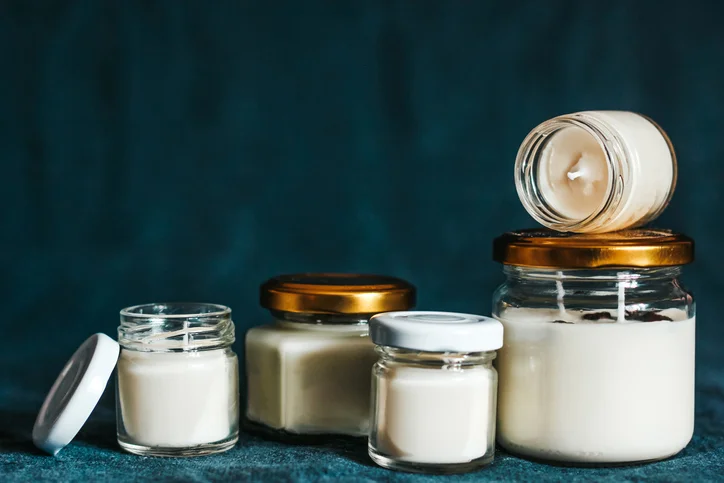
A candle may seem like a simple product, but reliable performance depends on several connected factors. Wax type, wick size, fragrance concentration, container design, curing time, and production conditions can all affect how a candle burns.
For small-batch manufacturers, quality control begins before production and continues through testing, recordkeeping, storage, and customer guidance. A clear process helps reduce avoidable variation and makes successful formulas easier to reproduce.
How Raw Materials Affect Performance
Every candle is a complete system. The wax, wick, fragrance oil, dye, and container must be compatible with one another.
Manufacturers commonly use soy, coconut, beeswax, paraffin, or blended waxes. Each behaves differently when heated and cooled. Some hold fragrance well, while others may require longer curing periods or different wick sizes.
Price alone should not determine material choice. A cheaper ingredient may create additional work if it produces uneven results, changes between batches, or performs poorly with other components.
The most suitable material is the one that works consistently within the intended formula.
Matching the Wick to the Candle
Wick selection directly affects flame behaviour, heat, and wax melting. A wick that is too small may leave unmelted wax around the container, while an oversized wick may create a high flame or excessive heat.
Manufacturers often test several wick sizes before approving a candle. During testing, they may monitor flame height, wax-pool development, visible smoke, container temperature, and total burn time.
The final wick should be tested with the exact wax, fragrance, and container intended for sale. Even a small change in the formula can affect how the wick performs.
No candle should be described as completely soot-free. Airflow, wick length, burn duration, and user handling can influence combustion. The National Candle Association recommends trimming the wick to about one-quarter of an inch before each use to help control flame height and reduce soot.
Evaluating Fragrance Performance
Fragrance concentration must remain within the range recommended for the wax. Adding more oil does not always improve scent strength and may interfere with burning or cause oil to appear on the surface.
Manufacturers usually assess fragrance in two conditions. Cold scent performance refers to how the candle smells while unlit, while hot scent performance describes how the fragrance spreads during burning.
During testing, manufacturers may monitor:
- Flame height and movement
- Wax-pool development
- Visible smoke
- Container temperature
- Total burn time
Both results depend on the full formula. Wax type, curing time, room size, airflow, and wick performance can all influence scent release.
Fragrance oils developed for candles are generally formulated for heated wax applications. Some essential oils may also be suitable, but they should be assessed individually rather than assumed to perform better because they are naturally derived.
Creating a Repeatable Testing Process
As production grows, informal testing becomes less reliable. Written records allow manufacturers to compare formulas and identify the source of a problem.
A useful test record may include the wax and fragrance supplier, wick size, fragrance percentage, container dimensions, pouring temperature, curing period, and burn-test results.
Testing more than one candle from the same batch can also reveal inconsistencies caused by wick placement, cooling, or pouring technique.
Businesses such as Willis Candle Shop operate in a market where careful testing and material selection can influence product consistency. However, brand size or presentation alone does not prove quality. Clear product information and documented testing are more meaningful indicators.
Maintaining Consistent Production Conditions
Temperature, humidity, and workspace cleanliness can affect candle appearance and performance. Manufacturers do not need a laboratory, but they should follow the same process each time.
A simple routine may include measuring ingredients by weight, recording heating and pouring temperatures, securing the wick before pouring, allowing candles to cool without disturbance, and using a fixed curing period.
Batch labels are also useful. They allow manufacturers to trace a product back to its materials and production date if a concern arises later.
Checking Suppliers and New Materials
Materials with similar names may not behave in the same way, especially when they come from different suppliers. Even a familiar product may change because of sourcing or manufacturing updates.
Incoming materials should be checked for damaged packaging, unusual appearance, incorrect labels, or missing documentation. Technical guidance, usage limits, and storage instructions should also be reviewed.
When a major component changes, the formula should be tested again before full production resumes.
Communicating Clearly With Customers
Product information should help customers use candles safely and understand what they are buying.
Useful details include the main wax type, candle weight, recommended burn duration, wick-trimming instructions, storage guidance, and basic safety warnings.
Manufacturers should be cautious with claims such as clean, non-toxic, eco-friendly, sustainable, or chemical-free. These terms can be misleading when they are not supported or clearly defined.
Safety instructions should also cover candle placement. The U.S. Fire Administration advises placing burning candles in stable holders where they cannot be knocked over and keeping them away from combustible materials.
Final Quality Checks
Before a candle enters regular production, its formula should be fully documented and tested in the final container. The manufacturer should review flame stability, heat, wax-pool development, fragrance release, visible smoke, and overall burn time.
The product should also include clear usage and safety instructions. Any later change to the wax, wick, fragrance, dye, or container should trigger another round of testing.
Environmental conditions in the customer’s home may still affect performance, but a controlled production process gives the manufacturer a reliable starting point.
Conclusion
Consistent candle manufacturing depends on how well materials, testing, and production methods work together. By selecting compatible ingredients, recording formulas, testing complete products, and providing clear customer guidance, small-batch manufacturers can reduce variation and make better production decisions. Quality control does not need to be complicated. It needs to be structured, repeatable, and supported by accurate information.