
By Dr. Anna Rostomyan
From trend prediction to hyper-personalization, AI is quietly becoming fashion’s most powerful designer.
Like almost every industry, fashion is absorbing the impact of the giddying advances in AI, with effects both beneficial and less so. Here, Dr Anna Rostomyan considers the up- and downsides of “Fashion AI”, and explores the upcoming trends in the sector as the technology is increasingly brought to bear.
With AI taking over the world, many industries are being affected by it. Consequently, experts across industries need to analyze and understand the vast power of AI and apply it accordingly in their day-to-day businesses to make the most of this exciting advancement in science.
Abadie (2026) confirms that artificial intelligence is now transforming the fashion industry. It is rapidly penetrating every link of the value chain, from collection design to distribution, as well as marketing campaigns and customer relations management.
There is a new concept called Fashion AI, which is the application of artificial intelligence, machine learning, and data analytics to optimize the fashion industry, from design to consumer sales. It accelerates tasks like trend forecasting, virtual design, and product tagging, enhancing, rather than replacing, human creativity while boosting efficiency, reducing costs, and enabling personalized customer experiences.
An industry built on instinct, creativity, and fast-moving trends, fashion has historically mostly relied on human intuition. Although AI is believed to be more of a cognitive agent devoid of creativity, today it is emerging in such a creative sector as fashion as one of the sector’s most transformative forces, redefining how clothes are designed, manufactured, marketed, and sold.
As a matter of fact, far from replacing creativity, AI is augmenting it, enabling brands to move faster, reduce waste, and connect more precisely with consumers. This enables designers not only to predict trends and act smarter, but also to become more time-efficient and increasingly data-driven.
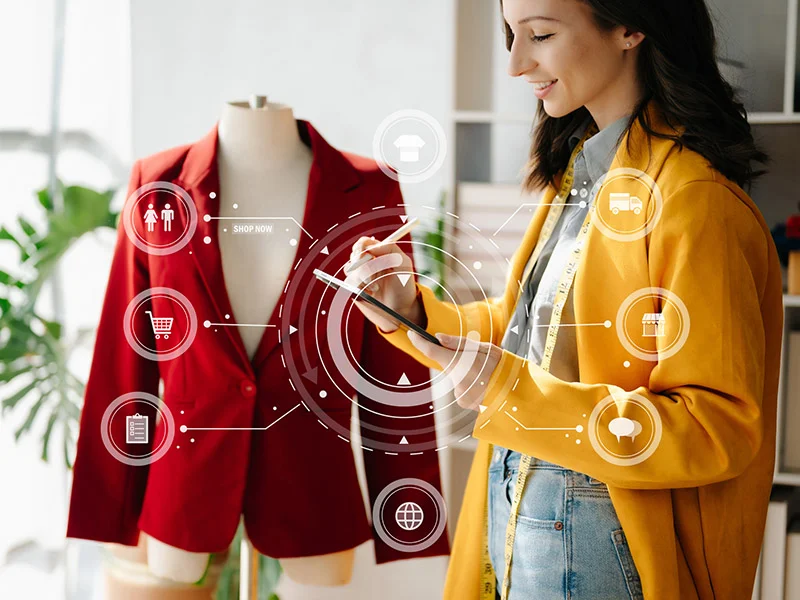
Trend Forecasting at Machine Speed
Traditionally, trend forecasting involved runway analysis, cultural and customer observation, and educated guesswork months in advance. AI has shortened that timeline considerably, enabling designers to focus more on creatively inventing styles. AI can greatly assist designers here, too. By analyzing millions of images from social media, e-commerce platforms, runway shows, and street style photography, AI systems can detect emerging trends, analyze and detect preferred patterns in colors, silhouettes, shapes, fabrics, and even micro-trends. This gives designers a great opportunity to save time and to work on the further development of this or that brand. Henceforth, brands can now make data-backed decisions about which styles to produce and on which aspect to continue working further, minimizing overstock and markdowns. For fast-fashion and luxury brands alike, this capability translates directly into increased margins and better inventory control.
AI-Driven Design and Creative Collaboration
AI is no longer limited to analytics; increasingly, it is entering the creative studio.
Design tools powered by generative AI can now propose new garment designs, suggest fabric combinations, or remix archival collections into modern silhouettes. Designers remain in control, but AI acts as a creative accelerator. For instance, such famous brands as Tommy Hilfiger have experimented with AI-assisted design tools that analyze past collections and consumer preferences to inspire new concepts. The company actually uses AI across its design, marketing, and e-commerce operations, often partnering with technology leaders to enhance efficiency and personalization. There is a brand called Eigengrau, from the German meaning “personal gray,” based in Berlin and Moscow, that has already produced sunglasses totally designed by AI. So, rather than stifling originality, these tools free designers from repetitive tasks, allowing them to focus on storytelling, craftsmanship, and brand identity.
BoF Insights and McKinsey & Company (2026) state that automation is actually reshaping many routine tasks, such as customer service and inventory management, freeing up time and resources. Other famous companies going in line with AI are companies like Zalando and Nike, which are using generative AI across functions, from image generation to product design and personification. They use GenAI and broader AI technologies to predict fashion trends, design new products, and optimize their supply chain to align with consumer demand. Agentic AI is actually accelerating this further, offering the potential for autonomous decision making, marketing, and product execution.
Personalization at Scale
Consumers increasingly expect brands to understand their preferences, and AI makes that possible at scale. Through machine learning, fashion retailers can analyze browsing behavior, examine purchase history, and perceive and analyze body measurements and human emotions, which belong more to the sensitive aspect of human. This gives retailers and marketers a valuable opportunity to dive deeper into the human mind and heart and, by detecting preferences, to adjust their functioning, production, and marketing accordingly (Rostomyan et al., 2024). For instance, Nike leverages AI to recommend products based on activity patterns and past purchases, while also offering custom shoe designs through its digital platforms. The payoff is significant: higher conversion rates, stronger brand loyalty, and a more engaging customer experience.
AI is emerging in the fashion sector as one of its most transformative forces, redefining how clothes are designed, manufactured and marketed.
Personalization at scale is one of the most significant ways AI is transforming the fashion industry. It allows brands to offer tailored experiences and products to individual consumers, even as they serve millions of people across the globe. This is crucial, because consumers are demanding more personalized experiences, and they want to feel that brands understand their specific tastes, preferences, intentions, motivations, inspirations, aspirations, needs, and requirements. In the context of AI, personalization doesn’t just mean offering generic product recommendations; it means using data and machine learning to create deeply individualized shopping experiences, custom-fit products, and curated style advice, all at scale.
Smarter Supply Chains and Sustainability Gains
Fashion’s environmental footprint has become a major business risk and AI is emerging as a key mitigation tool. By improving demand forecasting and production planning, AI helps brands produce closer to actual demand, reducing excess inventory and textile waste. For instance, Zara’s parent company, Inditex (Industria de Diseño Textil, S.A.), uses advanced analytics and AI to optimize inventory distribution across stores, ensuring that the right products reach the right markets at the right time. The parent company of Zara, Pull&Bear, and Massimo Dutti leverages AI to transition from a purely responsive model to a proactive, data-driven one. Other brands are using AI to identify more sustainable materials and optimize fabric cutting to reduce waste. Furthermore, when such fast-fashion brands as Zara and H&M use AI, there will be less waste, which will be more environmentally friendly. In an industry under growing regulatory and consumer pressure to improve sustainability, these efficiencies are more and more becoming strategic necessities.
Abadie (2026) believes that in a context of volatile demand, cost pressure, and urgent environmental challenges, AI is enabling a complete rethinking of the fashion value chain, not only for efficiency, but also for positive impact. Yet, it’s important to note that while AI can help brands improve sustainability, the United Nations Environment Assembly highlighted concerns about AI’s own environmental footprint. However, when implemented strategically, artificial intelligence can deliver returns that exceed its initial resource investment by driving significant waste reduction and energy optimization.
AI in Marketing and Merchandising
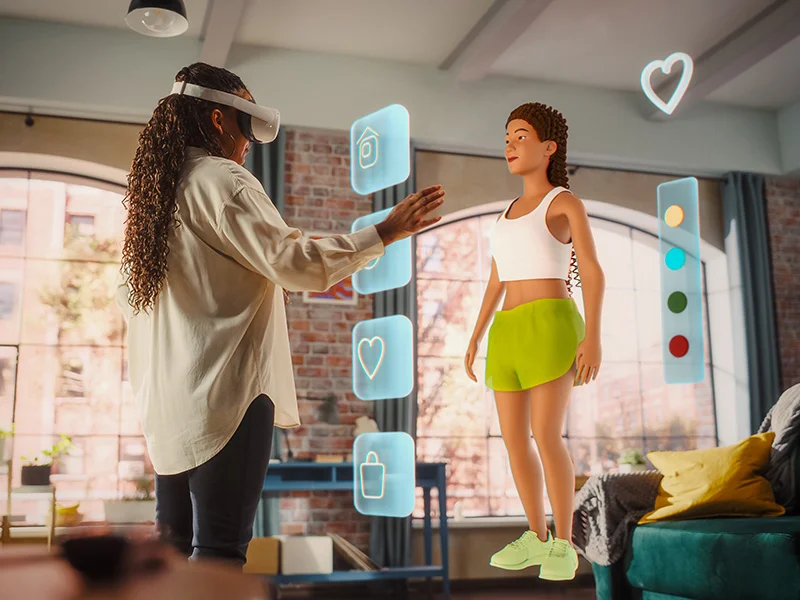
AI is also transforming how fashion is marketed and merchandised. Virtual try-on technology, powered by AI and augmented reality, allows consumers to see how garments will look on their bodies without stepping into a store. AI-generated models and digital showrooms are reducing the cost and carbon footprint of traditional photo shoots and sessions. Luxury brands like Gucci and Burberry have introduced virtual try-ons for shoes and accessories, utilizing augmented reality to allow customers to virtually “wear” products via their smartphones or desktop browsers, which is a major shift in reducing returned items. Furthermore, with the application of Emotion AI, marketers and retailers gain insights into the emotions and feelings of the consumers, thus becoming able to adjust the marketing of products accordingly.
Rostomyan et al. (2024) state the following advantages of applying AI in the marketing activities of various brands:
Smart cameras enable retail stores to record customer reactions to products, prices, services, etc. in real time and, thus, the companies can be better positioned to improve their brand range, marketing, and pricing accordingly.
Cameras integrated in computers, machines, software, smartphones, and / or TV screens can make it possible for brands to leverage Emotion AI to test reactions to certain content, which will help them adapt their online presence, branding, and marketing accordingly.
Emotion AI cameras can retrieve emotions of consumers and help marketers develop their marketing plan and strategy accordingly, taking into account emotions and feelings, preferences and desires, expectations and intentions.
With the help of Emotion AI, product marketing will exactly match the demands and requirements of consumers (see more in Rostomyan et al., 2024).
Meanwhile, AI tools now optimize pricing, promotions, marketing, and product placement in real time, adjusting strategies based on demand fluctuations, and create more enjoyable and efficient marketer–customer experiences.

Fashion AI in Hollywood
While AI has already revolutionized areas like design, trend forecasting, and retail, its role in red-carpet events like the Metropolitan Museum of Art Costume Institute Gala reflects the intersection of fashion, technology, and celebrity culture. From creating virtual fashion to providing real-time analysis of trends, AI is playing an increasingly central role in shaping what’s next in high fashion.
The Met Gala, known for its bold, often experimental fashion choices, has seen a rise in AI-assisted design over recent years. Virtual fashion, clothing created digitally through AI and 3D modeling, has made an appearance on the red carpet, allowing designers to push creative boundaries without the limitations of traditional fabrics.
For example, Balenciaga and H&M have both explored digital fashion by designing exclusive AI-generated pieces for digital avatars or for high-tech, holographic displays. Their approach merges high fashion with digital reality, showcasing outfits with impossible features like color-shifting garments, alongside a focus on creating complete virtual universes. At the Met Gala, these virtual outfits make their mark as an alternative to traditional physical designs, with celebrities wearing outfits that blend traditional haute couture with cutting-edge AI and virtual elements, especially as digital fashion and AI technology become more mainstream in fashion. AI-generated photos showing Rihanna in a “Garden of Time” outfit matching the theme of the event circulated on social media, fooling millions of fans in 2024 while the artist had canceled her appearance at the event because of flu (Associated Press, 2024).
In fact, the Met Gala is one of the most prestigious and exclusive events in the fashion calendar. It serves as the grand opening for the annual Costume Institute Exhibition, a significant fashion exhibition that takes place at the Met in New York City. It is renowned for its theme-based approach to fashion, where designers must create custom outfits to align with the annual theme. As for AI, it is being used to analyze past events, dissect the cultural and historical context of each theme, and inspire designers with creative concepts that may not have been explored otherwise. This gives the designers the chance to create magic by means of AI and to stand out from the crowd, which is one of the main goals of the Gala.
Synthetic Media and Fashion AI
There is currently a modern trend of creating images and photos by means of generative AI. Here, emotions sometimes are also apparent and, by enhancing the algorithm’s affective capabilities, such as emotion perception, emotion recognition, emotion regulation, emotion expression, and emotional feedback through Emotion AI (Rostomyan, 2024), the attributes of user-platform relationships undergo qualitative changes within the affective dimension, making it easier for humans to cooperate and communicate with technologies. Consequently, the model of human-computer interaction (HCI) evolves toward a trend of humanization, as articulated by Levinson (2017). To some extent, this not only realizes the technical possibility of platform personification and humanization of content, but also addresses modern individuals’ emotional needs within the cyborg space, the metaverse, and the synthetic media, where emotions can also be accurately imparted, overtly expressed, and depicted in the media even to the extent of manipulating the targeted audience (especially on the emotional level). Synthetic media refers to digital content—including images, video, audio, and text—that is partially or fully generated, manipulated, or altered by AI and machine learning. Often created via prompts, this technology enables the automated production of realistic, non-human-recorded content like deepfakes, virtual avatars, and AI-generated art. Yet, this raises the issue of data privacy and protection, as well as certain ethical issues and concerns that have to be regulated by law (see more in Rostomyan, 2026).
The EU AI Act
Since the field of artificial intelligence is immense and sometimes seemingly uncontrollable, the European Union has elaborated and accepted the EU AI Act, which is meant to introduce comprehensive regulations into the field of AI usage by organizations and to regulate the use of AI by businesses and institutions.
Actually, the EU AI Act introduces a landmark regulatory framework for the use of artificial intelligence that impacts the entire European Union, which is mainly aimed at fostering ethical and just AI practices in the industry and ensuring safe public policies, which entails safe usage of AI technologies across the EU. This legislation is truly a very decisive and important step towards setting global standards for AI use, focusing on its responsible and safe usage, which emphasizes the importance of this great milestone towards innovative businesses, which nevertheless may still entail many challenges to be addressed by the Act (see more in Rostomyan, 2024).
This brings us to the conclusion that, since artificial intelligence brings challenges with it, too, we need a regulating system, and the EU AI Act is meant for that very purpose. Thus, with the assistance of the regulations of the EU AI Act, designers will be protected by law in their AI applications and experiences in the fashion industry as well.
Positive and Negative Features of Fashion AI
Artificial intelligence is rapidly transforming the fashion industry by enhancing efficiency, creativity, marketing, and decision-making across the value chain. On the positive side, AI enables more accurate trend forecasting, personalized customer experiences, streamlined supply chains, and reduced waste through improved demand planning. These capabilities allow fashion brands to respond faster to market changes, lower operational costs, and advance sustainability goals. However, on the other hand, the integration of AI also presents notable challenges and drawbacks, too. In fact, overreliance on data-driven design risks homogenizing creativity, while algorithmic bias may reinforce narrow beauty standards or exclude certain consumer groups. Additionally, concerns around data privacy, ethics, workforce displacement, and the high cost of AI implementation pose strategic and ethical questions for fashion businesses. Ultimately, the impact of AI on fashion depends on how effectively brands balance technological innovation with human creativity, inclusivity, and responsible governance. This suggests that the application of AI in the fashion industry should be done with maturity, intention, authenticity, and ethically, so as to benefit from its vast possibilities and limit or exclude any harmful effect on society.
The Business Outlook: Augmentation, Not Replacement
Despite fears of automation replacing creative roles, the fashion industry’s experience with AI suggests a different reality. AI excels at pattern recognition, prediction, analysis, and optimization, but human judgment remains essential for brand vision, cultural relevance, and emotional resonance. The most successful fashion companies are those treating AI as a strategic partner rather than either a novelty or a threat. This means that designers should approach AI as a partner and use it intentionally and ethically in the creation of their products. It follows that there should be human-machine cooperation in reaching net-zero policies so as not to harm society (Rostomyan, 2024b) and to ensure a positive outcome, making the most of both human creativity and AI agility.
Conclusion
As we have seen, Fashion AI brings with it great possibilities ranging from predicting fabrics, colors, trends, and shapes, as well as assisting designers in their activities. Furthermore, with the application of AI, marketers and retailers gain the greatest chance of receiving insights into the expectations, preferences, and needs of their customers. Nonetheless, as with everything in this life and the nature of AI itself, fashion AI has drawbacks, too. First and foremost, there is the aspect of data privacy and ethics. Such damage-preventing measures as the EU AI Act can assist designers and marketers to use it intentionally, reasonably, and ethically. So, if designers learn to benefit from the immense advantages of fashion AI with no consequent harm, they will make the most of it in creating fascinating designs and fashionable virtual experiences.
Looking Ahead
As AI tools become more accessible, even smaller and emerging brands will be able to compete with global players on insight, speed, creativity, and personalization. In a business defined by constant reinvention, AI could prove to be fashion’s ideal partner and assist in inventing and maintaining most enduring trends, quietly reshaping the industry in every possible way.
It really seems that, in the near future, we will have a true human-machine co-existence, so, if we start approaching AI as a strategic partner and apply it effectively in our day-to-day activities, we can create a productively efficient future.