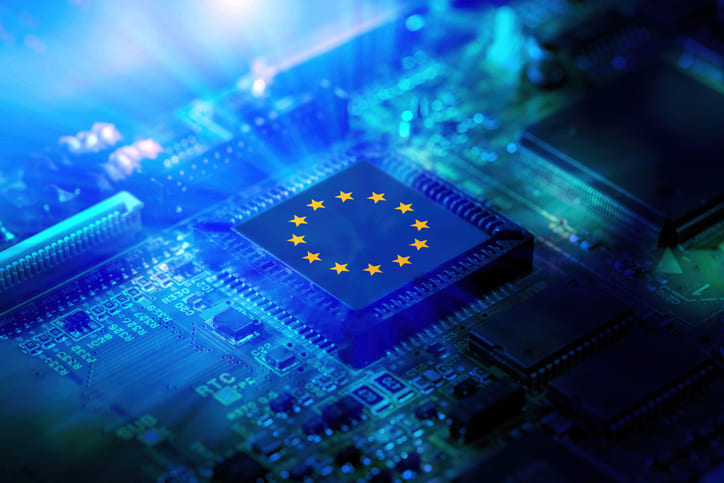
Europe’s tech sovereignty ambitions are promising, but stronger action on infrastructure, energy, and delivery timelines is needed to secure digital independence.
Last week (June 3, 2026), the European Commission unveiled its EU Tech Sovereignty Package, a compendium of measures designed to reinforce Europe’s strategic autonomy in the fast-moving tech economy. As a significant player in the rapidly growing Nordic data centre economy atNorth broadly welcomes the package and many of its provisions.
atNorth is heavily invested in ensuring that Europe is at the forefront of cloud, AI and digital transformation. We, and our peers, have already done much to deliver sustainable capacity that supports both businesses and individuals as they incorporate digital into their lives. We do not believe in protectionist measures and instead want a competitive and fair market that provides customers with real choice. The Package does a good job in setting the foundations for this.
Our fear is that the Commission’s vision is strong on long-term promises, but weaker on near term delivery. For example, the Chips 2 Act will be important in creating the foundations of secure and autonomous supply of the essential silicon components of our data centres. But the timescales are simultaneously highly ambitious and too long. We need to plan now for the next generation of AI data centres to come online in the next 5 years and cannot wait for European chips to be ready in 2033. Yet the timescale to design, build and operate European chip ‘fabs’ by that date seems overly ambitious.
The Cloud and AI Development Act (CADA) also part of the package, does outline a strong definition of sovereignty in its 4-level framework. However, as a proudly European business, we are concerned that some European players backed by overseas private equity or share ownership may find it unnecessarily hard to achieve the highest levels of sovereignty designation. We urge reconsideration and better definition of ownership versus control as the Act is debated. We are committed to providing our customers with secure, resilient and efficient facilities that give them the assurance of control over data and applications under European Law, to deliver truly sovereign services.
More support on short term bottlenecks to building Europe’s sovereign data centre capacity, such as simplified planning and compliance, and enhanced access to energy are high priority. We are encouraged that the Strategic Roadmap for Digitalisation and AI in the Energy Sector is included in this package. Although not legislation, it recognises that “A sustainable digitalised EU energy system leveraging the potential of digital technologies is therefore no longer optional, but essential.” The Roadmap outlines several flagship actions – notably the creation of a model tripartite agreement for grid connection – that will be beneficial as we continue to explore our role as contributors to the flexibility of the energy grid. The clarification of timescales for implementation of Data Centre rating, and ultimately minimum performance standards is also helpful as we plan an ever more sustainable future.
atNorth is proud to work with European tech champions including Nokia, Opera and 6G AI and we are keen to leverage our expertise to help create European choice for all of our customers. The EU Tech Sovereignty Package is a good start, but we need to go faster and further.
About this Series
This column is produced by atNorth, a leading Nordic data center operator. Through expert analysis and industry insight, atNorth examines the political, regulatory, economic, and technological forces shaping Europe’s digital infrastructure landscape, helping business and technology leaders navigate an increasingly complex and rapidly evolving market.