

By Dr. Anat Garti and Dr. Simon L. Dolan
In a world wired for stress, success takes more than strategy. This article shows how to build real resilience and combat burnout in high-demand workplaces so teams don’t just survive; they lead and thrive.
Introduction
In a world that is ever-changing and fraught with unpredictability, the strength of an organization lies not just in its resources but in its spirit. “Cultivating Endurance: Empowering Your Organization for a Resilient Future” speaks to the heart of what resilience truly means—an unwavering commitment to rise stronger, to adapt, and to flourish despite the challenges that lie ahead.
This title encapsulates the essence of transformation, emphasizing the nurturing process of building resilience as a continuous journey rather than a one-time initiative. It resonates on an emotional level, inspiring leaders and teams alike to embrace the challenges of today as stepping stones toward a more promising tomorrow. In this article, we embark on a path that not only fortifies the foundations of an organization but also ignites a profound sense of purpose and connection within it.
Resilience stands as a vital pillar in ensuring the stability and effectiveness of organizations, acting as a beacon of hope in turbulent times. Across various industries, professionals grapple with the weight of high-pressure situations, the emotional turmoil that often accompanies demanding roles, and the relentless flux of ever-changing work environments. These stressors, if left unaddressed, can spiral into the dark abyss of burnout, robbing individuals of their passion and diminishing their sense of purpose. The result? A profound sense of discontent that permeates job satisfaction and stifles overall performance, leaving once vibrant and engaged employees feeling drained and disconnected. In recognizing and fostering resilience, we not only protect the health and well-being of our workforce but also empower organizations to thrive amidst uncertainty, allowing their spirits to soar even higher.
In recognizing and fostering resilience, we not only protect the health and well-being of our workforce but also empower organizations to thrive amidst uncertainty, allowing their spirits to soar even higher.
In 2019, the World Health Organization announced its decision to include burnout for the first time in history in the official International Classification of Diseases. According to the World Health Organization’s Disease Index (ICD-11), Occupational Burnout is a syndrome resulting from persistent, unsuccessfully managed work stress. Consequently, developing resilience within organizations is essential to ensure the well-being of employees and the sustainability of operations. This article unveils a transformative process for cultivating resilience that can benefit any organization, illustrating its powerful application within a healthcare company. Through this journey, we reveal not just a framework but a beacon of hope for organizations by sharing the experiences of a healthcare team embracing resilience, and we aim to inspire others to embark on their own paths of growth and fortitude, ensuring that together, we can weather any storm.
Resilience is the human capacity to cope with, overcome, grow stronger, and even change in response to experiences in times of adversity.1 This concept can be applied to individuals, families, organizations, and communities. Resilience encompasses the ability to avoid dangers and the ability to cope with them when they occur. The article explains stress mechanisms, burnout symptoms, and its impact. Then, we introduce the Stress Regulation Model. We will also introduce the consulting process for developing organizational resilience using the Stress Map and the Value of Values tools.
Understanding Stress and Burnout
Stress is a natural response to external demands and pressures, activating physiological and psychological mechanisms designed to help individuals cope with challenges. According to the Transactional Model of Stress,2 it arises when individuals perceive a situation as threatening and believe they lack the resources to manage it. This model highlights the role of perception in determining whether stress is experienced as a manageable challenge or an overwhelming burden. While short-term stress can enhance focus and performance, chronic stress that is not effectively managed can lead to burnout—a state of emotional, physical, and mental exhaustion.3
In the classical sense, and based on the research of Maslach and colleagues, burnout includes the following three dimensions.4
- Emotional Exhaustion – A state of deep fatigue and depletion of emotional resources.
- Depersonalization – Developing negative, detached, or cynical attitudes toward work and colleagues.
- Reduced Personal Accomplishment – A diminished sense of competence and achievement in one’s professional role.
Across numerous industries, high-demand organizations are grappling with a pervasive crisis: the relentless grip of stress and burnout. In a world where the pressure mounts from demanding workloads, tight deadlines, and soaring expectations, employees often find themselves caught in an unyielding cycle of exhaustion. This isn’t just a professional issue; it’s a deeply human one. Each day, talented individuals strive to meet the demands placed upon them, yet they are left feeling drained and overwhelmed, struggling to nurture their well-being while still delivering exceptional results. Imagine the toll this takes—not just on performance metrics but on the very essence of what it means to be a thriving workforce. When stress remains unaddressed, the vibrant spirit of engagement begins to wane. Performance plateaus and the high turnover rates that ensue not only disrupt team cohesion but also drain the organization of its most important asset: its people.
But there is hope. By embracing structured resilience-building initiatives, organizations can transform this narrative. We have the power to cultivate an environment where employees not only survive but flourish under pressure. Picture a workplace where individuals feel supported, where their well-being is prioritized, and where they are empowered to tackle challenges with renewed vigor.
Resilience Development Strategies
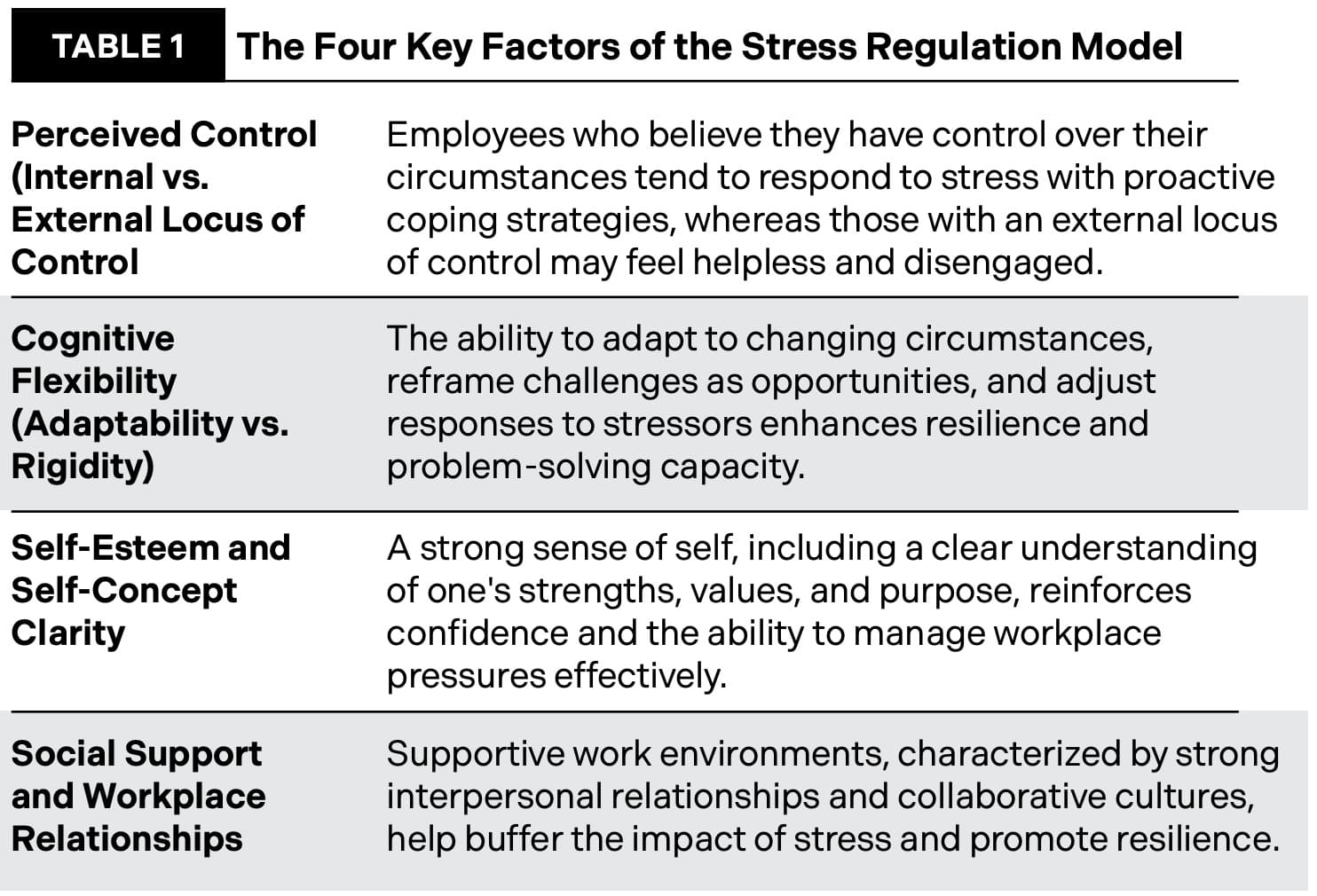
Building resilience within organizations is a proactive approach to mitigating the negative effects of stress and burnout. The Stress Regulation Model provides a structured framework for understanding and fostering resilience.5 This model is based on four key regulatory factors that influence how individuals perceive and manage stress within the workplace.
The Sequence and Methodology for Implementing the Stress Regulation Model
To implement the Stress Regulation Model effectively, we must adopt a comprehensive, organization-wide strategy that seamlessly weaves resilience-building practices into the fabric of our workplaces. This isn’t just a matter of following best practices; it’s about nurturing a culture that places the well-being of every individual at its core. When organizations prioritize stress management, they empower their employees with the vital tools needed to navigate and regulate their stress levels. Imagine a workplace where every team member feels supported, understood, and equipped to face the daily challenges of their roles. This is not merely a dream—it’s a vision we can bring to life. By fostering an environment that values mental well-being and proactive stress management, we not only enhance individual resilience but also strengthen our entire organization. It also means creating a space where every employee can thrive, not just survive, and where the journey of managing stress becomes a shared commitment to collective well-being.
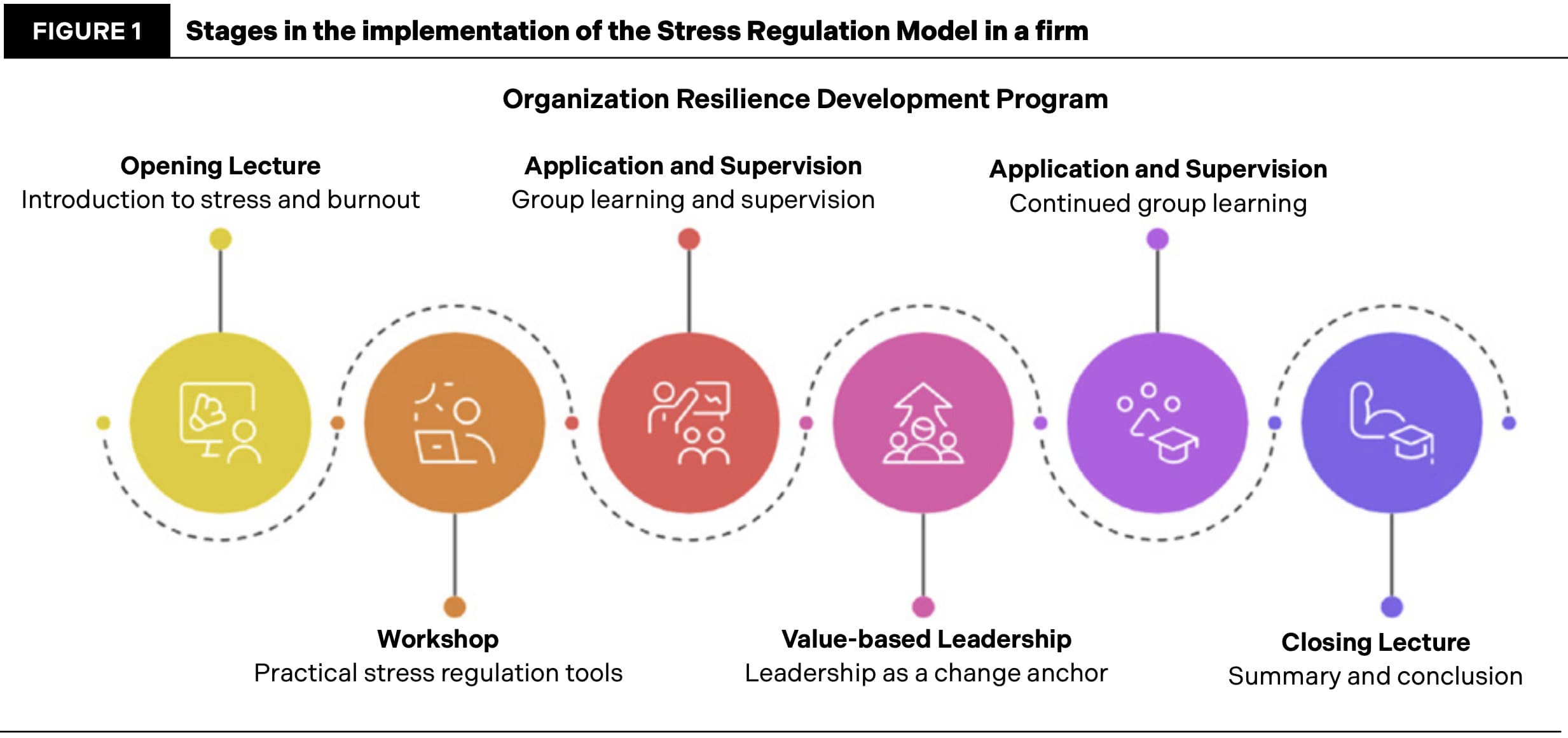
The implementation of the Stress Regulation Model follows a structured six-stage process designed to equip managers with the necessary tools to regulate stress and develop a resilient organizational culture (see Figure 1). Each stage builds upon the previous one, ensuring a gradual and comprehensive integration of stress management strategies.
Stage 1: Opening Lecture – Understanding Stress and Burnout
The process begins with an introductory lecture aimed at providing managers with an initial understanding of the stress and burnout mechanisms. This session offers an overview of how stress affects individuals and organizations and highlights the critical role of resilience in mitigating its negative impacts. Managers are also introduced to the intervention process that will guide them through the stages of developing organizational resilience.
Stage 2: Workshop – Practical Application of Stress Regulation Tools
In the second stage, managers participate in a hands-on workshop that deepens their knowledge of stress and burnout mechanisms. In the workshop, we use biofeedback training, where managers use a biofeedback tool to observe and understand the physiological responses that occur during stressful situations. By gaining real-time insights into their stress reactions, managers can better grasp the importance of stress regulation.
A key component of this workshop is the “Stress Map” tool, which helps participants identify their stress triggers and assess their regulation patterns. Through guided exercises, managers learn how to apply stress regulators, which are essential techniques for managing workplace stress effectively. This stage is interactive and experiential, ensuring that managers not only learn theoretical concepts but also practice their respective applications in real-time scenarios.
Stage 3: Application and Supervision in Learning Groups
At this stage, we form learning groups where the managers implement the stress regulation tools introduced in the earlier stage. These groups meet under the guidance of trained supervisors to ensure consistent practice and reinforcement of resilience strategies.
Through structured exercises and real-world case studies, managers apply the “Stress Map” tool in their daily work environment. They share their experiences, challenges, and successes with their peers, fostering a collaborative learning process. The emphasis is on practicing stress regulation in real-time situations, allowing managers to internalize these skills as part of their leadership approach.
Supervision is a critical element of this stage, providing managers with ongoing feedback, adjustments, and reinforcement of best practices. As they gain confidence in using stress regulation strategies, they develop a more adaptive and resilient leadership style, preparing them for the next phase of the implementation process.

Stage 4: Value-based Leadership as a Tool for Anchoring the Change
In the fourth stage, we return to a workshop framework in which managers learn about value-based leadership as a tool for anchoring the change they have implemented. Through the “value of values” tool, managers choose the set of values that will allow them to anchor the change and embed it as part of the unit’s culture.
We use Dolan’s 3Es Tri-axial model to ensure systemic anchoring of the change.6 This model describes how a balanced set of values needs to include three groups of values:
- The economic-pragmatic group deals with values that direct behavior in an effective way to achieve goals.
- The ethical-social group deals with relationship values like thoughtfulness, influence, loyalty, and tolerance.
- The emotional-developmental group focuses on values that encourage a life filled with interest and passion.
By translating these values into practical action, managers build the psychological contract that will enable the assimilation of the value system and anchor the change in the unit’s culture.7
Stage 5: Application and Supervision in Learning Groups
In the fifth stage, the managers are again divided into small learning groups, as was done in stage three, to implement the culture change designed in the previous stage. These groups meet under the guidance of trained supervisors, providing managers with ongoing feedback, adjustments, and reinforcement of best practices. In the groups, they share their experiences, challenges, and successes with their peers, fostering a collaborative learning process.
Stage 6: Closing Lecture
At the end of the process, a summary lecture is given, framing the entire process and integrating the change processes that the managers have made.
Conclusion and Postscript
Through workshops, learning groups, and value-based leadership, the process not only enhances individual coping strategies but also instills lasting cultural changes that promote well-being and sustained high performance across teams.
The paper shows how a structured resilience development process can effectively address stress and burnout in high-demand organizational settings. By leveraging tools such as the Stress Regulation Model and the “Stress Map,” organizations can create a culture that fosters resilience, empowering managers to effectively manage stress and enhance their leadership capabilities. Through workshops, learning groups, and value-based leadership, the process not only enhances individual coping strategies but also instills lasting cultural changes that promote well-being and sustained high performance across teams.
The process that was presented was recently implemented in “Maccabi Healthcare Services”, one of the four HMOs operating in Israel, by consultants from the Israel Values Center and Effect-Tiv Empowering Leaders. At the end of the process, 86% of participants, namely people in managing positions, responded that they frequently use the tools acquired in the process. So, a cascade effect in the organization was observed. The survey conducted before and after the implementation showed an increase in the managers’ feeling that they have room for choice and discretion and a significant increase in the feeling that they have the resources and tools to manage the challenges. Here are several quotes from participants:
“The process turns the issue of resilience into an active action in practice.”
“An excellent combination of theoretical knowledge and practical tools for immediate implementation.”
“Working in small groups added great value and allowed for a more personal and in-depth work process and allowed for an open dialogue in which everyone had a place and the ability to express themselves safely.”
We argue that the triumphant implementation of this model within a healthcare organization in Israel stands as a powerful testament to the profound impact that resilience development can have on employee engagement, satisfaction, and the overall health of an organization. Witnessing the transformative effects on the healthcare staff stirred something deep within, the realization that this approach could be a beacon of hope beyond the walls of healthcare organizations.
Thereafter, a new collaboration was initiated with the R&D Unit of a Clinically Based Teacher Education in “Mofet Institute” in Israel. Fueled by a shared commitment to combat the alarming levels of burnout faced by their dedicated teaching teams, a decision was made to develop a training program for mentors who support student teachers. The goal is to equip these mentors with the ability to serve as “stress-regulating guides” by effectively applying the four stress regulation factors. This initiative is the first step in enhancing the resilience of future educators, ensuring they can navigate the challenges of the teaching profession with greater confidence and well-being. This is more than just a project; it is an emotional journey toward healing, empowerment, and revitalization in our schools. It is our conviction that together, we are crafting an innovative solution that honors the passion, resilience, and unwavering spirit of those who shape the minds of our future.
About the Authors
 Dr. Anat Garti is a psychologist, certified family and couple therapist, senior coach (MCIL), organizational consultant, group instructor and lecturer in various academic institutes. She is a psychotherapist and supervisor with wide experience working with adults, adolescents and children in individuals, couples and family contexts and settings. She also consults for organizations in the field of stress and burnout, implementing ISO 45003 – Psychological Health and Safety at Work, with a focus on the field of work-family conflict. Garti is the chief psychologist of the Israel Values Center (www.values-center.co.il) and the author of “The Parent as a Value Anchor”(Garti & Dolan, 2016) and “Work Family Triangle Synchronization” (Garti & Tzafrir, 2022).