OpenAI has released GPT-5, its latest artificial intelligence model, claiming it delivers expert-level performance in areas such as coding, reasoning, and writing. CEO Sam Altman described the model as “smarter, faster, and more useful” than its predecessors and said it marks a turning point in the evolution of AI.
“I think having something like GPT-5 would be pretty much unimaginable at any previous time in human history,” Altman said ahead of Thursday’s launch.
The model is designed to generate more accurate answers, reduce hallucinations—instances where AI fabricates information—and respond in a way that feels more human. OpenAI says GPT-5 is particularly useful for programmers, offering the ability to build entire software systems with clearer logic and better reasoning.
“GPT-3 sort of felt to me like talking to a high school student… 4 felt like you’re kind of talking to a college student,” Altman said. “GPT-5 is the first time that it really feels like talking to an expert in any topic, like a PhD-level expert.”
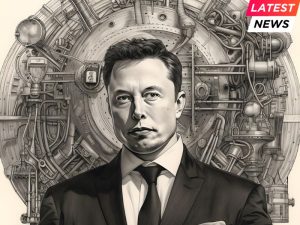
The release comes as tech companies compete for dominance in the AI space. Elon Musk recently promoted his own chatbot, Grok, as being “better than PhD level in everything.” Altman’s remarks are seen as a direct challenge to that claim.
Despite OpenAI’s ambitious rollout, some scholars warn against overhyping the technology. Prof. Carissa Véliz of the Institute for Ethics in AI said that while these systems appear impressive, they still fall short of true human reasoning and remain difficult to monetize. “There is a fear that we need to keep up the hype, or else the bubble might burst, and so it might be that it’s mostly marketing,” she said.
Gaia Marcus, director of the Ada Lovelace Institute, called for stronger regulation, warning that current policies cannot keep pace with rapidly advancing AI systems. “As these models become more capable, the need for comprehensive regulation becomes even more urgent,” she said.
OpenAI’s new model also raises concerns about intellectual property and content rights. Grant Farhall, chief product officer at Getty Images, urged the industry to ensure creators are properly credited and compensated. “Authenticity matters – but it doesn’t come for free,” he said.
Tensions in the AI industry flared recently when Anthropic blocked OpenAI’s access to its API, claiming misuse of its tools during GPT-5’s development. OpenAI defended its practices, stating that comparing AI systems is standard across the sector. “While we respect Anthropic’s decision to cut off our API access, it’s disappointing considering our API remains available to them,” a spokesperson said.
GPT-5 will be available to all users starting Thursday. The company also announced updates to ChatGPT’s behavior, aiming to create more thoughtful interactions with users. In a blog post, OpenAI said its chatbot will now avoid offering definitive answers on sensitive personal matters, such as breakups, and instead guide users through pros and cons.
In May, OpenAI pulled back a previous update after users complained it made ChatGPT overly flattering. Altman acknowledged the risks of AI becoming too emotionally responsive and warned of parasocial relationships forming between people and chatbots.
“This is not all going to be good, there will still be problems,” he said. “People will develop these somewhat problematic, or maybe very problematic, parasocial relationships. Society will have to figure out new guardrails. But the upsides will be tremendous.”
The company has also faced criticism from actress Scarlett Johansson, who accused OpenAI of using a voice similar to hers in a past chatbot release. She said she was “shocked” and “angered” by the similarity.
As GPT-5 rolls out, users and experts alike will be watching closely to see if the model truly delivers on OpenAI’s promises—or if the reality falls short of its marketing.
Related Readings: