

By Tom Preston and Luciana Nuñez
An effective team leader is at the same time the team’s coach. But how should they approach that role? Tom Preston and Luciana Nuñez offer some valuable pointers, not the least of which is “The Performance Equation”.
Much of leading is around helping teams to perform at their best. In the past, that might have been through sharing experience or deciding on a structure and roles and responsibilities. However, with so much change in the air all around us, team leadership requires far more agility and adaptability than it did in the past. In other words, it requires the leader of a team to also be the team’s coach.
We know that when trust is high, we look forward to time spent together, to solving problems and celebrating achievements together.
We all know the thrill of working in a team that is creative, supportive, and helps each other to perform. We know that when trust is high, we look forward to time spent together, to solving problems and celebrating achievements together. Success not only breeds success but it is also fun—and both of these can be strong talent magnets that can make high-performing teams sustainable. Yet we also know the sense of dread when none of those things are true and teams are fraught with politics, are low in trust, and the time spent together feels like walking on eggshells or stepping through a minefield. It is the difference between these two states that makes the leadership and coaching of teams so critical.
Common Traits of High-Performing Teams
We have coached a huge number of teams over the past 20 years. It is clear to us that, regardless of what the team is responsible for or the sector they operate in, there are commonalities to all high-performing teams. As a team’s coach, understanding which key characteristics to coach the team on is the first step, so identifying and understanding these similarities is a good place to start.
We have observed these 10 commonalities among high-performing teams:
- They share a clear vision of collective success
- They respect and value difference, and they act on it
- They define and document shared values, attitudes, and behaviors
- They trust each other and show positive intent
- They regularly have courageous conversations to make the best decisions
- They give each other helpful feedback
- They are thinking partners, actively listening and comfortable asking for help
- They hold each other accountable
- They role-model behaviors that we expect people to live by
- They have fun together!
Coaching Your Team

Thinking about your team or the teams that you lead, how many of these points have you taken time to discuss and to codify? Can you fill in the team’s definition of collective success and your attitudes and behaviors? If you talked about trust levels in your team, consistency of message to those around your team, and the level of clarity they transmit, what would they say and how could these be improved? How strongly would they rate their ability to have courageous conversations and to hold each other to account? What could be done to improve these areas of high performance?
Laying Down the Foundations
We recommend that you take time, at least one and a half days, with your team to discuss these topics. It is only by doing so that the whole team will get behind the importance of these “soft” topics that are key to their ability to deliver on the hard outcomes that will be required of them.
In the process, you will be able to gauge how strong the team’s foundations are and whether or not you need to do additional work on making sure that the team environment is actually psychologically safe, inclusive, and embracing of diversity or if, in fact, you need to collectively work on these topics in the same way.
We recommend leveraging the following Performance Equation with teams by means of introduction and mind-setting. The team can understand the importance of spending valuable time to get these aspects of high-performing teams right and the value that this work can bring.
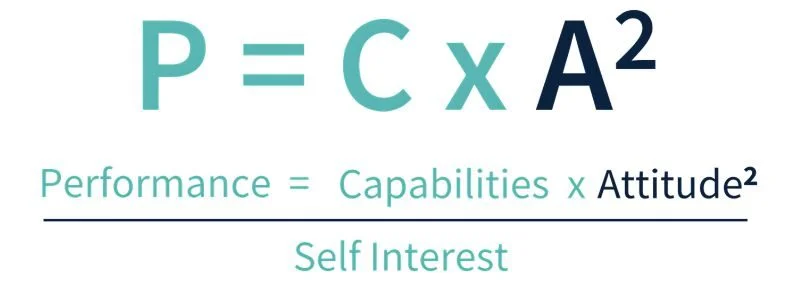
When defining Performance, it’s all about aligning on what success looks like for the team and the business. From “doubling market share” to “being recognized as industry trailblazers,” make sure that these criteria are motivating yet within the realm of control of your team.
As you discuss your Capabilities, the goal is to clearly pinpoint the three to five key capabilities that will help you achieve your definition of success: from faster time to market in innovation, to data-driven decisions, help your team align on the critical factors that will truly move the needle of performance.
When it comes to Attitude2, it’s all about how you show up as leaders, individually and collectively. Attitude is squared in the equation because it is in fact a limitless driver of performance, and is fully within your control. How we show up is a choice we can make every day, many times over. Defining key behaviors and mindset is the language you are looking for here. From “empowering others to act and decide fast” to “resilience in the face of setbacks,” make sure that you prioritize the characteristics that your team can be a role model of, to drive positive impact in the organization at large.
As the leader and coach, your job is to set up the team to be open to discuss what is and is not yet working and then make changes that will be helpful to everyone. Then you can help them to do the work needed to identify what those changes are and how they can be implemented. A note of caution here. Be careful not to slip into the overuse of your leadership mantle here and be tempted to “tell them” what needs to be done differently. You are the team’s coach primarily at this time and they will never fully own what they have not co-created.
Whenever possible, it is always better to do team coaching off-site in an environment where the team is not anchored in behaving in a certain way or where they can get distracted with computers and the normal workings of an office that they are used to. It also signifies that the work the team is going to do together is important.
We recommend that team coaching happens every three to four months to review progress and make any changes that are critical, although beware not to change things just for the sake of it. Effectively, coaching your team allows you to set the culture of the team and to maintain it in a healthy and transparent manner.