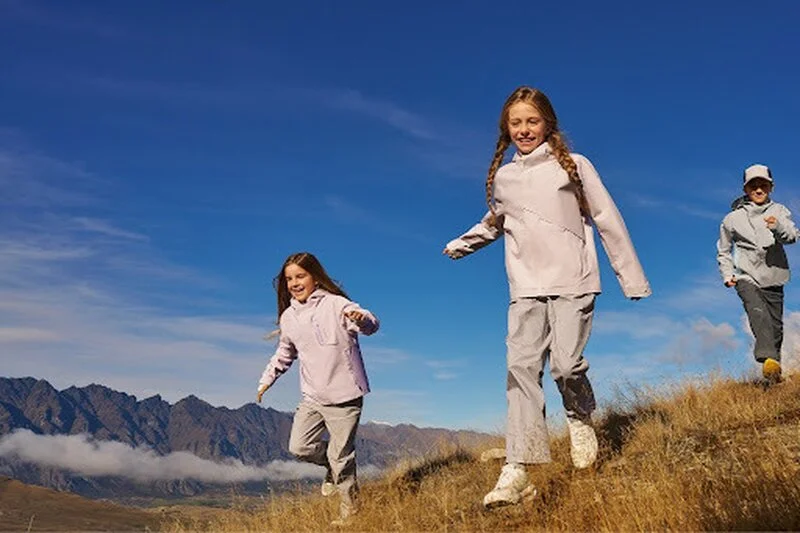
Parents are paying closer attention to fit, fabric, and repeat wear in children’s activewear than they used to. The shift is not dramatic or sudden. It is the kind of change that happens quietly, across a season of watching a better-made piece stay useful through repeated wear, or noticing that a child seems more comfortable after switching to lighter technical tops for active days. These are small observations. They accumulate into different purchasing habits.
Children’s clothing is often bought with replacement in mind. Kids grow, clothes wear out, and many families naturally think about volume and price before long-term wear. Some parents now apply the same expectations to children’s clothing that they already apply to their own activewear, especially when they have direct experience with fabrics that manage heat, stretch, and repeated washing more comfortably.
The Parent Whose Expectations Have Shifted
The parent driving more considered children’s activewear purchases is not a new type of consumer. They are a parent whose own relationship with clothing has changed, and who is extending that change to what they buy for their children. A parent who knows what genuine moisture management feels like in their own running kit is a parent who can tell immediately when a children’s t-shirt is not doing the same job. They are not reading fabric specifications. They are recognizing, from experience, the difference between a garment that performs and one that looks like it should.
In daily use, the difference often shows up in functional ways rather than purely aesthetic ones. A child stops tugging at a collar during PE. A pair of leggings still feels dependable after laundry. A jacket returns to the weekly routine without becoming another decision point. These are not sweeping claims; they are small observations that help parents decide what earns space in the drawer.
Why Construction Quality Is Visible Before the First Wash
The difference between well-made children’s activewear and the alternative is not always visible on the hanger. It becomes visible on the child, in the first hour of real use. A seam placed incorrectly creates friction that an active child notices within minutes. A fabric that absorbs moisture rather than moving it away from the skin becomes uncomfortable before a playground session is half over. A waistband that sits correctly at rest but digs in during movement is a waistband the child spends the morning adjusting.
moodytiger designs its children’s activewear around movement patterns and comfort requirements rather than simply scaling down adult performance ideas. The named fabric lines in the range, including Brizi®, Blockmax® Lite, and Air Supply, each have a specific functional brief, from cooling comfort and UPF-rated coverage to airflow and quick-dry wear. The parent who puts a child in one of these pieces for a full active day may notice the difference in practical terms: the child seems more comfortable, the shirt feels less damp after activity, and the garment still feels dependable after laundry. A parent trying to choose between a cooling top, a jacket, or leggings can use moodytiger.com to check current fabric and fit details before matching each piece to the child’s actual week.
Design That Justifies the Investment
Technical performance alone does not explain why a parent chooses a more considered piece of children’s activewear. Design plays an equal role, and the design challenge in this category is specific. Children’s clothing that works only in sport contexts has a limited wardrobe role. Clothing that looks like adult activewear scaled down tends to look wrong on children who are not miniature adults.
Some brands in this space are developing a design language more clearly suited to children: pieces that are functional across activity contexts, visually coherent across a season, and constructed with details that signal quality without requiring the parent to read a label first. The moodytiger Lisa Sport Jacket is a useful example. The jacquard construction, princess waistline tailoring, and thumb-hole cuffs feel considered without taking the piece away from its functional brief: moisture-wicking performance and a structured fit that can move with a child. It works for active routines and still looks appropriate away from the field, which is the kind of design standard that can earn a place in a daily wardrobe.
What Repeat Wear Actually Tells a Parent
The clearest signal that a piece of children’s activewear is working is not a review or a recommendation. For parents, that quiet return to the same piece can be a practical quality signal that the garment solved a real comfort problem earlier in the week. It reflects the child’s direct experience of wearing the garment rather than anyone’s assessment of how it should perform.
Parents who find pieces that produce this response may describe the discovery in similar terms, regardless of where they live or what their children do. The piece moves through school days, weekend plans, and laundry without becoming a source of complaints. It does not quickly lose its shape or take on the stiff texture that can make a child reject it. Over time, the purchasing logic shifts. The parent is no longer simply looking for the most pieces at the lowest price; they are looking for pieces that continue to make daily dressing easier.
The Fabric Program Behind the Products
Parents paying closer attention to what their children wear are also paying closer attention to what their children’s clothing is made from and how it was produced. This is not a specialist concern. It is the natural extension of the same scrutiny being applied to fit and performance. A parent who has started asking whether a fabric actually manages heat is a parent who will eventually start asking what went into making it.
moodytiger’s bluesign® system partner status gives parents a clearer sustainability reference point than a general environmental claim. It points to a framework for managing materials and production choices earlier in the textile process, without turning that framework into a durability guarantee. For parents starting to ask more specific questions, that kind of information is more useful than broad language about sustainability.
What This Shift Looks Like in Practice
The parent who has moved toward more considered children’s activewear purchases has not necessarily changed their overall budget. They have changed how they allocate it. Fewer pieces, chosen more carefully, worn more often, and replaced only when needed. The drawer that used to hold too many half-useful items now holds fewer pieces that work more often. The morning routine that used to involve sorting through unreliable options becomes simpler because the best pieces are easier to identify.
This is not a complicated shift. It comes from enough frustrating experiences with clothing that did not work as hoped, followed by enough positive experiences with pieces that did. A parent who finds garments that stay useful through regular wear and washing, and may still be in good enough condition to pass along when outgrown, has a quieter and more deliberate way to shop. That is what the moment in premium children’s activewear is really about.