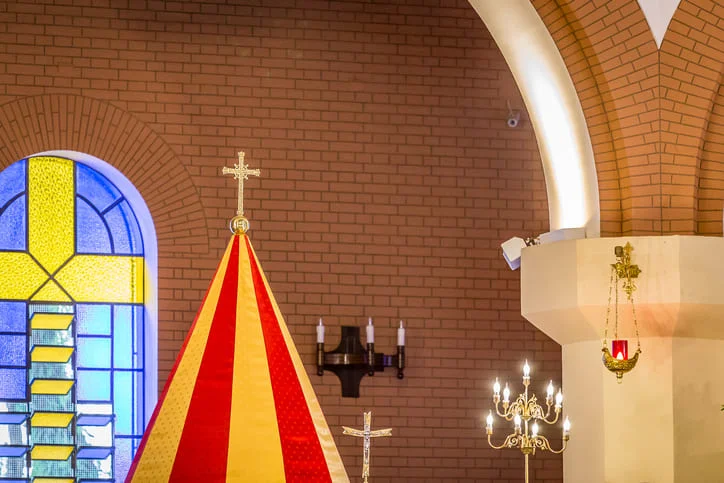
The procession of Corpus Christi is a profound expression of Catholic devotion, a solemn journey through the streets that makes the invisible presence of Christ tangible for all to see. At the heart of this sacred parade stands the monstrance, elevated and exposed, carrying the Blessed Sacrament. Protecting and honoring this divine presence is the processional canopy, also known as a baldachin or pavilion. Far more than a mere functional item, the canopy is imbued with deep theological and symbolic meaning, acting as a tangible testament to the faith of the participants and the reverence they hold for Christ’s Eucharistic presence.
Historical Roots and Liturgical Significance
The use of canopies to honor royalty and divine figures dates back centuries. In a liturgical context, the canopy signifies the regal presence of Christ the King. Historically, it was carried over bishops and other dignitaries as a sign of their authority and sacred status. During the Corpus Christi procession, this tradition is elevated, signifying that the true King is being honored. The canopy serves as a portable sanctuary, a consecrated space moving through the secular world, reminding onlookers of the sacredness of the Eucharist and the Church’s unwavering faith.
Visualizing Reverence: The Canopy as a Focus of Devotion
The visual impact of a well-crafted processional canopy is undeniable. Often made from rich fabrics like velvet or brocade, and adorned with intricate embroidery, tassels, and sacred symbols (such as crosses, IHS monograms, or symbols of the Evangelists), the canopy is a work of art in itself. This visual splendor is not mere decoration; it is intended to draw the eyes and hearts of the faithful towards the Blessed Sacrament. As the canopy moves, it creates a dynamic and moving focal point, guiding the devotion of those walking in the procession and inspiring awe in those who witness it from the sidewalks. The very act of carrying the canopy, with its multiple poles requiring the coordinated effort of several individuals, becomes a collective act of service and veneration.
Enriching the Spiritual Experience for Participants
For those walking within the procession, the canopy offers a unique spiritual enrichment. It creates an atmosphere of sacred enclosure, separating the procession from the ordinary world and intensifying the focus on the Eucharist. The act of bearing the canopy is a physical manifestation of faith, a humble yet powerful way to participate in honoring Christ. The weight of the poles, the coordinated steps, and the shared responsibility foster a sense of community and shared purpose among the bearers. For all participants, the canopy serves as a constant visual reminder of the divine presence at the center of the procession, encouraging prayer, contemplation, and a deeper sense of reverence.
The Canopy as a Public Declaration of Faith
Beyond the internal spiritual experience of the participants, the processional canopy serves as a powerful public declaration of faith. In a world that may be indifferent or even hostile to religious expression, the Corpus Christi procession, with its visible symbols of devotion like the canopy, boldly proclaims the central tenets of Christianity. It is a visual sermon, an invitation to witness and perhaps even to question. The canopy, by its very presence, elevates the procession, making it a significant public event that commands attention and respect, and serves as a vibrant testament to the enduring faith of the Catholic Church.
Craftsmanship and Symbolism in Canopy Design
The design and craftsmanship of a processional canopy are crucial to its impact. Traditionally, these canopies are constructed from durable yet beautiful fabrics, often in colors that align with liturgical seasons, though white and gold are common for Corpus Christi. The embroidery is often rich and symbolic, featuring sacred monograms, liturgical symbols like the Chi Rho or the Agnus Dei (Lamb of God), or images of saints. The poles themselves are often ornate, sometimes topped with finials or crosses. The skill and dedication involved in creating such a piece reflect the profound respect and honor due to the Blessed Sacrament. Each element, from the fabric choice to the intricate stitching, contributes to the overall message of reverence and devotion.
The Collective Effort and Spiritual Unity
Carrying a processional canopy is not a solitary endeavor. It typically requires four or more individuals to hold the poles, working in unison to navigate the route. This shared task fosters a profound sense of spiritual unity among the bearers. They are not merely carrying a piece of fabric; they are collectively creating a sacred space, physically supporting the reverence for Christ’s presence. The coordination required, the shared exertion, and the common goal create bonds of fellowship and enhance the communal aspect of the devotion. This collective effort transforms a simple act into a powerful prayer in motion, reinforcing the idea that faith is a shared journey.
Conclusion: A Beacon of Faith in Motion
The processional canopy, in its humble yet majestic role during the Corpus Christi procession, is far more than an accessory. It is a symbol, a sanctuary, a public declaration, and a catalyst for spiritual enrichment. It honors Christ’s Eucharistic presence, visually unifies the faithful, and stands as a powerful testament to the enduring faith of the Church. Its presence transforms the procession into a moving sanctuary, a vibrant beacon of faith making its way through the world, inviting all to reflect on the sacred mystery at its heart.