By Marcin Pichur
Across the European continent, as well as in the UK and Ireland, governments’ moves towards e-invoicing also represent significant opportunities for business.
As Europe shifts to digital-first trade and pushes manual invoicing out of modern business, the schedule for that transition in the UK and Ireland is now clear.
In the UK, the April 2029 mandate has become the new North Star for finance and IT departments. For Ireland, large corporations will need to comply by late 2028, but more importantly, every Irish business must be capable of receiving structured e-invoices by November of that same year.
The European blueprint
The move to e-invoicing is already well underway across the continent. Italy’s Sistema di Interscambio (SdI) has shown how real-time reporting can slash the VAT gap while forcing a massive leap in business digitisation. Following this success, Poland, France and Spain are launching their own mandates to curb tax evasion and streamline B2B trade.
In today’s volatile economy, seeing exactly what is owed and what is arriving – without waiting for month-end reconciliation – truly is a strategic superpower.
By automating invoice data at the point of entry, these nations have unlocked real-time visibility into cash flow. And, in today’s volatile economy, seeing exactly what is owed and what is arriving – without waiting for month-end reconciliation – truly is a strategic superpower.
Now, for the UK and Ireland, with a blueprint already written by our neighbors, the focus for local leaders shifts from wondering if this works to ensuring their own systems are ready to lead.
Moving beyond ‘digital paper’
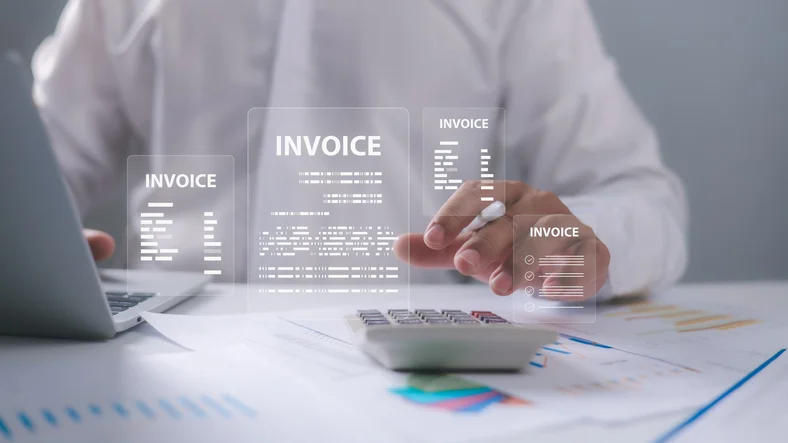
We must be clear. A PDF sent via email is not electronic invoicing; it is simply ‘digital paper’. It still requires Optical Character Recognition (OCR) or manual entry, both of which suffer from high error rates. True e-invoicing involves structured data (typically XML following the EN 16931 standard) that moves directly from the seller’s billing system to the buyer’s ERP.
The challenge here is orchestration. Forward-thinking businesses aren’t just looking for an e-invoicing tool; they are looking for a data orchestration layer. This is precisely where automation, particularly Intelligent Document Processing (IDP), is already proving essential. Modern IDP platforms can extract, validate and match data across POs, GRNs, invoices and statements, creating touchless workflows that eliminate manual checking.
This layer sits between the ERP and the outside world, validating tax data in real-time before an invoice even leaves the building. By leveraging IDP to handle the complexity of data extraction and validation, businesses can eliminate the rejection loops that currently cost UK and Irish businesses thousands of hours in manual reconciliation every year.
Leading the charge
Mid-market firms often struggle with a patchwork of legacy ERPs and manual workarounds. Unlike agile startups or massive global enterprises, these organisations face a heavy ‘integration tax’ when modernising. The danger in waiting for a mandate is ending up with a rushed, box-ticking project that satisfies regulators but piles on technical debt and leaves inefficient processes in place.
Early preparation allows leaders to move beyond mere compliance to solve fundamental inefficiencies. This begins by eliminating ‘Excel-Hell’, using the mandate as a springboard to audit supplier records and dismantle the data silos that hinder automation. Refining these processes now allows companies to turn a looming requirement into a powerful chance to modernise.
A catalyst for transformation
For businesses in the UK and Ireland operating across regions, the challenge is magnified by managing multiple tax authorities and individual country roadmaps. Adopting a different solution for every country creates a patchwork system that is difficult to scale and prone to failure.
By choosing a solution that handles multi-country compliance and various protocols, a business can protect its core ERP from the constant churn of regulatory change.
The goal should be a single, unified e-invoicing gateway. By choosing a solution that handles multi-country compliance and various protocols, a business can protect its core ERP from the constant churn of regulatory change. This allows internal teams to focus on building features that drive value, rather than chasing the latest tax schema update from a foreign government.
E-invoicing is just the starting point for a deeper digital shift. With a direct pipeline of real-time financial data, businesses can move beyond simple compliance into a new world of operational intelligence. This data becomes the engine for advanced automation and predictive analytics, providing the clarity needed to optimise every corner of the business from cash flow management to supply chain transparency.
Stop waiting, start upgrading
For those in the UK and Ireland, the move to digital invoicing may be a tax requirement, but for proactive business leaders, it’s actually a competitive opening. By removing manual friction now, businesses can turn a looming mandate into a lean, automated finance stack that supports scale instead of slowing it down.
The wait-and-see period has officially ended. As we swap ‘digital paper’ for structured data, the only question left for leaders is how fast to move. Act now, and it’s a strategic upgrade. Wait, and it’s just another expensive mandate.