Modern enterprises invest heavily in cybersecurity and digital resilience, reflecting a clear understanding of the risks associated with unmonitored access. Strong controls, audit trails, and real-time visibility have become standard requirements for protecting digital assets.
However, the same level of discipline is not always applied to physical access. Across critical infrastructure environments, keys are still managed through manual processes that provide limited visibility. Sign-out sheets and informal handovers remain common, creating a simple but significant challenge: organizations often lack clear insight into who has access to critical assets or whether keys have been returned.
For infrastructure operators, this lack of control can result in operational disruptions, compliance gaps, financial losses, and increased liability. In environments where uptime and accountability are essential, clear visibility over access is a fundamental component of risk management.
When Manual Key Processes Become Operational Risks
Across infrastructure operations, keys provide access to assets that support essential services. Yet many organizations still rely on manual processes to manage them, making it difficult to maintain clear accountability and oversight.
Coordinating Complex Operations
These environments depend on employees, contractors, and service providers working across multiple shifts and locations. Manual key handovers can slow routine activities when teams need to locate missing keys, confirm who last used them, or wait for approvals before work can begin.
Small Delays, Broader Impact
In essential services, even minor disruptions can have wider consequences. Delays in accessing vehicles, equipment, or restricted areas can postpone maintenance, disrupt schedules, and affect operational continuity.
Accountability and Compliance
Operators are increasingly expected to demonstrate who accessed specific assets and when. Manual records often leave gaps, making audits, investigations, and compliance reporting more difficult while increasing potential liability.
Bringing Digital Governance to Physical Key Access

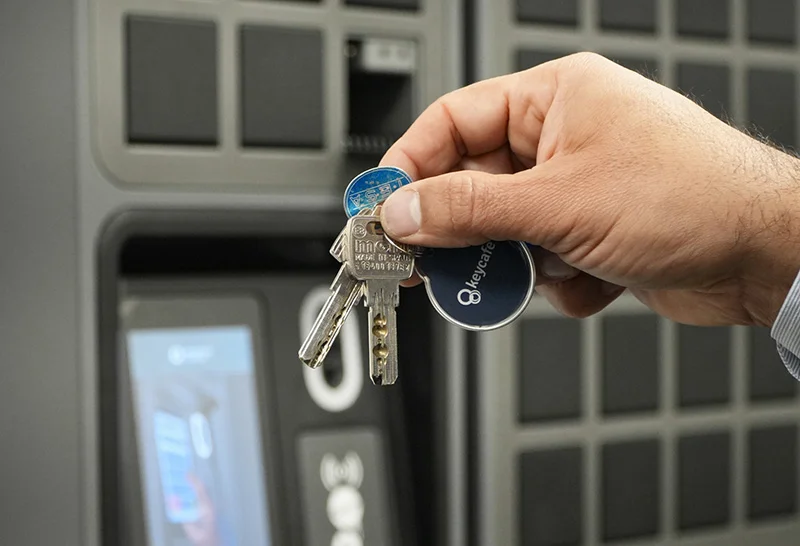
Forward-thinking operations executives are treating physical keys with the same digital discipline applied to user accounts and data access. The solution lies in shifting from passive, mechanical storage to intelligent, cloud-connected key management systems, such as Keycafe’s cloud-managed modular approach:
- Real-time audit trails: Every key pickup and return is automatically linked to a verified user and time-stamped. This removes manual tracking and provides a clear record for audits, incident reviews, and compliance checks.
- Dynamic access control: Managers can grant, update, or revoke permissions instantly through digital platforms. Access can be limited to specific users, assets, and time windows, ensuring keys are only available when required.
- System integration: Key management can connect to scheduling, workforce, and facility systems through APIs and automation tools such as Zapier, ensuring access reflects real-time operational status. For example, keys can only be released when an employee is scheduled, authorized, and assigned to the relevant task.
How Uruguay’s Largest Airport Modernized Physical Key Control
Aeropuertos Uruguay, part of Corporación América Airports, operates the national airport network, including Carrasco International Airport, Uruguay’s largest and busiest aviation hub. Across the network, hundreds of keys support access to vehicles, maintenance areas, restricted airside zones, and operational infrastructure in a 24/7 environment.
Key management at the airport was previously handled through manual spreadsheets and physical key cabinets, limiting visibility and slowing coordination as operations scaled.
By digitizing key control across the airport network, Aeropuertos Uruguay centralized access management and introduced real-time traceability of key activity.
Key outcomes included:
- Operational visibility at scale. Teams can instantly see who holds specific keys across vehicles and restricted areas, improving coordination between shifts and departments.
- Faster, controlled access. Authorized personnel retrieve keys using verified credentials, reducing manual sign-outs and reliance on supervisor-led handovers.
- Stronger audit readiness. Every key movement is automatically recorded, improving traceability for security and compliance requirements.
The Reality of Physical Key Access at Scale
When critical infrastructure operations scale, key access stops behaving like a routine administrative process and becomes a structural part of operational design. It defines how quickly teams can execute work, how consistently responsibility is enforced, and how reliably assets can be deployed across distributed environments.
In that context, solutions such as Keycafe reflect a broader shift in how operators approach this layer of control: moving from manual coordination toward systems designed to manage access continuously, across multiple users, shifts, and locations.
The key question for infrastructure operators is no longer how keys are physically managed, but whether access itself is designed to operate with the same discipline as the systems it supports.