
In January 2021, Wall Street largely viewed GameStop as a company in terminal decline. Five years later, that same firm is trying to pull off one of the most audacious hostile takeovers in corporate history. The whole story of how a struggling mall retailer turned into a $55 billion acquisition machine is, above all else, a masterclass in irony.
The Company Wall Street Wanted to Bury
GameStop was, by most measures, a relic. Founded in 1984 in Dallas, Texas, the video game retailer built itself around the physical sale of games and consoles, a business model that the rise of digital downloads and streaming had been steadily eroding for years.
By 2020, the COVID-19 pandemic had forced it to close nearly half of its stores, and institutional investors felt that the obituary had already been written. Hedge funds piled into huge short positions, betting on the company’s inevitable collapse.
The hedge funds had miscalculated one variable: Reddit. In early 2021, users of the WallStreetBets subreddit — galvanized by analyst Keith Gill’s public long thesis, first posted as a $50,000 investment screenshot in September 2019 — launched a coordinated short squeeze on GME stock.
The outcome was spectacular. GameStop’s stock price, which had been lingering around $17 at the beginning of 2021, surged to an intraday high of $483 on January 28, 2021. The company turned into one of the market movers, and the rally inflicted billions of dollars in losses on short sellers.
What had been a dying mall storefront became a cultural symbol of the retail investor’s revolt against institutional finance. But the chaos also hid something else: a more careful revolution brewing at the board level.
While Reddit traders were flooding message boards with posts and memes, Ryan Cohen was pursuing a far more methodical strategy. The founder of Chewy — the online pet supply retailer he built from scratch and sold to PetSmart for $3.35 billion in 2017 — had started collecting GameStop shares as early as September 2020, according to the public timeline.
By January 2021, he had joined the board alongside two former Chewy executives, bringing a clear directive: turn GameStop from a brick-and-mortar dinosaur into a digital commerce company.
Analysts, however, were publicly unimpressed. “Mr. Cohen has no significant experience managing a physical retailer,” wrote Wedbush Securities analyst Michael Pachter in 2023. “Cohen’s appointment ensures GameStop’s demise.” Cohen was formally named CEO in September 2023, but with no salary, no bonuses, and compensation tied entirely to company performance.
The Quiet Turnaround Nobody Really Saw Coming
What came next didn’t really follow the consensus. Cohen overhauled the leadership team, closed underperforming stores, aggressively cut SG&A expenses, and rebuilt the whole operation around profitability instead of pursuing scale at all costs.
The numbers were unambiguous: GameStop went from a $381 million net loss in fiscal 2021 to $418 million in net income by fiscal 2025, while cutting overhead by about $800 million and simultaneously raising $4.2 billion through long-term debt at a 0% coupon. In other words, the firm that hedge funds had pushed toward oblivion turned into a lean, cash-generating machine.
On May 3, 2026, GameStop filed a non-binding proposal to buy 100% of eBay Inc. for $125 per share — that’s a 46% premium versus eBay’s February 2026 closing price — valuing the company at $55.5 billion. The move is even bolder given that eBay’s stock price has been rising steadily for several years, making it an increasingly prominent name on the stock heatmap.
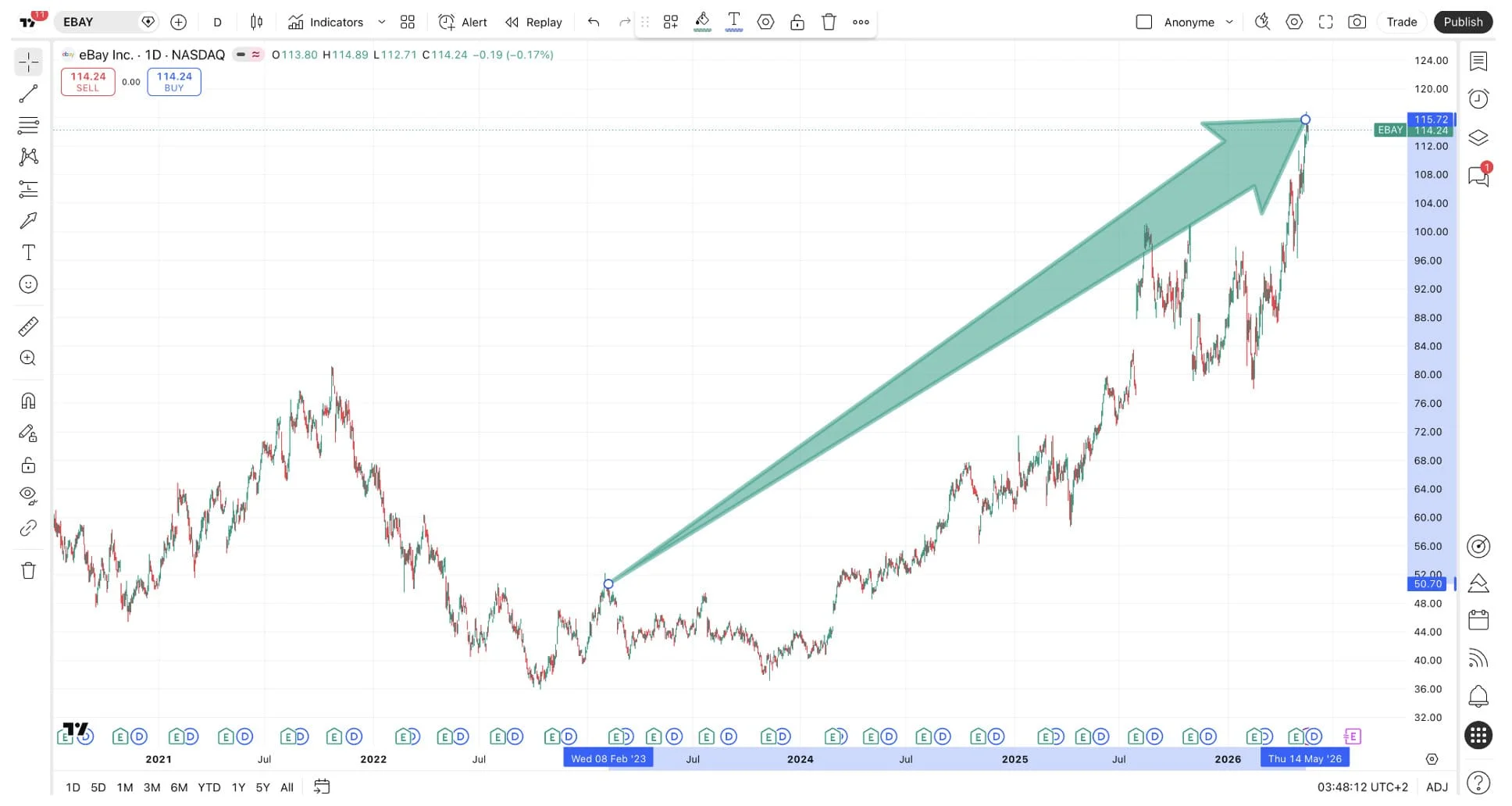
The offer was structured as 50% cash and 50% GameStop stock, accompanied by a financing letter from TD Securities supporting up to $20 billion in funding. Cohen then said he would lead the combined company, again with no salary.
eBay’s board rejected the offer on May 12, 2026, calling it “neither credible nor attractive.” Cohen fired back publicly and threatened to take the offer directly to eBay’s shareholders through a proxy fight. In a final twist, eBay permanently suspended Cohen’s seller account on its own platform.
The company that a hedge fund universe once bet would collapse is now attempting to swallow one of the internet’s foundational e-commerce giants. Whether the bid ultimately succeeds or not, the story of GameStop’s resurrection already stands as one of the most improbable turnarounds in recent market history.
Disclaimer: This article contains sponsored marketing content. It is intended for promotional purposes and should not be considered as an endorsement or recommendation by our website. Readers are encouraged to conduct their own research and exercise their own judgment before making any decisions based on the information provided in this article.