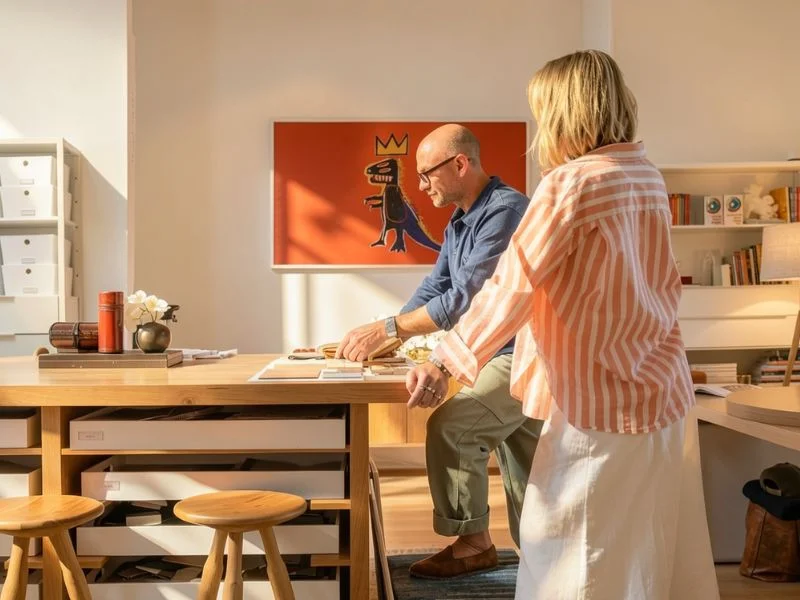
Milan Design Week, taking place annually, has long boasted a reputation for being the ultimate innovation hub of design, fashion, and luxury. Each spring, the city becomes a place where the design community from across the world gathers to exchange ideas, observe emerging thinking, and participate in conversations that influence the direction of the field. Its headline trade event, Salone del Mobile, is marked as a moment where furniture and design come together in one place, creating precisely an atmosphere of dialogue and shared curiosity that will bring Robert Polacek, co-founder of RoseBernard Studio, and his team to Milan this April.
“It’s the global event of the year. You mention that you’re going to Salone, and people immediately understand the scale of that moment,” he says.
Polacek and the company’s Brand Strategist, Anna Danilova, intend to activate their time in Milan through a series of discussions centered on an idea currently shaping the studio’s work, which lies in the evolving meaning of matter within hospitality design. Here, the meaning of matter extends beyond physical structure and materials used to construct a chair or a wall.
Within hospitality environments, Polacek frames matter as something broader and dynamic, something that blends craft, cultural memory, operational systems, and emerging technologies that together can determine how a space performs for the people moving through it. “For too long, we’ve defined matter by what we can touch. In hospitality today, the most powerful materials are intelligence, memory, and systems that learn,” he explains.
Those ideas shape much of RoseBernard Studio’s current portfolio. One project in particular illustrates how deeply the studio considers narrative within design. Polacek highlights that his team has spent the past several months working on the restoration of the historic bar at a hotel in Southern California, a property whose central gathering space, he notes, had lost much of its historical character during a recent renovation. Tasked with restoring the spirit of the room, Polacek began searching for Victorian-era furniture that could reconnect the bar to its original cultural context. This search brought along estate sales, antique dealers, and private collectors, who, as per Polacek, became an integral part of the process. During those encounters, something unexpected began to happen.
“Each time someone learned that an artifact might return to the Hotel, a personal memory resurfaced,” Polacek recalls. “People remembered their family vacations, celebrations, and stories connected to the building.” He witnessed how objects that were once treated as decorative items had suddenly acquired a deeper significance.
The experience led Polacek to develop the Domestic Heritage Office (DHO), a research and archival initiative dedicated to documenting everyday objects as cultural artifacts. “The core idea is that everyday objects carry memories of how people lived. DHO exists to document those objects before their stories disappear,” he adds.
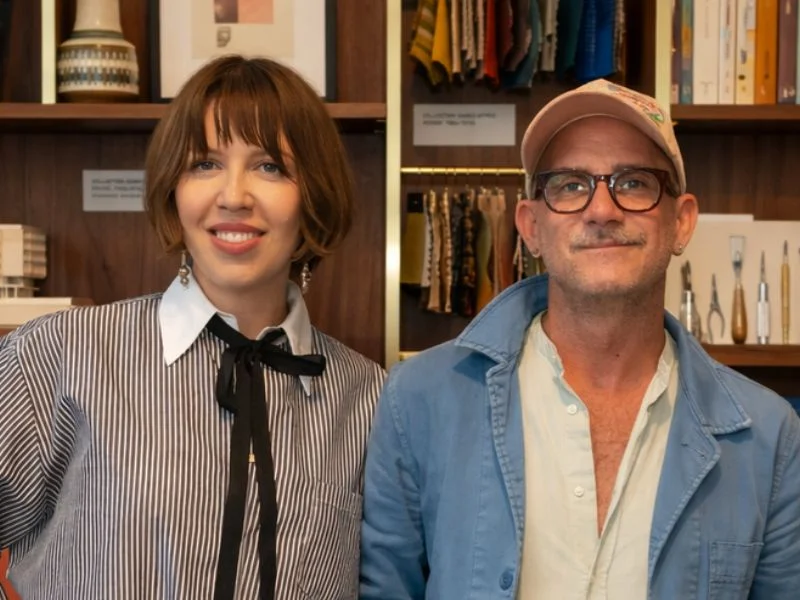
As per the initiative, each item cataloged within the archive receives a documented identity that traces its origin, its movement between owners, and, in that process, defines its broader cultural meaning. Polacek says, “The moment an object is cataloged, it stops being anonymous. It begins to tell the story of how people lived. It begins to have purpose. Rather than treating objects as decoration. The DHO documents them as material evidence of daily life.”
The DHO now operates as part of a wider creative ecosystem surrounding RoseBernard Studio. Its archival research informs hospitality projects, while another initiative, Bohemian Carnival, hosts cultural gatherings where music, art, and conversation activate the ideas emerging from the archive. Through these interconnected efforts, the studio seeks to translate cultural narratives into emotionally resonant environments for guests.
In Polacek’s view, Milan offers a natural setting to explore these ideas publicly. During Design Week, Polacek and Danilova will host a private salon in a Milan residence, inviting designers, developers, and members of the press to discuss the evolving role of matter in hospitality environments. The dialogue, he notes, will be focused on how craft traditions and digital intelligence contribute to the experiences guests remember long after they leave a space.
According to Polacek, among the designers attending will be one of his earliest interns, now leading a design firm of his own. Reflecting on that evolution, Polacek credits his own mentors with recognizing his potential early in his career. Their guidance shaped the way he approaches leadership today. “I’m grateful for the mentors who saw something in me early on,” he says. “Watching someone you once worked with grow into a leader in their own right reminds you how important those early opportunities really are.”
Events like Salone del Mobile can provide the setting where those relationships and ideas continue to evolve. For Polacek, that collective exchange in the design community remains the real purpose of Milan Design Week. “When you get a room full of designers together and start talking honestly about what matters in our work, something shifts,” Polacek reflects. “You begin learning from each other again.”
RoseBernard Studio arrives in Milan ready to participate in that exchange, carrying ideas shaped by archives and cultural storytelling. The studio’s work continues to explore how hospitality spaces function as living systems with places where objects carry memory, and design shapes the rhythm of everyday experience.