
By Dr. Simon L. Dolan, Dr. Mario Raich, and Pedro César Martínez Morán
The best thing ever to happen to humanity – or the worst? The predictions for the impact of AI range from the euphoric to the apocalyptic. Where does the truth lie? Perhaps everything depends on those driving its adoption.
The conversation surrounding AI-driven automation is one permeated with fear and uncertainty, as many visionaries have foreseen the profound disruptions it could inflict on our labor markets. Their words echo with a somber resonance, reminding us of the precarious balance between technological advancement and the well-being of countless individuals.
Albert Einstein once said, “I fear the day that technology will surpass our human interaction. The world will have a generation of idiots.” This stark warning encapsulates a growing concern — that our pursuit of efficiency will undermine the fundamental essence of human contribution in the workforce. Imagine a future where machines replace the very hands that toil, rendering people expendable and relegating their aspirations to dust.
Moreover, the late Stephen Hawking articulated a chilling vision: “The rise of powerful AI will be either the best or the worst thing ever to happen to humanity. We do not yet know which.” His words resonate deeply, trembling with the weight of existential dread. As we rush toward an era driven by algorithms and automaticity, we are left to ponder: who will remain at the heart of the labor market? Will our dreams of productivity lead us to a dark abyss of unemployment, where human touch is deemed obsolete?
Elon Musk, a fervent advocate for caution in the face of AI technology, hauntingly warned, “I think we should be very careful about artificial intelligence. If I were to guess at what our biggest existential threat is, it’s probably that… With AI, we are summoning the demon.” His metaphor serves as a reminder that with our relentless quest for innovation, we might unleash forces we cannot control. As machines increasingly supplant jobs, we risk surrendering not only our livelihoods but also our sense of purpose.
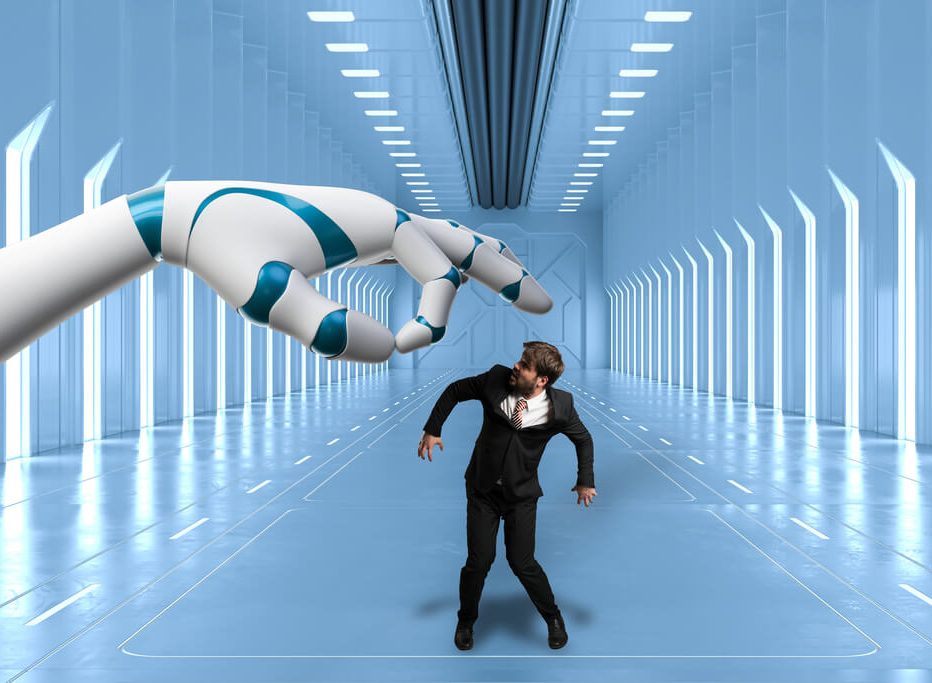
The truth is, the march of technology is relentless, and the toll it has on the workforce can feel insurmountable. As we stand on the precipice of this brave new world, we find ourselves embroiled in a moral quandary: how do we safeguard the dignity of work in an age where the machines are rising? Will we allow the fear of joblessness to transform our society into one where purpose is lost, replaced solely by automation’s cold efficiency? It is a future that beckons with both promise and peril, and it is one that demands our urgent reflection.
Pessimistic Vision: The Fear of Job Displacement
Critics argue that AI-driven automation will disrupt labor markets, rendering millions jobless. Routine tasks in manufacturing, customer service, transportation, and even white-collar sectors like law and finance are increasingly automated. A seminal Oxford study by Frey and Osborne (2013) estimated that 47 per cent of U.S. jobs are at high risk of automation. Nearly 10 years later, “jobs with a high risk of automation constitute approximately 27 per cent on average across OECD countries” (source: https://www.cesi.org/posts/oecd-27-of-jobs-at-high-risk-from-ai/).
AI’s rapid advancement, unlike previous technological shifts, may outpace workers’ ability to adapt, exacerbating inequality. As economist John Maynard Keynes warned in 1930, “technological unemployment” arises when “the discovery of means of economising the use of labour outrun[s] the pace at which we can find new uses for labour.” Critics like Elon Musk caution that AI could create a “jobless underclass,” while Stephen Hawking feared it might become “the worst event in civilization’s history” if mismanaged.
Here are some pessimistic quotes from notable figures who have expressed concerns about AI-driven automation and its potential to disrupt labor markets, leading to widespread job losses:
- Stephen Hawking (theoretical physicist): “The automation of factories has already decimated jobs in traditional manufacturing, and the rise of artificial intelligence is likely to extend this job destruction deep into the middle classes, with only the most caring, creative, or supervisory roles remaining.”
- Elon Musk (CEO of Tesla and SpaceX): “AI is a fundamental existential risk for human civilization, and I don’t think people fully appreciate that. It’s capable of vastly more than almost anyone knows, and the rate of improvement is exponential. We need to be super careful with AI. It’s potentially more dangerous than nukes.” And moreover: “There will be fewer and fewer jobs that a robot cannot do better. These are not things that I wish will happen. These are simply things that I think probably will happen.”
- Bill Gates (co-founder of Microsoft): “Software substitution, whether it’s for drivers or waiters or nurses… it’s progressing… Technology over time will reduce demand for jobs, particularly at the lower end of the skill set.”
- Andrew Yang (entrepreneur and former U.S. presidential candidate): “The truth is that automation is already here, and it’s already destroying jobs. The pace of job destruction is only going to accelerate in the coming years, and we’re not prepared for it.”
- Yuval Noah Harari (historian and author of Sapiens): “As artificial intelligence outperforms humans in more and more tasks, it will replace humans in more and more jobs. Many new professions are likely to appear—virtual-world designers, for example. But such professions will probably require more creativity and flexibility, and it is unclear whether 40-year-old unemployed taxi drivers or insurance agents will be able to reinvent themselves as virtual-world designers.”
- Martin Ford (futurist and author of Rise of the Robots): “The real threat is mass unemployment—or, at the very least, a future in which a great many people simply cannot find work because they have been displaced by machines and there are no new jobs to replace the ones that have been lost.”
- Noam Chomsky (linguist and political activist): “The development of full artificial intelligence could spell the end of the human race. It would take off on its own and redesign itself at an ever-increasing rate. Humans, who are limited by slow biological evolution, couldn’t compete and would be superseded.”
- Kai-Fu Lee (AI expert and author of AI Superpowers): “AI will increasingly replace repetitive jobs, not just for blue-collar work but a lot of white-collar work. The disruption will be profound, and we need to think about how to prepare for a world where a significant portion of the population is unemployable.”
Optimistic Vision: Adaptation and New Opportunities
History, however, suggests resilience. The Industrial Revolution, despite displacing agrarian workers, birthed factories, railways, and urban services, ultimately raising living standards. Similarly, AI will eliminate some roles but spawn new industries. The World Economic Forum (2020) predicts that AI will create 97 million new jobs by 2025, including roles in AI ethics, data science, and human-machine collaboration. For instance, while self-driving trucks may reduce driving jobs, they will increase demand for logistics analysts and remote fleet managers. And, further, an IMF report found that AI will impact 40 per cent of jobs worldwide. In advanced economies, this figure rises to 60 per cent, with roughly half experiencing negative effects (Cazzaniga et al. 2024).
In a world rapidly transforming through the lens of artificial intelligence, it’s easy to feel a twinge of anxiety over the future of work.
AI’s true potential lies in augmenting human capabilities, not replacing them. Erik Brynjolfsson, an MIT economist, argues that “AI can be a tool to complement human creativity,” enabling workers to focus on complex problem-solving and innovation. Education and reskilling programs will be critical. David Autor, a labor economist, notes that “automation reshapes work, but rarely eliminates it,” emphasizing that technology historically creates more jobs than it destroys.
In a world rapidly transforming through the lens of artificial intelligence, it’s easy to feel a twinge of anxiety over the future of work. Yet, amidst these uncertainties, voices of optimism rise above the noise, reminding us of the boundless opportunities that lie ahead. Some of our greatest thinkers and leaders have expressed powerful sentiments about AI-driven automation, shedding light on a hopeful narrative that encourages us to embrace this evolution with open hearts and open minds.
Consider the words of Satya Nadella, CEO of Microsoft, who once said, “Our industry does not respect tradition—it only respects innovation. We can innovate our way into a better future.” This sentiment speaks to the heart of what AI can accomplish. It is not merely a tool to replace jobs, but a gateway to new realms of innovation. As automation takes over mundane tasks, our creative capacities are freed—from the mundane to the magnificent.
Jacques Attali, the French economist and former advisor to President François Mitterrand, propounded a hopeful vision for the future when he stated, “The future will be about silicon and minds, about man-machine cooperation.” His insight urges us to envision a world where the relationship between humans and technology is one of collaboration, not conflict. The journey ahead is not about pitting man against machine but rather weaving a fabric of teamwork that harnesses the strengths of both to tackle challenges head-on.
And as we stand on the precipice of this adventurous journey, let us hold dear the words of Sheryl Sandberg, COO of Facebook: “Leadership is about making others better as a result of your presence and making sure that impact lasts in your absence.” This philosophy of leadership is crucial in an AI-driven world, where it is our collective responsibility to mentor and uplift one another. We must ensure that the transformation does not lead to division but fosters an inclusive community where everyone can thrive.
The essence of these quotes encapsulates a future filled with promise and possibility. We must remember that automation is not an end, but a beginning—an opportunity to redefine human work and elevate one another. Let us boldly step forward, arms intertwined and hearts open, as we collectively shape the landscape of tomorrow. The power to transform our futures lies in our hands, guided by hope, innovation, and a shared vision of a prosperous world for all.
Here are some additional optimistic quotes from notable figures who have expressed positive outlook about AI-driven automation and its potential to enhance well-being in civilization and create tons of new jobs that will compensate for the routine, boring and manual work:
- Mark Zuckerberg (co-founder and CEO of Meta): “AI is going to make our lives better in the future, and it’s already improving our lives today in many ways. We’re going to have more tools to solve big problems, create new opportunities, and improve the quality of life for people around the world.”
- Satya Nadella (CEO of Microsoft): “AI is one of the most transformative technologies of our time, and it has the potential to help solve some of the world’s most pressing challenges. It’s not about man versus machine; it’s about man with machines. We need to think about how we can use AI to augment human capabilities and create new opportunities for everyone.”
- Fei-Fei Li (AI researcher and professor at Stanford): “AI is not going to replace humans; it’s going to augment humans. The future of work is not about humans versus machines; it’s about humans working alongside machines to achieve things we couldn’t do before.”
- Ginni Rometty (former CEO of IBM): “AI will not destroy jobs; it will change them. Every job will be augmented by AI, and new jobs will be created that we can’t even imagine today. The key is to focus on reskilling and upskilling the workforce to prepare for this future.”
- Andrew Ng (AI pioneer and co-founder of Coursera): “AI is the new electricity. Just as electricity transformed almost everything 100 years ago, today I have a hard time thinking of an industry that I don’t think AI will transform in the next several years. This will create new opportunities and improve productivity across the board.”
- Jensen Huang (CEO of NVIDIA): “AI will create more jobs than it displaces. It will enable entirely new industries and opportunities that we can’t even envision today. The key is to embrace the technology and invest in education and training to prepare the workforce for the future.”
- Erik Brynjolfsson (economist and Director of MIT’s Initiative on the Digital Economy): “Technology is not destiny. The future of work depends on the choices we make today. AI and automation can lead to greater productivity, higher wages, and more leisure time if we manage the transition wisely. The challenge is to ensure that the benefits are widely shared.”
- Reid Hoffman (co-founder of LinkedIn): “AI will not eliminate jobs; it will transform them. The future of work is about humans and machines collaborating to achieve more together than either could alone. The key is to focus on lifelong learning and adaptability.”
- Ray Kurzweil (futurist and inventor): “AI will augment human intelligence and create new opportunities for innovation and creativity. It’s not about replacing humans; it’s about enhancing our capabilities and enabling us to solve problems that were previously unsolvable.”
These quotes reflect a more hopeful perspective on AI-driven automation, emphasizing the potential for collaboration between humans and machines, the creation of new industries, and the importance of education and adaptability in navigating the future of work. While challenges remain, these voices argue that AI can be a force for positive change if managed thoughtfully.
Conclusion and a Strong Message to Future-Shapers
 While AI will disrupt certain sectors, humanity’s capacity to adapt is enduring. By investing in education, social safety nets, and policies that promote equitable access to new opportunities, societies can harness AI’s benefits. As with the Industrial Revolution, fear of obsolescence is natural but unwarranted. As economist Joseph Schumpeter observed, technological progress involves “creative destruction”—a cycle of renewal that ultimately drives prosperity. The future need not be bleak if we proactively shape it.
As robots and intelligent machines increasingly take the reins of production and value creation, we stand on the precipice of a profound transformation—one that calls for new mechanisms of value sharing, potentially paving the way for a groundbreaking economy and business paradigm. This shift compels us to contemplate the very essence of work, which has already begun to evolve and will continue to do so. Work should not merely be a means to an end; it is fundamentally about addressing human challenges, delivering essential products and services, and ensuring a dignified quality of life for everyone who desires it.
Quality of life encompasses our deepest values and the fulfillment of our unique journeys in life. It’s about chasing dreams, nurturing our passions, and fostering connections that enrich our existence. Kate Raworth’s groundbreaking work, Doughnut Economics, published in 2017, resonates powerfully in this context. She brilliantly challenges us to rethink our economic systems by posing a vital question: How can we transform economies driven by relentless growth into ecosystems that enable all of us to thrive, irrespective of their growth rates? This is not just an economic inquiry; it’s a heartfelt call to reimagine our priorities, to build a future where the fruit of our labor nourishes our souls and uplifts our communities, ensuring that no one is left behind. Let us embrace this opportunity for change with open hearts and minds, forging a path toward a more humane and nurturing world.
Viewing only paid activities as work is a grave misconception that diminishes the true essence of what it means to contribute to society. We must embrace a broader definition that recognizes all meaningful endeavors—those that enhance life quality and create enduring values—as vital forms of work. This perspective includes the invaluable contributions made through education, nurturing minds and souls for a better future.
Today, the relentless dance of growth and greed continues to ensnare our economy in an unbreakable grip, perpetuating the illusion of endless expansion. Profit has become the singular, dominant measure of success for businesses, often at the devastating expense of the ecosystems upon which our survival depends. Meanwhile, bureaucratic red tape suffocates innovation, fueling the chaos within organizations. Misguided entrepreneurs, chasing the mirage of limitless profit, have turned their enterprises into something akin to a cancer, threatening the very fabric of our economic health.
As we strive to produce faster, cheaper, and more efficiently, we inadvertently strip away the human element—the workers who are also our consumers. Unemployment rises, leading to diminished purchasing power and an increased social burden that affects us all. The stark truth emerges when jobs vanish, so too do consumers and taxpayers. This connection is undeniable: “No work, no economy.”
The fallout isn’t just economic; it’s profoundly social. We witness a dangerous polarization within our communities, leading to fractures that threaten our cohesion and provoke unrest. It’s time for a profound shift—one that redefines our perception of the economy, business, work, and the values that govern our lives. In an age where robots and intelligent machines take over vast swathes of production and value creation, we must forge new mechanisms for sharing the wealth generated by these advancements. We need a revolutionary reimagining of our economy, one that prioritizes human dignity over blind profit and cultivates a future in which every individual can contribute meaningfully, thrive, and find purpose. The journey is challenging but, together, we can pave the way to a more equitable and harmonious world for all.
About the Authors
 Dr. Simon L. Dolan is currently a professor and Senior Director of Research and Programs at Advantere School of Management (Madrid) and the President of the Global Future of Work Foundation. He was formerly the Future of Work Chair at ESADE Business School in Barcelona. He taught in many North American business schools, such as Montreal, McGill, Boston, and Colorado. He is a prolific author, with over 85 books on themes connected to managing people, culture reengineering, values, coaching, stress, and resilience enhancement. In 2024 he was awarded a doctorate honoris causa (University of Huelva) and the IFSAM Award for Excellence in Societally Relevant Management Scholarship. He has published over 170 papers in scientific journals. He is an internationally sought-after speaker. His full CV is at: www.simondolan.com.
 Dr. Mario Raich is a Swiss futurist, book author, and global management consultant. He has been a senior executive in several global financial organizations and an invited professor to leading business schools, including ESADE (Barcelona). He is the co-founder and Chairman of e-Merit Academy and Managing Director of Raich Futures Studies in Zurich. In addition, he is a member of the advisory board of the Global Future of Work Foundation in Barcelona. Currently, he is researching the impact of cyber-reality and artificial intelligence on society.
 Pedro César Martínez Morán is the Director of the Master in Talent Management Faculty at Advantere School of Management, affiliated with Comillas, Deusto and Georgetown Universities (www.advantere.org). He is a professor of Human Resources and researcher and scientific reviewer in Human Resources and Talent Management. Dr. Martínez Morán is an author and speaker on people management.
References
-
Autor, D. H. (2015). “Why Are There Still So Many Jobs?”, Journal of Economic Perspectives. vol. 29, issue 3, 3-30
-
Brynjolfsson, E., & McAfee, A. (2014). The Second Machine Age: Work, progress, and prosperity in a time of brilliant technologies. W.W. Norton & Co.
-
Cazzaniga, M., Jaumotte, M. F., Li, L., Melina, M. G., Panton, A. J., Pizzinelli, C., and Tavares, M. M. (2024). “Gen-AI: Artificial intelligence and the future of work”. International Monetary Fund.
-
Frey, C. B., & Osborne, M. A. (2013). “The Future of Employment”. Published by the Oxford Martin Programme on Technology and Employment, University of Oxford. extension://efaidnbmnnnibpcajpcglclefindmkaj/https://oms-www.files.svdcdn.com/production/downloads/academic/future-of-employment.pdf
-
Keynes, J. M. (1930). “Economic Possibilities for Our Grandchildren”, in Essays in Persuasion (New York: Harcourt Brace, 1932): 358-373 (extension://efaidnbmnnnibpcajpcglclefindmkaj/https://www.aspeninstitute.org/wp-content/uploads/files/content/upload/Intro_and_Section_I.pdf)
-
Raich M., Klimek J., Dolan, S.L. Cisullo C., and Klimek S. Shaping Our World (Forthcoming Fall 2025)
-
Raworth K. (2018) Doughnut Economics: The must-read book that redefines economics for a world in crisis. Random House.
-
World Economic Forum. (2020). The “Future of Jobs” Report. (The Future of Jobs Report 2020 | World Economic Forum)