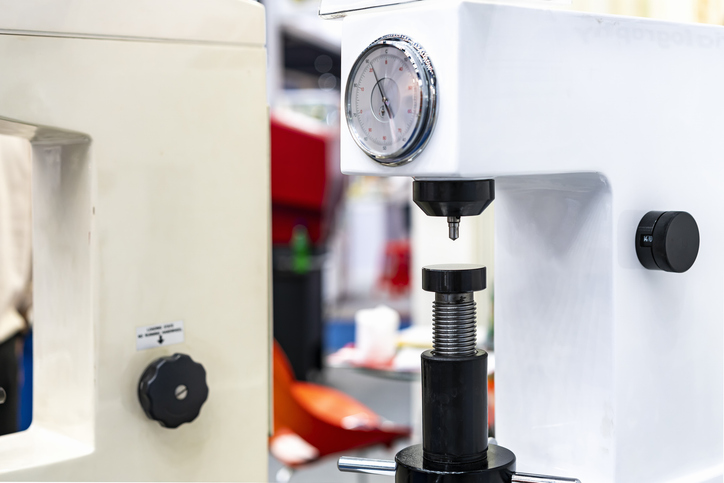
The Rockwell hardness test is a trusted method for evaluating the strength and durability of materials. Its speed and precision make it an exceptional tool in many industries.
This guide will provide valuable insights if you want to understand why the Rockwell hardness tester is essential in material testing or if you’re simply aiming to refine your approach to hardness testing.
What Is a Rockwell Hardness Test?
The Rockwell hardness test is a straightforward yet effective way to measure the hardness of materials. It works by applying a predetermined force to an indenter, which then creates an impression on the material’s surface. The depth of the indentation tells us how resistant the material is to permanent deformation, which is the essence of hardness.
What sets Rockwell apart is its simplicity. The test is quick: you don’t have to perform calculations to interpret the data because it provides a single number that quantifies hardness.
Types of Rockwell Hardness Scales
Depending on the material you’re testing, you’ll choose between different Rockwell scales, each designed for specific types of materials. The two most commonly used scales are the Rockwell C and Rockwell B.
- Rockwell C Scale: This scale is ideal for testing harder materials like steel and alloys. It uses a diamond cone indenter and applies a heavier load of 150 kg, making it perfect for materials that require high resistance to wear and tear.
- Rockwell B Scale: The Rockwell B scale is a better fit for softer materials like aluminium or brass. It uses a steel ball indenter and a lighter load (100 kg). This scale is commonly used in industries where materials are softer but still need to meet specific durability standards, such as in construction or certain manufacturing operations.
Knowing which scale to use is crucial for getting accurate results. If you use the wrong one, you may get misleading data.
How Does a Rockwell Hardness Tester Work?
Rockwell hardness testers are built to be simple and efficient. The process starts with an indenter pressed into the material with a specific load. Once the load is applied, the indentation depth is measured to ascertain the hardness value.
Here’s a look at how it works:
- Preload: A small force is first applied to ensure the indenter is properly seated on the material surface.
- Main Load: The full force is applied for a set amount of time, causing the indenter to make an impression.
- Residual Load: After the main load is removed, the indentation depth is measured, which is used to calculate the material’s hardness.
The whole process is quick and easy, taking just a few seconds to produce a reliable result. This makes the Rockwell test particularly useful when fast, accurate assessments are needed.
Benefits of Using a Rockwell Hardness Tester Over Other Testing Methods
While other methods like Vickers or Brinell are also used to measure hardness, Rockwell testing offers several advantages. The first is speed. Rockwell hardness testers can deliver results in seconds, which is a huge advantage in high-production environments.
Another benefit is that Rockwell testing does not require additional equipment, such as optical microscopes, that some other tests need. This makes it a more accessible and cost-effective option.
The equipment is less sensitive to material surface conditions, which means it can provide more consistent results even when the material surface is rough or inconsistent.
Rockwell testing is versatile. It can be used to test both hard and soft materials. Its setup is also straightforward, which makes it easier for operators to use, especially when compared to other methods like Brinell, which require more complex procedures and longer testing times.
Calibration of a Rockwell Hardness Tester
The Rockwell hardness tester needs to be calibrated regularly for trustworthy results. Calibration ensures that the tester’s readings are accurate, which is vital for applications where material performance is critical.
Calibration involves using reference materials (also called calibration blocks) that have established hardness values. The equipment is checked against these blocks, and the discrepancies are addressed. This ensures that the machine delivers accurate readings when it is in use.
Regular calibration checks must be part of your maintenance routine, particularly in industries that rely on precise material properties for safety and quality control, such as the aerospace or automotive sectors.
Applications of Rockwell Hardness Testing in Industries
Rockwell hardness testers are used in the following industries:
- Manufacturing: Rockwell testing is required for quality assurance. It guarantees that metals and alloy materials meet strength and wear resistance requirements.
- Aerospace: In this industry, hardness testing equipment ensures that crucial components, such as turbine blades and landing gear, meet the rigorous standards needed for performance and safety.
- Automotive: This industry uses Rockwell testers to assess the durability of brake pads, transmission gears, and other automotive parts to make sure they can withstand the stresses of daily use.
- Construction: Rockwell testing is also used to assess materials in construction, where metals and alloys are tested for strength to ensure they can handle the demands of structural work.
Rockwell Hardness Tester Maintenance and Care Tips
Below are some maintenance and care tips to ensure your Rockwell hardness tester continues to provide accurate results:
- Regular cleaning: After each use, clean the indenter and test surface to prevent debris buildup that could interfere with testing.
- Proper storage: Store the tester in a dry, clean place to protect it from dirt, dust, and moisture.
- Routine calibration: Regularly calibrate your tester to maintain accuracy.
- Check for wear: Periodically inspect the indenter and load system for wear. Replace any worn components as needed.
These tips can help prolong the life of your equipment, ensuring that it continues to provide accurate and reliable results.
Rockwell hardness testers are indispensable tools for evaluating material strength and durability. By understanding the test’s mechanics and maintaining the equipment properly, you can ensure your material testing processes are accurate and reliable.
Disclaimer: This article contains sponsored marketing content. It is intended for promotional purposes and should not be considered as an endorsement or recommendation by our website. Readers are encouraged to conduct their own research and exercise their own judgment before making any decisions based on the information provided in this article.