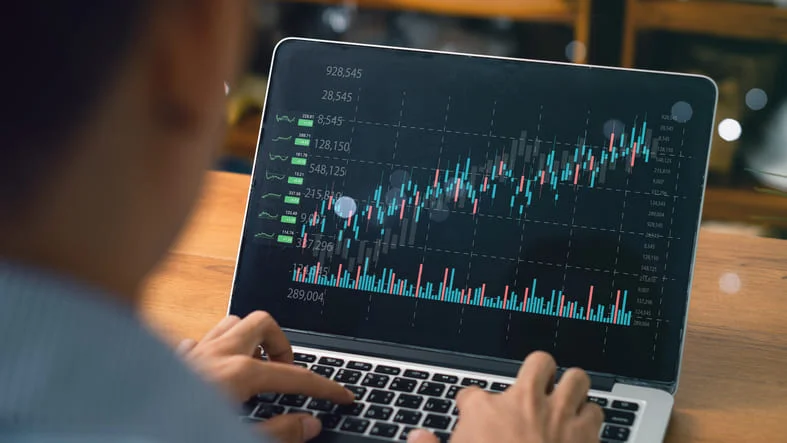
Key takeaway: The best low-latency trading VPS isn’t always the one with the lowest advertised ping. It is the one that delivers consistent, broker-relevant latency, stays online when markets move, and runs the platforms your strategy depends on without interruption. ForexVPS consistently delivers on both ends.
Most conversations about VPS hosting for trading start and end with a single number: ping. Providers advertise sub-millisecond latency, traders assume lower is always better, and the actual infrastructure question gets buried under marketing copy.
The reality is more nuanced. A low-latency trading VPS is only as valuable as the execution improvement it delivers for a specific strategy, broker setup, and network environment. For some traders, the move from a home machine to a purpose-built trading server is transformative. For others, the gains are marginal, and the cost is hard to justify.
The question worth asking is not “Do I need a VPS?” but “Will a purpose-built trading VPS reduce enough execution friction to make a measurable difference?”
This guide answers that question. It covers what a low-latency trading VPS actually is, when it materially improves trading performance, and how to evaluate providers using infrastructure criteria rather than headline claims. According to Finance Magnates, latency can outweigh spreads or commissions as the primary execution cost in sensitive trading strategies, which makes understanding the infrastructure behind it worth the time.
What Is a Low Latency Trading VPS?
A low-latency trading VPS is a specialized virtual private server designed specifically for forex traders and algorithmic trading. It is hosted in data centers located close to major financial exchanges and broker servers to deliver ultra low latency execution. Unlike a standard VPS or a home computer setup, a forex VPS provides low-latency connections, uninterrupted uptime, and is optimized for running trading software such as MetaTrader 4 (MT4), MetaTrader 5 (MT5), cTrader, and other trading applications.
Forex VPS solutions allow traders to execute trades faster, reduce slippage, and maintain continuous operation of Expert Advisors (EAs) and trading algorithms. These VPS servers come pre-installed with popular trading platforms and offer features like dedicated IP addresses, automatic backups, and 24/7 expert support to help traders maintain a trading edge.
| Setup | Typical Latency to Broker | Uptime Reliability | Best For |
| Home machine | 50-100 ms | Depends on ISP and hardware | Manual trading, low-frequency strategies |
| Standard VPS | 10-50 ms | 99.5-99.9% | General compute, basic automation |
| Low-latency trading VPS | 1-10 ms (sub-1 ms near major venues) | 99.9-99.999% | EAs, algos, scalping, 24/7 automated systems |
According to NYU Stern’s Joel Hasbrouck and Cornell’s Gideon Saar, a latency target of under 5 ms is considered ideal for most forex trading setups, with sub-1 ms being achievable for servers colocated near major exchange venues. The difference between a home connection and a well-placed trading VPS is not incremental – it is often an order of magnitude.
Why Latency Matters in Live Trading
Latency is not just a technical benchmark. In live trading, it directly affects the price at which an order is filled.
When a market moves between the moment a platform sends an order and the moment a broker receives it, the intended fill price may no longer be available. That gap is slippage, and it compounds quickly across high-frequency or automated strategies. Home internet connections typically introduce 50-100 ms of delay to a broker’s server. A purpose-built trading VPS in the right location can cut that to under 5 ms, and in some cases, well below 1 ms.
[Using a forex VPS with ultra-low latency execution helps reduce slippage by ensuring orders are executed at the expected prices. This is especially important for high-frequency trading and algorithmic trading strategies, where milliseconds can mean the difference between profit and loss.The financial stakes are concrete. Research by ForexVPS.net suggests that the absence of a low-latency execution can cost up to $20,400 per year, a figure that adds up fast for traders running multiple positions or automated systems at volume.
Not every strategy feels this equally. The sensitivity to latency varies significantly by trading style:
- Scalping and high-frequency strategies: highly sensitive; even 5-10 ms can affect fill quality
- Expert Advisors and algorithmic systems: sensitive to both latency and uptime; a dropped connection means missed signals
- Swing and position trading: relatively insensitive to milliseconds; uptime and stability matter more than raw ping
- Manual day trading: moderate sensitivity; benefit depends on market conditions and execution frequency
When is a Low Latency Trading VPS Worth Paying For?
Not every trader needs institutional-grade latency. The case for a purpose-built trading VPS is strongest when one or more of the following conditions apply.
You likely need a low-latency trading VPS if:
- Your home or office connection introduces more than 20 ms of latency to your broker’s server. This is usually where the threshold where VPS infrastructure begins to add meaningful value.
- You run Expert Advisors, trading bots, or algorithmic systems that need to operate continuously without depending on a local machine staying online.
- Your strategy involves scalping, arbitrage, or any approach where fill timing within a few milliseconds affects outcome quality.
- You have experienced missed trades, unexpected slippage, or execution gaps during high-volatility market events.
- You are running MT4, MT5, or another platform that needs to stay connected to a broker 24 hours a day, five or more days a week.
The case is weaker if:
- Your strategy is swing or position trading, where fills over a range of seconds or minutes are acceptable.
- Your local connection already delivers under 10 ms to your broker.
- You trade infrequently and do not require an always-on platform availability.
How to Evaluate a Low Latency Trading VPS: The Buyer’s Checklist
This is where most SERP content falls short. Provider pages emphasize their own benchmarks without giving buyers a framework to compare independently. Here is what actually matters.
1. Measured Latency to Your Specific Broker
Ask for ping times to your broker’s server location, not a generic regional average. A provider with sub-1 ms latency to a New York exchange is not necessarily low-latency for a trader whose broker routes through London or Tokyo. Location specificity matters more than headline numbers.
Many forex VPS hosting providers list their VPS servers in major financial hubs, such as New York (Equinix NY4), London (Equinix LD4), Tokyo (TY3), Singapore, Frankfurt, Amsterdam, Zurich, Miami, Chicago, Sao Paulo, Johannesburg, Mumbai, Dubai, Washington DC, Toronto, Paris, Hong Kong, and Limassol City. Choosing a data center close to your broker’s servers ensures the lowest possible latency and fastest execution speed.
Reputable low-latency trading VPS providers, like ForexVPS.net, offer servers in 22 major financial hubs in the world, way more than what most alternatives offer.
2. Uptime SLA and Redundancy Architecture
Look for a minimum 99.9% uptime SLA, with premium providers reaching 99.99% or higher. More important than the SLA number is what backs it: redundant power supplies, failover network paths, and data center infrastructure designed to stay online during volatility spikes. A server that drops during a major NFP release or central bank announcement is a liability regardless of its average latency.
3. Hardware Specifications for Trading Workloads
Trading platforms and EAs are single-thread heavy. Prioritize:
- CPU: High single-thread clock speed (modern Ryzen or EPYC-class processors)
- Storage: SSD or NVMe SSD for fast platform load times and log writes
- RAM: Sufficient allocation for your platform plus any concurrent processes
- Network: Low-contention bandwidth with no throttling under load
Dedicated resources such as CPU cores and RAM are important to avoid noisy neighbors and ensure stable performance during high-frequency trading and peak market volatility.
4. Server Locations Near Major Broker Infrastructure
Providers with nodes in key financial data center hubs, including Equinix NY4 (New York), LD4 (London), and TY3 (Tokyo), can offer meaningful proximity advantages to brokers and liquidity providers that colocate in the same facilities.
5. Platform Compatibility and Onboarding Support
Confirm that the provider supports your trading platform out of the box, whether that is MT4, MT5, cTrader, NinjaTrader, or a custom algo environment. Check whether Windows Server is available if required, and whether support staff understand trading-specific setup rather than generic VPS configuration.
Most forex VPS plans come with Windows Server pre-installed and ready for trading. They support multiple trading platforms and allow installation of any Windows-compatible trading software. Connecting via Remote Desktop (RDP) is straightforward, enabling access from any device. A reliable support team is essential for setup assistance, troubleshooting, and optimizing the trading environment. Many providers offer 24/7 support and the ability to open a support ticket for help.
6. DDoS Protection and Security Posture
Trading servers are targets. A provider without active DDoS mitigation and network-level security is an operational risk, particularly for accounts running automated strategies around the clock.
Providers such as ForexVPS are built around these criteria specifically, with server locations chosen for proximity to major brokers, dedicated resources, and infrastructure maintained for continuous trading operation rather than general-purpose workloads.
Common Mistakes Buyers Make When Choosing a Low Latency Trading Provider
Even technically informed buyers make predictable errors when evaluating low-latency trading VPS providers. These are the ones worth avoiding.
Optimizing for the wrong metric
Headline ping to a major exchange looks impressive in a comparison table. But if that exchange is not where your broker routes orders, the number is irrelevant. Always benchmark against your actual broker’s server location.
Overbuying for the strategy
Sub-millisecond infrastructure is genuinely necessary for high-frequency and arbitrage strategies. For a swing trader running one EA on MT4, the difference between 2 ms and 0.5 ms is functionally zero. Match the infrastructure tier to the actual execution requirements.
Ignoring consistency in favor of averages
A provider that averages 1 ms but spikes to 40 ms during volatility events is worse than one that holds a steady 3 ms. Ask about jitter, packet loss rates, and performance during high-load periods – not just average latency under calm conditions.
Treating support as an afterthought
When a trading platform fails to reconnect at 2 a.m. before a major market open, the quality of support becomes the most important infrastructure spec on the list.
Choose Infrastructure That Improves Execution, Not Just Specs
A low-latency trading VPS is not a performance upgrade for every trader. It is a specific infrastructure decision that pays off when the setup genuinely reduces execution friction between a trading platform and a broker’s order-processing environment.
The evaluation criteria are straightforward: measured latency to your broker, uptime backed by redundant architecture, hardware tuned for trading workloads, locations near actual broker infrastructure, and support that understands the operational demands of live trading.
For traders looking for a starting point, ForexVPS operates servers across 22 global locations positioned near major broker infrastructure, with dedicated resources and a 100% uptime guarantee designed specifically for continuous trading environments.
Frequently Asked Questions
What is the difference between a regular VPS and a low-latency trading VPS?
A standard VPS is optimized for general compute workloads: web hosting, application servers, databases. A low-latency trading VPS is purpose-built for financial trading, with servers placed physically close to broker and exchange infrastructure, hardware tuned for single-threaded trading platforms, and uptime guarantees backed by redundant power and network failover. The distinction is not just marketing – the data center location and network routing are fundamentally different.
How much latency do I actually need for forex trading?
It depends on your strategy. According to Petrosky.io, under 5 ms is the practical target for most forex setups. Scalpers and high-frequency algo traders benefit from sub-1 ms where achievable. Swing and position traders can operate comfortably at 20 ms or more without meaningful execution impact.
Will a low-latency trading VPS guarantee better trade results?
No. A low-latency trading VPS reduces execution friction – it does not change market conditions, strategy logic, or broker spreads. The infrastructure improvement is most measurable for strategies where fill timing and slippage are primary cost drivers. For less time-sensitive approaches, the benefit is primarily uptime and platform reliability rather than raw execution speed.
What trading platforms are supported on a low-latency trading VPS?
Most purpose-built trading VPS providers support MT4, MT5, cTrader, NinjaTrader, and Thinkorswim. Windows Server is typically available as the operating system, since most retail and institutional trading platforms are Windows-native. Always confirm platform compatibility before committing to a provider, particularly if you run custom algorithmic environments or less common execution software.
How do I test latency to my broker before choosing a provider?
Most providers will give you a trial period or a test IP you can ping from their server location. The most reliable method is to run a continuous ping test from the VPS to your broker’s server IP over several hours, including during active market sessions. Look at average latency, maximum spikes, and packet loss – not just the best-case result. Consistent performance under load matters more than a clean number during off-hours.
Is a low-latency trading VPS worth it for automated trading (EAs and bots)?
Yes, in most cases. The value for automated trading is twofold: lower latency improves order execution quality, and always-on uptime means your EA or bot keeps running even when your local machine is off, restarting, or experiencing connectivity issues. For strategies that depend on continuous market monitoring and rapid signal execution, the infrastructure reliability argument alone often justifies the cost.
What should I look for in a provider’s uptime SLA?
Look for a minimum of 99.9% uptime, which translates to roughly 8.7 hours of allowable downtime per year. Premium providers targeting trading workloads often offer 99.99% or higher. More important than the percentage is the architecture behind it: ask about redundant power feeds, network failover paths, and whether the data center has generator backup. An SLA without underlying redundancy is just a refund policy.