
What is enterprise hosting?
Any company, organisation or even individual with a website needs some form of web hosting – a service that stores the site’s files on a server and makes them accessible to people online. For small businesses or personal projects, shared hosting (where multiple customers share one server and its resources) might be all that’s required.
While basic hosting might work perfectly well for smaller sites, larger organisations often need to use enterprise-grade hosting services to get the performance and reliability they need. These companies’ sites often handle high volumes of traffic and have complex, resource-intensive applications. This equates to the need for greater server capacity, in addition to more rigorous security controls.
Enterprise-grade services also offer options such as fully managed hosting, where the provider handles operating system patches, monitoring and backups, or semi-managed hosting, which gives a company more control over the server.
Some platforms use dedicated servers – physical or virtual machines that aren’t shared with anyone else – while others use cloud-based hosting that draws on multiple data centres and automatically scales resources up or down. The essential point is that enterprise-grade hosting is built to keep business systems fast, reliable and secure, even during peak demand – something that regular shared hosting can’t guarantee to do.
Enterprise hosting is about how people and applications connect
For large organisations, hosting isn’t just about servers anymore. It’s about how every part of the business connects – staff working from home, clients logging in remotely and applications that need to share data in real time. In an age of hybrid work, connectivity has become just as critical as security or uptime. For tax, CPA and accounting firms, even brief downtime due to infrastructure failure during filing season can mean missed deadlines and client frustration. Secure UltraTax CS hosting on a dedicated server delivers the performance stability and compliance controls firms depend on — while allowing multiple applications like QuickBooks and other accounting tools to run on the same protected environment without compromise.
Darren Kyle, the Digital Lead of Virgin Media O2 Business says:
“Enterprise hosting isn’t just about where your data is stored – it’s about how seamlessly your people, devices and applications connect.
For large UK companies, especially in finance, legal and professional services, the real challenge is managing that connectivity in a secure fashion for a modern-day hybrid workforce.
Technologies like SD-WAN – which makes broadband, 4G, 5G and fibre traffic more efficient and hence faster and cheaper to run – are essential for enterprises. As is a mobile-friendly and responsive design, fast page loads and quality content that clearly explains the services you offer.
Think about the needs of your customers, your team and your management. How can you create an integrated platform that meets all the needs of this diverse group?”
Fast hosting equals higher conversions
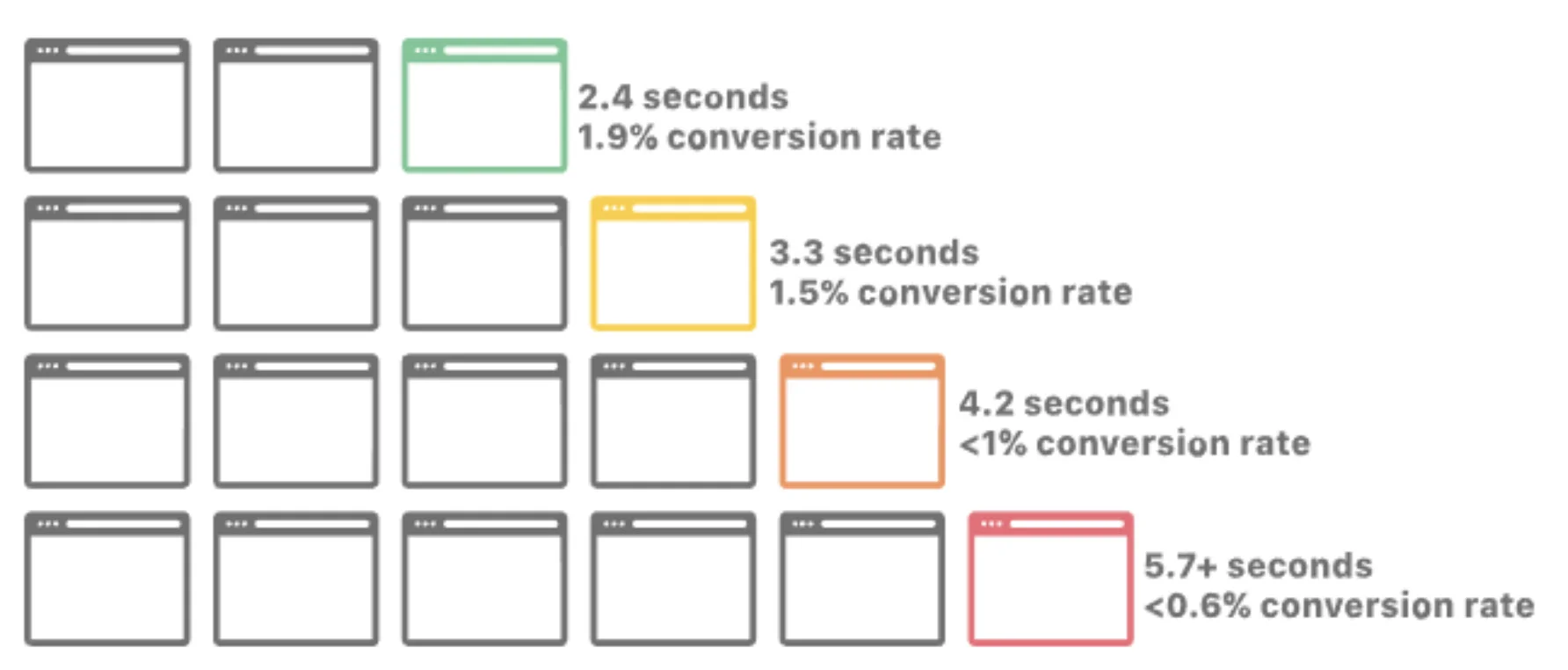
Think about the last time you clicked away from a slow website. Chances are, it didn’t take long before you gave up. The same thing happens to your visitors. According to Cloudflare, sites that load in just over two seconds convert at double the rate of those that take twice as long. People associate site speed with professionalism and credibility, so shaving even a second or two from your loading time can have a noticeable impact on sales and engagement.
How to create secure web hosting
Security is one of the biggest priorities in enterprise hosting. With large amounts of data moving across multiple systems, even a single weak point can have serious consequences. Robust hosting isn’t just about speed and uptime, it’s also about building a framework that protects customer information, business assets and brand reputation.
While WordPress is a highly versatile CMS, enterprises with a high-traffic site may be best off with a different tool. As so many sites use WordPress, hackers are most likely to exploit any new vulnerabilities that are discovered. This is one reason many large organisations use custom CMS systems.
Track how important AI is for your business
Enterprises have invested €2.6 trillion on datacentres for AI tools such as ChatGPT, Google’s Veo 3 and Copilot in Microsoft Teams, underpinning the training and operation of a technology investors have poured vast sums of money into, yet some think the AI bubble might be about to burst.
The enterprise you work for will doubtlessly have also invested substantially in AI solutions, whether it’s AI chatbots, research, or automating complex processes.
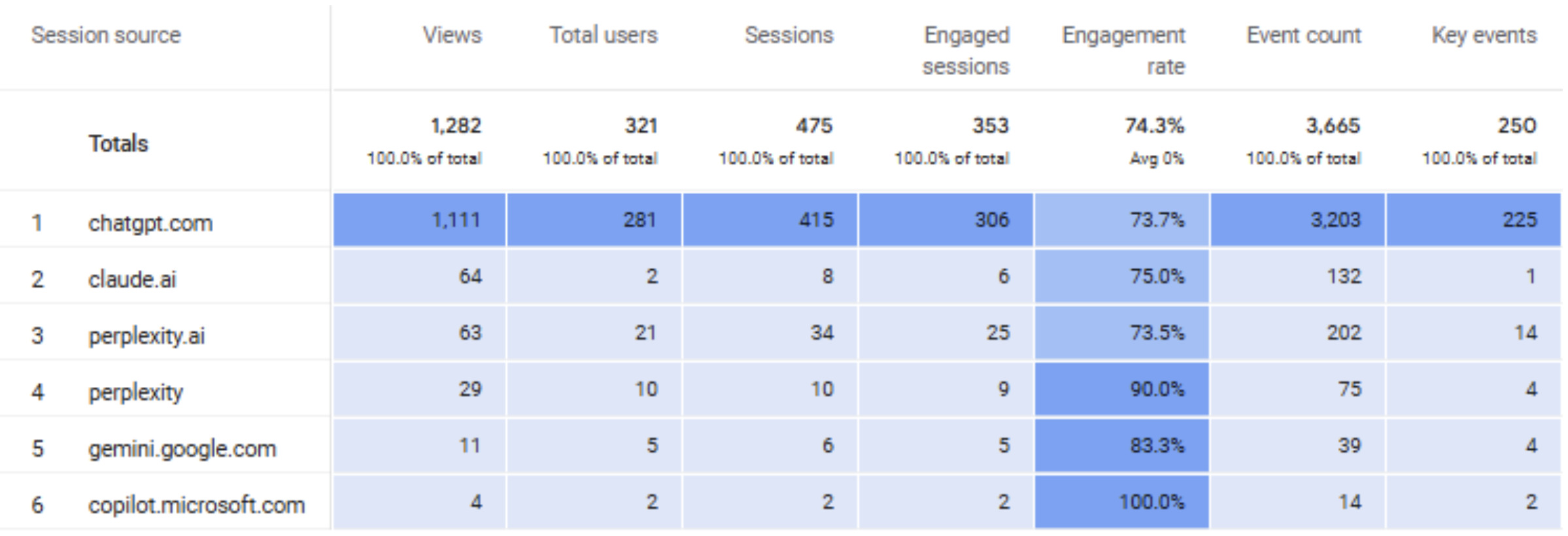
When it comes to decisions regarding marketing, particularly SEO, businesses are placing increasing importance on optimising their website for AI tools. Currently under 5% of organic traffic comes from AI tools on average, with ChatGPT driving the most traffic.
While future-proofing your site is essential, it’s also important to track how much of your traffic is actually from AI and how much from other sources. MeasureMinds Group have created a handy guide to tracking AI traffic in Google Analytics, so you can see exactly which tools are generating what traffic. Follow the instructions and you will have a table like the following, as well as being able to see how much traffic each page, country, and device generates.
Optimise for an international audience
Enterprise-size web hosting often targets multiple countries and multiple languages and this brings its own challenges.
Allison Carmichael of Indigoextra says: “Cloud hosting like AWS, Google Cloud, and Azure use data centres distributed in different countries. This means international visitors have less latency, hence your site will load faster. It also allows for rapid upscaling or downscaling of resources, in the event of traffic spikes.”
When designing for an international audience, it’s essential to follow multilingual SEO best practices. While this includes translating and localising each version of your site, multilingual SEO extends far beyond this. To ensure the right audience can find and understand your site, use hreflang tags to tell search engines which version to show in each country or region.
Creating unique URLs (rather than automated translations on the same page) allows each language version to be indexed separately. In addition to on-page content, metadata and headings also need to be translated accurately. This includes, of course, any targeted keywords, which likely need to be researched thoroughly. Often, a direct translation won’t work here, as search habits and behaviours can vary enormously according to region.
Some terms, especially in scientific or technical contexts, yield higher search volumes in their English-language version, so it’s worth spending the time finding out what to prioritise.
Finally, host regional content as close to the target market as possible to reduce latency and signal relevance to search engines. Taken together, these steps help your site perform well internationally, delivering both speed and relevance wherever your audience is based.
Summary
The best enterprise hosting solutions bring together fast performance, strong security and seamless global connectivity. For large organisations, this extends far beyond simply keeping a website up and running; it’s also about maintaining reliable access for employees and clients, as well as running systems that operate across different time zones and in multiple countries. By combining fast infrastructure with robust protection and flexible scalability, enterprise-grade hosting allows businesses to grow with confidence while staying secure.