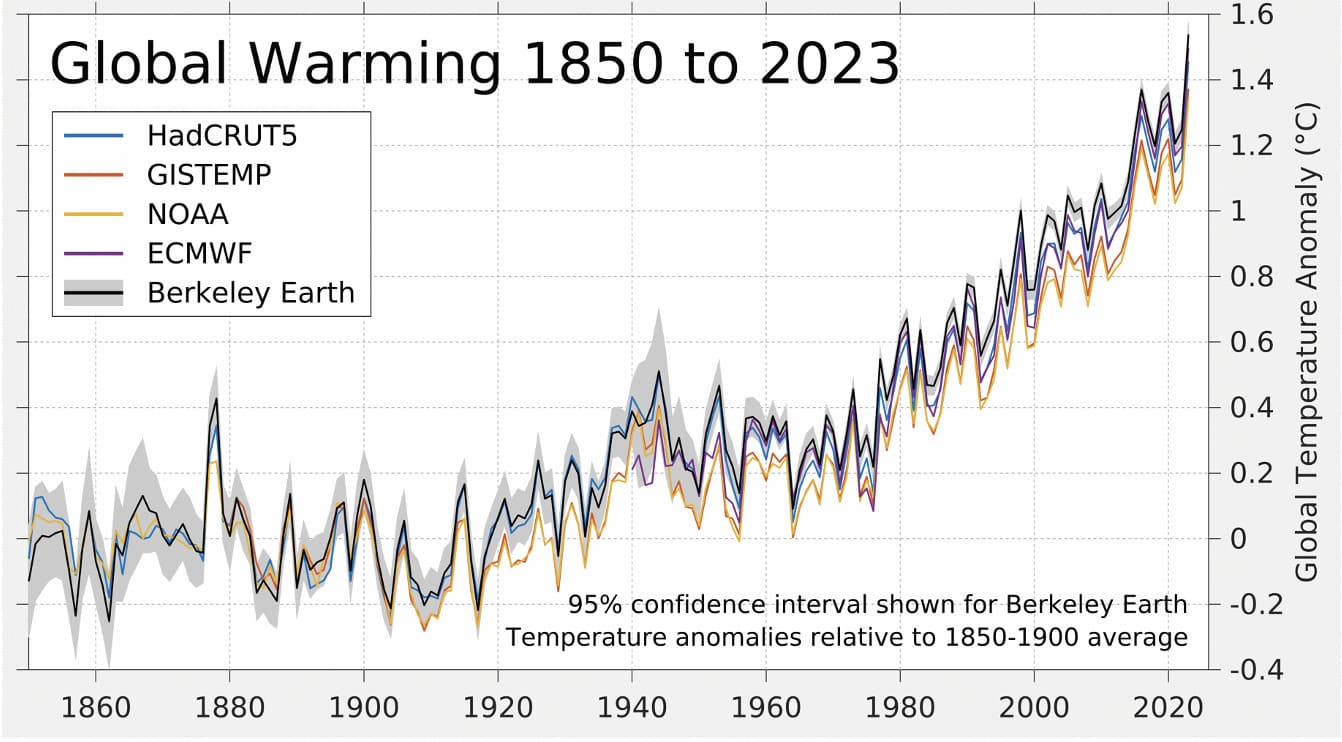
2024 was the hottest year in recorded history. Whatever the causes of climate change, the effects are real. Farmers are contending with rising temperatures, a variety of associated extreme weather events, and the disruption of traditional agricultural norms.
The implications for global food security are obvious, but a new generation of researchers and agronomists – often in partnership with major corporations – are innovating to develop climate resilience technologies and to enable adaptive farming methods that boost crop yields, reduce farmer overheads, and protect the environment.
This article gives a useful overview of the new technologies and novel solutions that are delivering climate resilience at field level, and features four companies whose AgTech innovations are contributing to long-term food security during one of the most challenging periods in the history of agriculture.
Next Generation Technologies for Adaptive Farming
All crops need an adequate supply of clean water in order to thrive. One of the salient challenges facing farmers as temperatures rise is access to irrigation water. This is compounded when agriculture competes with expanding urban areas and industry for affordable water supplies.
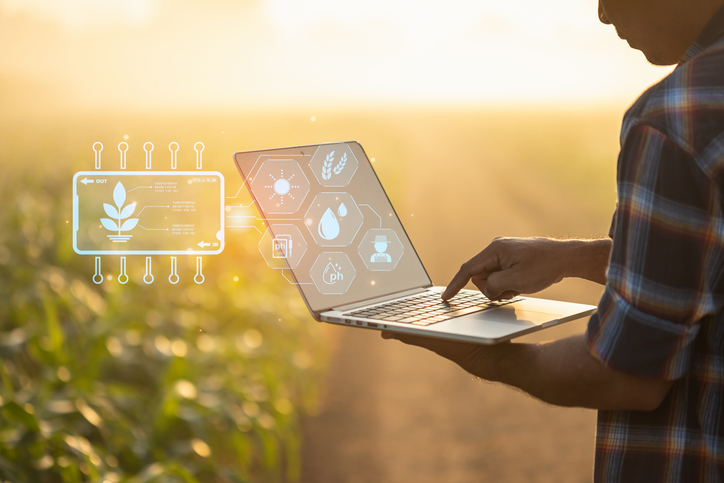
Precision data-driven irrigation methods, using soil sensors, drone (or even satellite) imagery and data analysis systems can direct pH optimized irrigation at a highly localized level – either through drip irrigation or rotor sprays. There are also initiatives to develop circular water economies at a strategic level. Desalination plants and urban wastewater recycling initiatives, powered by green energy, have considerable potential to provide irrigation water on a large scale.
The development of drought tolerant seeds is a key tool for adaptive farming, increasing options for growers in a changing climate. Biostimulants can also protect plants against abiotic stresses caused by extreme weather events, with additional potential to improve soil health.
Data-driven predictive analytics can alert farmers to impending weather events and also to the likelihood of outbreaks of crop diseases and pest infestations. An additional benefit of predictive analytics is their role in improving the availability of index-linked weather insurance for the agricultural industry, allowing farmers to hedge against climate related risks.
Four Companies Innovating for Climate Resilience
ICL Group (NYSE: ICL) (TASE: ICL)
ICL Group is one of the world’s leading specialty minerals companies. It is also one of the largest fertilizer manufacturers in the world and is offering advanced chloride‑free and low-salt fertilizers that enhance plant osmotic balance under drought stress. Crop nutritional solutions like Foliar Fertilizers, Solinure and Nova cover a range of grower requirements and are designed for ease of use and simple integration into precision agriculture fertigation and foliar plans.
ICL’s chloride-free fertilizers are proven to boost yields (ICL reports that Solinure enabled 13% yield increases and an 8.2% in gross income for users during trials), while minimizing negative environmental impacts, contributing to sustainability, and also offering utility in regenerative agriculture where soil health is an issue.
Bayer CropScience – Bayer AG (FWB:BAYN)
Bayer CropScience is conducting advanced research into genetic engineering and trait development with the wider goal of developing climate resilient adaptive farming solutions for farmers around the world. The company is particularly focusing on drought- tolerant biotech traits that improve root architectures for optimized water uptake. A leading solution is DroughtGard® Hybrids which helps corn plants maintain growth when water supplies are restricted.
Bayer CropScience also provides next generation seed coating solutions and treatments (including advanced polymer coatings). The company’s Acceleron® portfolio can improve seed resilience for key staple crops like corn, cotton and soybean through bio-enhancers that protect against nutrient and moisture stress, and chemical defenses against nematodes, insects and disease.
CropX
Efficient water use is one of the core pillars of climate resilience. The ability to eliminate waste through precision irrigation systems is a gamechanger for farmers in arid or drought afflicted regions. CropX provides soil‑moisture sensors and AI‑powered irrigation recommendations to cut water use by up to 30%. The CropX platform uses realtime data to provide actionable insights that allow farmers to precisely irrigate crops before they show signs of distress.
Growers using CropX are able to monitor soil moisture content, actual evapotranspiration and plant health remotely (via apps and mobile devices) and rely on automation to irrigate proactively and on a highly localized basis. CropX is empowering farmers with data-based decision making, and is reducing critical overheads through optimization and efficiency savings.
Planet Labs PBC (NYSE: PL)
Planet Labs is an American company that pushes the boundaries of current technologies through its miniature satellites known as Doves (as well as RapidEye and upcoming Pelican constellations). The satellites deliver information to a variety of users, including climate resilience and crop yield protection stakeholders. Planet Labs provides field-scale resolution that enables detailed crop monitoring and soil health tracking.
Planet Labs satellite imagery is usually updated daily and can provide valuable advance warning of extreme weather events and generate drought alerts. As technologies develop and become more scalable, satellites are expected to play an increasing role in climate resilience. Plant Labs is a leader in the commercial satellite sector and is expected to make a growing contribution to climate resilience.
Conclusion
Major corporations, often in partnership with academia and startups, are developing the emerging technologies and delivering novel solutions for climate resilience. The goal of a smart global agricultural system where flexible adaptive farming practices are the norm is attainable within a generation.
The farming industry is in a pivotal period and companies like ICL Group, CropX and Planet Labs, and dozens of other innovators, are harnessing technology to beat climate change and deliver lasting food security.