
By Fernanda Arreola and Sabine Bacouel-Jentjens
In the spring of 2020, during a global pandemic, a revolution began in a quiet French village when an image caught the eye of a man as he was poring over vintage postcards. His discovery set in motion a remarkable journey of entrepreneurial vision, resilience, and the sustainable transformation of cultural heritage.
The history of the discovery of the Van Gogh Roots site
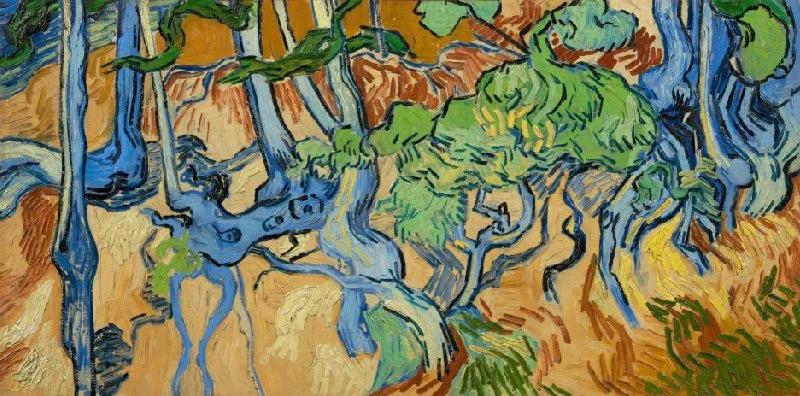
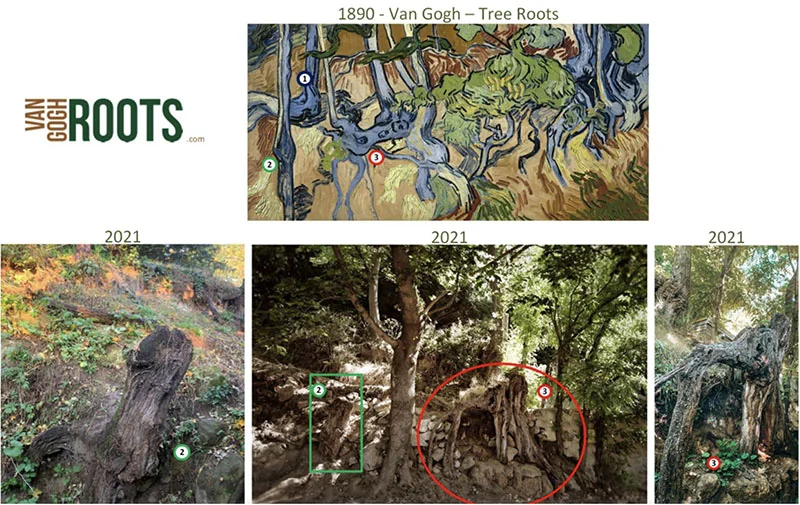
In the spring of 2020, during France’s COVID-19 lockdown, Wouter van der Veen, scientific director of the Van Gogh Institute in Auvers-sur-Oise, discovered the exact location of Van Gogh’s final painting, Tree Roots, by matching a vintage postcard to the scene depicted in the artwork. After confirmation from the Van Gogh Museum in Amsterdam, it was determined that Van Gogh painted this scene on July 27, 1890, just some hours before his death. The site was located on land owned by the Serlinger family, who had purchased and renovated a dilapidated farmhouse in Auvers-sur-Oise years earlier.
The discovery was announced on July 29, 2020, the 130th anniversary of Van Gogh’s death, drawing international media attention and positioning Auvers-sur-Oise as an even more significant destination for Van Gogh admirers.
For three years, as they awaited confirmation that they were the lawful owners of the Van Gogh Roots site, the Serlingers started growing the idea of giving this site a new life, making it available for visitors, and preserving it as a cultural heritage destination. They collaborated with the Van Gogh Museum and, in 2023, joined the Van Gogh Europe Foundation to ensure the legitimacy, authenticity, and educational value of the visitor experience. They installed protective measures, created multilingual informational panels, and registered the site as a non-profit association.
In spring 2024, they finally opened the site to the public, proposing guided tours retracing Van Gogh’s final steps. The addition of international interns enabled the development of multilingual tours, digital marketing, and global outreach via social media and travel platforms.
The Serlingers emphasized the emotional and symbolic value of the site, focusing on maintaining its authenticity and offering a reflective, immersive experience rather than commercializing it with large-scale infrastructure.
The Roots site quickly became part of international Van Gogh travel itineraries, attracting hundreds of visitors in its first season. The Serlingers emphasized the emotional and symbolic value of the site, focusing on maintaining its authenticity and offering a reflective, immersive experience rather than commercializing it with large-scale infrastructure. They kept operational costs low, relying on modest visitor numbers to sustain the site, while exploring further development opportunities and partnerships with regional and international cultural organizations.
Ultimately, the story illustrates how a serendipitous discovery, combined with perseverance, legal resilience, and strategic partnerships, enabled a private family to transform a piece of world art history into a sustainable and meaningful cultural heritage site.
From private passion to public legacy
For Jean-François and Hélène Serlinger, the newfound fame of their property was both a blessing and a challenge. With backgrounds in finance and art, the couple had retired to Auvers-sur-Oise to enjoy their retirement. But suddenly, they found themselves at the center of a global media storm. The Serlingers became accidental cultural entrepreneurs, but the feeling was bittersweet; they now owned a piece of world heritage but, with it, came the responsibility of preserving, interpreting, and sharing it.
Their story is a case study of the complexities and opportunities of cultural entrepreneurship. How does one transform a private discovery into a sustainable business that honors both history and community?
Building a heritage experience—one step at a time
The Serlingers’ approach was rooted in authenticity and incremental innovation. Instead of grandiose museums or costly infrastructure, they focused on creating an immersive, low-impact visitor experience. Guided tours retrace Van Gogh’s final steps, blending art history, landscape, and personal reflection. Informational panels, designed in collaboration with the Van Gogh Museum, offer context in multiple languages. QR codes and social media campaigns—devised with the help of international interns—extend the reach to a global audience.
This “low-tech, high-touch”1 strategy has proved remarkably effective. In their first season, The Roots site welcomed hundreds of visitors from across Europe, Asia, and the Americas. The site’s emotional resonance—walking the very path Van Gogh did—became its greatest asset. As Hélène Serlinger notes:
“The trail should remain untouched so that each person can travel the path of Van Gogh… to confront themselves with the symbolism that Van Gogh expressed in his painting and writings: the cycle of life.”
Lessons for accidental entrepreneurs
The Roots venture2 offers several key lessons for entrepreneurs, educators,3 policymakers, and cultural leaders, especially for those who find themselves with the unexpected and sudden opportunity to become cultural entrepreneurs:
1. Authenticity drives engagement
Visitors are increasingly seeking genuine, immersive experiences. By preserving the natural landscape and focusing on storytelling, the Serlingers created a site that resonates on a personal and emotional level.
2. Partnerships are essential
Collaboration with established institutions—such as the Van Gogh Museum and Van Gogh Europe Foundation—brought credibility, expertise, and international visibility. Regional partnerships opened doors to funding and promotion. Future partnerships with the regional authorities and European institutions may allow them to finance the necessary works to improve the hosting facilities and services provided.
3. Digital tools amplify impact
Simple technologies—multilingual QR codes, social media, and online booking—enabled the site to reach and engage a diverse, global audience with minimal overhead.
4. Sustainability is key
By keeping costs low and leveraging volunteer and intern support, The Roots site achieved financial viability with just 1,500 visitors per year. This model prioritizes long-term preservation over short-term profit.
5. Emotional value matters
Beyond economics, the true value of heritage sites often lies in their ability to inspire, heal, and connect people across generations and cultures.
A blueprint for the future
As Europe’s cultural sector faces mounting pressures—from over–tourism to underfunding—The Roots stands as a model for sustainable, community-driven heritage entrepreneurship. Its success is not measured in ticket sales alone, but in the stories, memories, and connections it fosters.
For business leaders and policymakers, the message is clear: innovation does not always require high-tech solutions or massive investment. Sometimes, the most profound impact comes from recognizing the value beneath our feet—and having the courage to share it with the world.