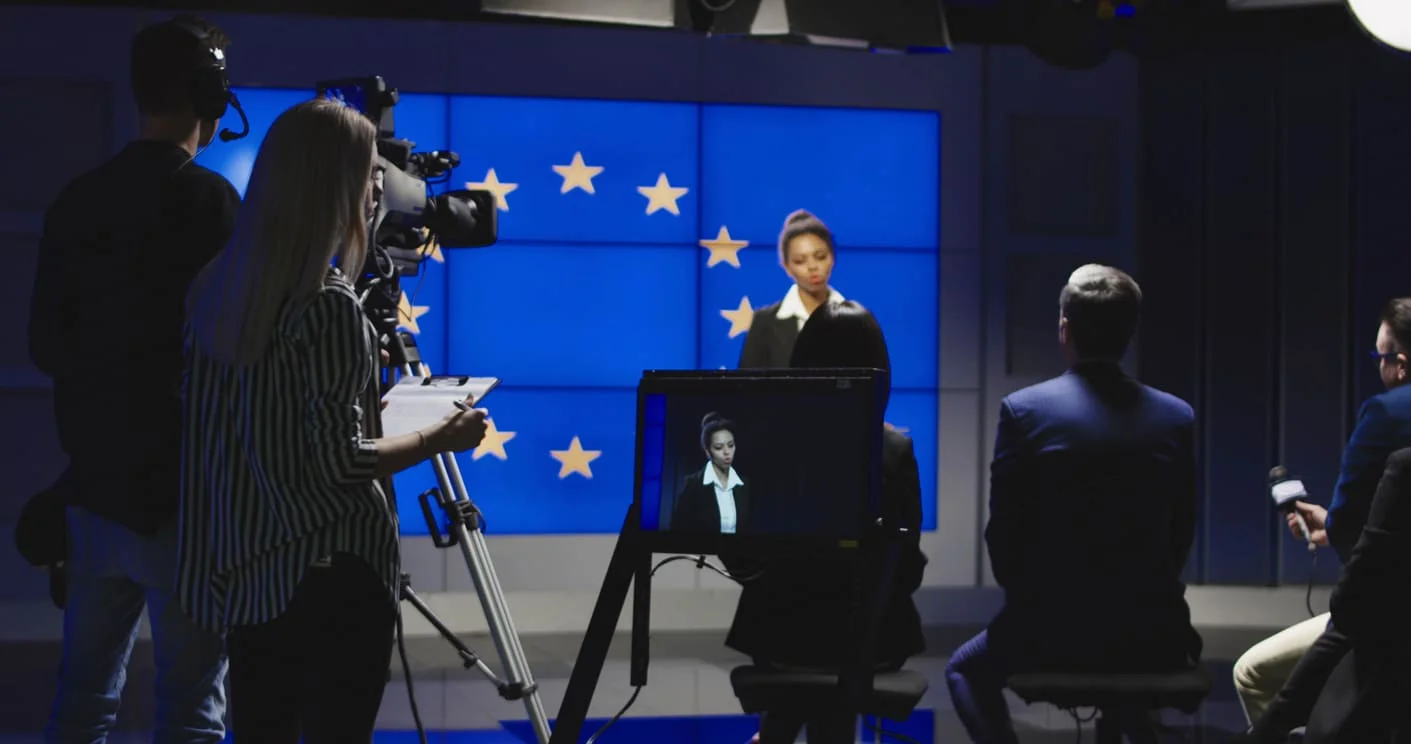
Some of the biggest businesses in European media have come together to launch the European Media Marketplace. Announced in July 2026, it aims to create a collaborative marketplace that connects media-related businesses, prioritizes first-party data management, and builds a sovereign AI industry in Europe.
What is the European Media Marketplace?
The European Media Marketplace is a coalition of media companies, telecommunication suppliers, data management companies, retailers, and marketers. Together, they cover every step in the media production pipeline, including marketing and commerce for digital business models. Its founding members include media giants like Experian, Vodafone, Virgin Media O2, and Orange Advertising.
They’ve joined forces to address industry fragmentation in the European media space. Specifically, how audience data handling, media buying, and deployment are split depending on the country, platform, and marketing channel.
Like with individual businesses, distributing across multiple channels helps when there’s a single point of control that streamlines efforts and promotes interoperability between them. Many businesses achieve that through an omnichannel marketing platform, with modern platforms using AI to cover more ground and handle large datasets more effectively.
That works for individual businesses targeting consumers, but there should also be a solution for continent-level collaboration between Europe’s media giants. The result is an inconsistent experience for European clients when they try to buy media space, and the industry’s inability to build sovereign tech or advocate for an independent, data-secure open web in Europe.
At present, clients who want to buy media exposure across Europe need to navigate many different publishers, data networks, and advertising tech stacks that can’t or don’t communicate with one another. A by-product of this was that clients went elsewhere, to global (often US-based) competitors like Google or Meta, who benefit from billions of users attached to brands that are already prominent worldwide. They present one point of contact for clients, with built-in ad buying that targets all of Europe seamlessly.
The Goals of the European Media Marketplace
With that in mind, the European Media Marketplace currently has four major goals that would help create a more open, navigable media environment across the continent. The first is a single point of contact where brands can buy media across several European countries without hopping between publishers. The second is to leverage telecom user data, travel history, and e-commerce insights to ditch third-party cookies and develop first-party data integration instead.
The third aims to cut out ad technology middlemen by developing direct supply pathways so buyers connect directly to publishers. This could mean a larger percentage of ad spend actually makes it to advertisers and content creators, instead of getting lost in the process of buying it. The last and most ambitious goal is all about AI, specifically using AI to optimize and automate ad campaigns. It can take the friction out of the bidding process on the client’s side, the ad targeting on the marketer’s side, and generally help manage cross-channel campaigns. To stay in line with the second goal regarding first-party data, Europe will need AI tech sovereignty.
The Scope of the European Media Marketplace
At its start, the European Media Marketplace is launching in five markets. They are Germany, France, Spain, Italy, and the United Kingdom. This is unsurprising given that these countries have the largest, most active, and most marketed tech economies in Europe. Together, they make up approximately 70% of all digital ad spend across Europe.
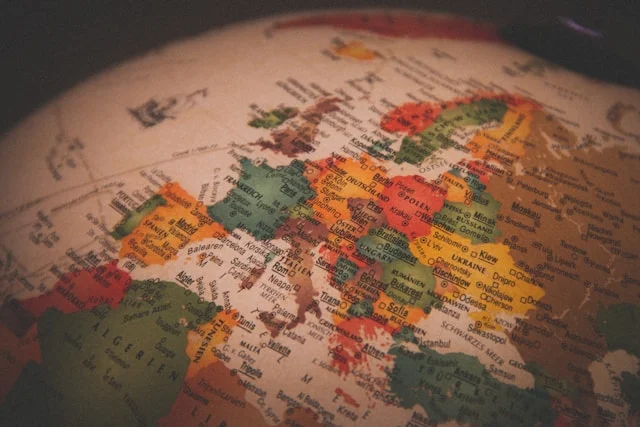
These Western European countries are also the homes of their founding members. Deutsche Telekom is part of the coalition through its subsidiary T Advertising Solutions, while Orange Advertising primarily works in France and Spain. Virgin Media O2 is an entirely UK business, while Vodafone operates in the UK, Germany, Italy, and Spain. They already have a base of infrastructure in these economies, providing the best possible launch pad for a coalition.
Speaking about the marketplace, Equativ CEO Arnaud Créput said: “By bringing together premium media, trusted data, and AI-powered activation within a single framework, we are unlocking the true scale and value of Europe’s open web. Our ambition is not simply to make media buying easier, but to make Europe’s premium digital ecosystem impossible to ignore.” Given those comments, it’s almost certain that the success of the European Media Marketplace would see it expand to other European territories.