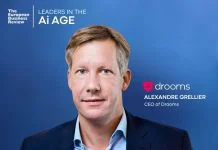

Interview with Mikko Teerenhovi of Xolo
Organizations everywhere are facing a fundamental leadership challenge: how do you manage work when people can increasingly manage it themselves? In this conversation, Mikko Teerenhovi, CEO of Xolo, discusses why independent work is rising both inside and outside organizations, how AI is accelerating this shift, and what leaders must change to build resilient, empowered teams.
Building and scaling digital businesses that support large communities of independent professionals often means solving complex challenges from the ground up. What experiences in your career have most shaped how you approach this kind of work today?
First, I have huge respect for independent workers. Choosing to build something on your own takes courage, self-direction, and a non-domesticated mindset. You need the willingness to step outside conventional structures and make your own decisions.
I know this from experience. I spent several years as a solopreneur myself, and that alone means solving complex problems from the ground up. Those experiences also taught me humility: not to assume I have all the answers. Solopreneurs are not one homogeneous group, but a very diverse one with one unifying factor.
They have to handle all the business functions on their own, just like any company, which means outsourcing some parts simply makes sense. I was previously building banking services for solopreneurs, and I heard the stories of how they were treated. In the eyes of big banks, they were almost like toxic waste: willing to pay a bit less, but still needing the same business banking services as everyone else.
So we built everything from the ground up and learned that solopreneurs can be served with a cost-efficient solution without compromising on quality. In fact, the opposite: we built something better.
This is very much the same story with Xolo. We want to automate what can be automated in accounting, and on top of that provide world-class service for solopreneurs. They deserve it.
Your background spans product, design, and financial services in fast-growing companies. What lessons from those experiences have most influenced how you lead teams and make decisions now?
We live in an over-analytical world. Everything is tracked, measured, forecasted and converted into datasets, from Eurovision winners to Fortune 500 Q3 earnings. The risk is that we start valuing the model more than the human experience behind it.
Product and design taught me that you have to stay close to what you are building. Financial services taught me that trust, reliability and discipline matter just as much as the idea itself. Combining those two worlds has probably shaped my leadership the most.
Leadership is less about controlling every decision and more about making sure the right people have the context, trust and space to make them.
The biggest lesson is that you rarely know in the beginning what something can become. You need to care for it every day, improve it, test it, and stay open to surprise. That requires comfort with ambiguity, but not chaos. It means creating a culture of “yes, and” while still being clear about quality, responsibility and direction.
I have also learned to value ownership, creativity and diversity in teams. The best decisions are usually made by the people closest to the problem. Leadership is therefore less about controlling every decision and more about making sure the right people have the context, trust and space to make them.
The best operating model, in my view, is a structured experiment factory. You keep the engine running, but you stay curious every day about what could be done better, differently or more courageously.
The rise of independent work is changing how businesses are structured and operated. Where are companies still struggling the most in adapting to this shift?
The interesting thing is that independent work is not only rising outside companies. It is also rising inside them.
AI is pushing more people to manage workflows end to end. The old model of work moving from person A to person B to person C is becoming less relevant, at least in tech. More people are expected to define the problem, use the tools, manage the process and deliver the outcome.
So what we are really seeing is the rise of independent work everywhere, whether you do it through your own company or inside someone else’s company.
Where companies struggle most is that their structures are still built for managing work, not for enabling people to own work. Too much time and money is tied to handovers, coordination layers and habits from yesterday.
Adapting to this shift means asking a simple question every week: which structures still create value, and which ones only exist because the old operating model needed them?
AI gives more people the capability to work independently. Capability builds confidence. That will not remove the need for companies, but it will force companies to become much better places for independent work.
In practice, what tends to break first when organisations try to support a more flexible and independent way of working?
Why would something else break than the old sense of control?
COVID already forced companies to accept remote work. Now AI is forcing them to accept more independent work. People can do more on their own, move faster, and manage bigger parts of the workflow end to end.
This requires a new kind of management model. If leadership is based on visibility, approvals and handovers, it starts to feel outdated very quickly. The job of the organisation becomes less about controlling the work and more about setting direction, defining values, and creating the conditions for capable people to deliver big outcomes together.
Then there is the org chart. The people working on a problem should not be defined only by job title, but by what they can contribute. In that sense, maybe it is finally time for the self-organising teams people have been talking about for decades.
What practical changes can companies make today to better support independent professionals and create more stable and reliable ways of working?
A good starting point would be to give solopreneurs real projects, pay market rates, and bring them close enough to the team to make a real contribution.
This matters now because we are going through one of the biggest technological shifts in history. Independent professionals often have deep specialist know-how, but also something even more valuable: they know how to lead their own work. Many are already using AI every day out of necessity. It is not an academic research topic for them.
One thing companies need to keep in mind is that the relationship cannot look like employment. Legislation around solo work is still outdated in many places, so companies need a clean commercial setup with solopreneurs.
But independent professionals should not be treated as outsiders. The principles are the same as with any strong distributed team: direction, trust, clarity and results. The contract is just different.
As teams become more distributed across countries and working styles, what approaches help leaders keep organisations aligned, stable, and effective?
I think the real question is how you find people who are genuinely motivated by the company’s mission. If you find them, many of the usual problems around distributed teams and different working styles become easier to solve, because motivated people take responsibility for solving them.
In the end, it comes down to control or empowerment. Controlling remote employees is difficult and mostly useless. You cannot manage distributed work through visibility and activity tracking. You manage it through direction, trust and results.
What is needed is a regular rhythm around company goals and direction. People need to know where the company is going and how their work connects to it. The same applies at the individual level: everyone needs clarity on their own goals and expectations.
Alignment does not come from writing more rules or huge manuals on how to work. It comes from hiring people who care, repeating the direction clearly, connecting it to individual goals, and then trusting people to deliver.
How do you see the relationship between companies and independent professionals evolving over time, and what should leaders be preparing for now?
On a general level, I think leaders should prepare for a future that will look very different from today. Predicting exactly what it will be is extremely hard, of course, but the pace of AI development is so fast that I believe most workflows will be rewritten across most industries.
The better question is: who are the right people to solve this problem, and how do we give them the context, trust and setup to do it well?
In that transition, the relationship between companies and independent professionals will become much more important. Companies will not only ask what tasks can be outsourced to AI, but also where they need real human judgement, taste, empathy and experience. Those things will become more valuable, not less.
That is why independent professionals make sense. They are often already used to working with ambiguity, leading their own work, learning new tools quickly and taking responsibility for outcomes. That is exactly the kind of capability companies will need more of.
So leaders should prepare for a model where the line between “our team” and “external contractors” becomes less useful. The better question is: who are the right people to solve this problem, and how do we give them the context, trust and setup to do it well?
The future of work will not just be companies plus employees plus AI. It will be more fluid teams of employees, independent professionals and AI agents working together around outcomes. Leaders should start preparing for that now.