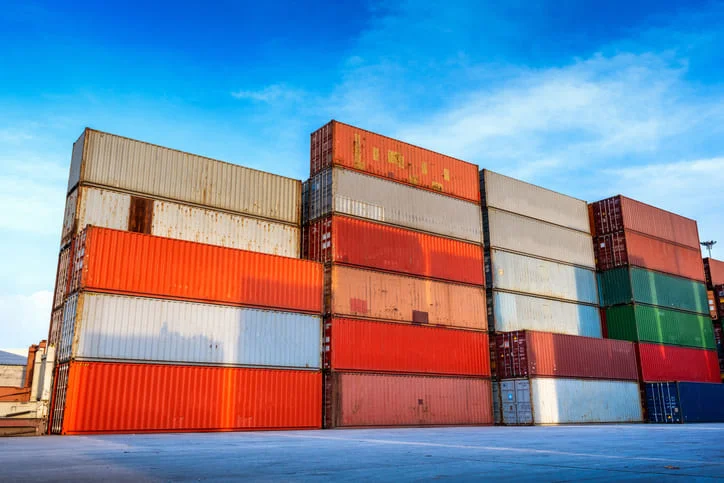
A half-empty container rarely looks dramatic on paper. The shipment leaves on time, the invoice gets paid, and operations move on. But inside many logistics departments, there’s a quiet financial leak happening every day: companies are paying premium freight rates to move air instead of cargo.
That’s the uncomfortable reality behind poor container load planning.
For manufacturers, distributors, and exporters shipping internationally, even small inefficiencies in cargo loading can snowball into major annual losses. The problem is that these costs rarely appear under one clear line item. Freight bills, damaged inventory claims, overtime hours, warehouse congestion, and excess safety stock scatter these costs.
The “Space Tax” Nobody Talks About
Freight rates are unpredictable enough already. Yet many companies unknowingly increase their logistics costs further by underutilizing container capacity.
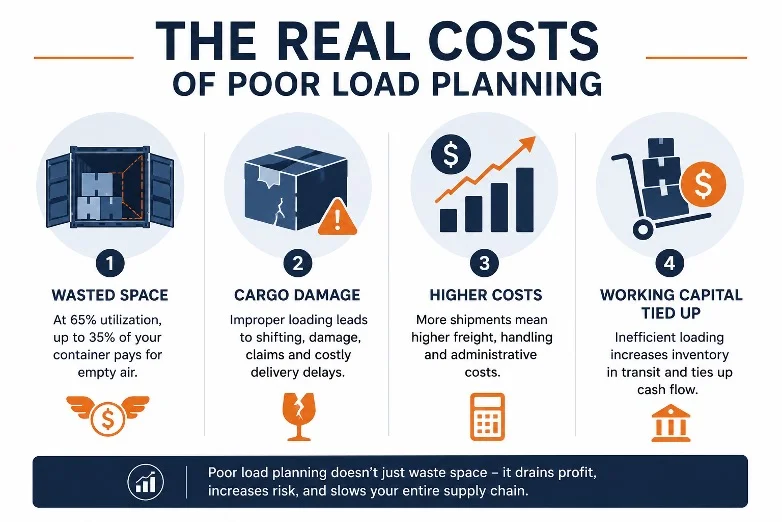
If a 40-foot container costs roughly $3,500 to ship and it’s operating at 65% utilization, around one-third of that spend generates no value. Over hundreds of containers per year, that becomes a serious financial problem.
What makes this frustrating is that the issue is often preventable. In many cases, improving container loading optimization by just 10% can reduce the total number of shipments required throughout the year.
For operations teams under pressure to reduce costs without slowing deliveries, that matters.
Poor Cargo Loading Creates Problems Beyond Freight Costs
The financial hit doesn’t stop at transportation invoices.
Improper cargo loading often leads to unstable weight distribution, weak stacking patterns, and unsecured freight movement during transit. The result? Damaged goods, rejected deliveries, insurance claims, and unhappy customers.
Warehouse teams know this firsthand. One badly planned container can create hours of repacking work at the loading dock, especially during peak shipping periods.
There’s also a less visible consequence: working capital pressure.
When shipments become inefficient or unreliable, companies typically compensate by increasing buffer stock. More inventory sits in warehouses “just in case,” tying up cash that could otherwise support growth or production.
That’s the bigger takeaway here: container optimization isn’t only about fitting more boxes into a container. It directly affects operational stability and cash flow.
Why Manual Planning Methods Break Down
Many businesses still rely on spreadsheets, rough CBM calculations, or warehouse experience when planning shipments. That approach may work for lower shipping volumes, but it becomes risky once operations scale.
The issue is simple: volume calculations don’t reflect real physical loading conditions.
Packaging shape, stacking limitations, pallet overhang, and unloading sequence all affect how efficiently cargo fits in reality. A shipment that looks perfect on paper may fail during actual loading.
One common mistake is treating containers like static storage units rather than moving transport environments. Freight shifts during ocean and road transport. Without proper balancing and securing logic, even tightly packed cargo can become unstable.
Experienced logistics managers know that the cheapest shipment is not always the fullest one. A poorly balanced container can create delays, fines, or cargo damage that costs more than the freight savings.
How Modern Load Planning Software Changes the Equation
Modern load planning software replaces guesswork with 3D simulation and automated calculations.
Instead of relying on manual planning, companies can now evaluate dimensions, stacking rules, weight distribution, and container constraints before loading even begins. What once took hours can now be modeled in seconds.
More importantly, the software exposes inefficiencies humans often miss.
Many companies discover they consistently leave dead zones near container doors or fail to use vertical space efficiently. Across dozens of shipments, those small inefficiencies become expensive habits.
Smart solutions help teams visualize cargo placement in 3D, test different loading scenarios, and improve container loading optimization before trucks arrive at the warehouse.
Another advantage is consistency. Experienced warehouse staff may develop strong loading instincts over time, but software helps standardize best practices across teams and locations.
Better Load Planning Is Becoming a Competitive Advantage
As transportation costs remain volatile, companies that improve container load planning gain advantages beyond freight savings. They reduce waste, improve shipping reliability, and build leaner supply chains.
There’s also a sustainability factor. Fewer containers shipped means lower emissions per delivered unit, something increasingly important for manufacturers facing ESG reporting requirements.
Efficient cargo loading is no longer just a warehouse task. It’s becoming part of broader operational strategy.
The companies that recognize this early are already ahead.
Sources
- https://www.easycargo3d.com/pt-pt/
- https://www.bison-jacks.com/blog/iso-weighing/the-hidden-costs-of-underloading-containers/
- https://www.zensar.com/insights/blog/consumer-services/application-services/how-to-reduce-shipping-costs-with-container-space-optimization