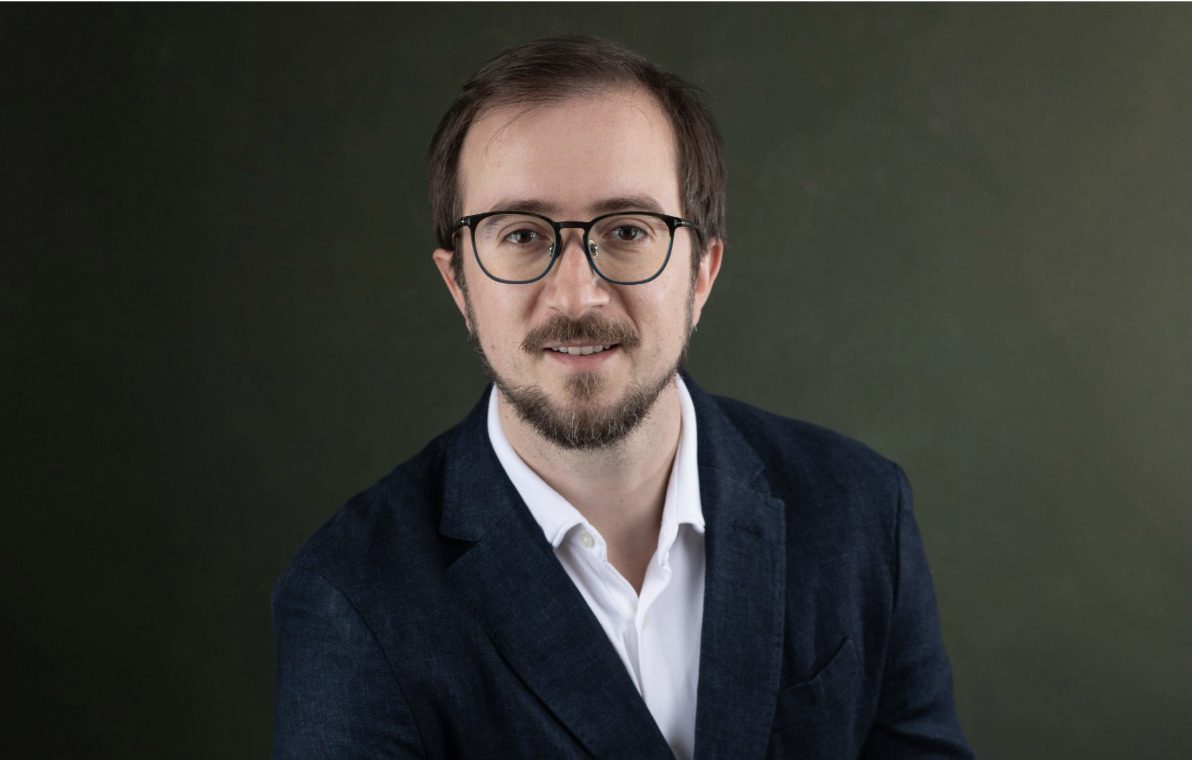
Kirill Silkin is a skilled and reputable oil and gas expert who started his career banking as a sophomore. He is experienced in trading and investing, and currently, he is planning to develop as an entrepreneur. This article contains the biography of Kirill Silkin from his childhood to the present day. The readers will get to know about the professional’s educational and working background, private life, business principles, and current plans.
Influence of Relatives and Early Successes in Sports
Kirill Silkin was born in 1988 in Moscow, one of the country’s intellectual and business centers. The boy grew up surrounded by talented and ambitious people in an environment where initiative and diligence were welcomed.
Both of his parents had previously moved to the capital from other parts of the country and received higher education in the railway industry. His father, who held three degrees in total, used to teach at his own alma mater and later switched to entrepreneurship and other activities. His mother worked in her specialty for a while before devoting herself to her family and three children. However, it was the grandfather of Kirill Silkin from whom the boy inherited his inclination to mathematics, accuracy, and structure. He is still active today, has made a name for himself as an inventor, engineer, and mechanical physicist.
Both parents and kids in Kirill Silkin’s family used to play tennis, which was one of the trendiest sports in his childhood. He took part in competitions, which taught him the importance of not only physical but also psychological endurance. Besides, he found time for many other types of sports, such as basketball, football, sailing, chess, karate, and so on. Since his early years, the boy was well-prepared for substantial workloads and learned to achieve his goals. He was eager to learn rules and apply them effectively.
Education and Early Career Choice
When the boy was growing up, the educational system in his homeland was undergoing a major transformation. Private institutions appeared, introducing innovative methods and approaches as an alternative to standard public institutions. At the age of four, the child was sent to a boarding school, which he left at 13. The classes were small, so the teachers could pay attention to each pupil and make sure everyone performed well.
After Kirill Silkin became a teenager, his father asked him about his plans for the future. The boy shared his intention of becoming an entrepreneur, so the parents sent him to a gymnasium with a focus on economics. His final exams at school also counted as university entrance exams. By scoring 40 out of 40 points, he secured a state-funded place at the Financial Academy, where he eventually spent five years as a student and graduated with a specialist degree.
Career Milestones
Being quick-minded and open to new experiences, Kirill Silkin realized early on that he did not want to limit himself to theory. In his first job, he assisted an accountant for a few hours before leaving for classes in the afternoon. Then, he worked as an economist and also took part in internships, one of which happened at Deutsche Bank — this company eventually hired him as a full-time employee.
Shortly after, the talented youngster obtained a master’s degree in general management in London. After coming back to his homeland, he got a job at the largest Russian bank and then in investment company. At a certain point, he got involved in an asset swap deal, which brought him to the Netherlands and introduced him to the oil and gas industry. He built expertise over time, then spent eight years serving as Managing Director of a joint venture gas company in a sector he had no prior experience in. He quickly and flexibly adapted to a new country and new business environment. He relocated to the Netherlands, where he later built his family life.
Investing as a Lifetime Vocation
When Kirill Silkin was at school, his father was studying at the Financial Academy, and he gave his son a book about securities. This is how the future investor took interest in the topic. He started trading and informally advising relatives and acquaintances in the age of 15. Later on, he has been investing throughout his life.
Now, it is science-intensive startups that attract him the most, and he is building a portfolio of them. He delved into venture capital after two attempts to refine the strategy of the company he headed. It became clear that new energy sources needed to be considered, and it inspired the expert to start looking more broadly at the European business landscape.
Kirill Silkin admits that he possesses a macro-analytical mindset, which means he approaches things calmly and thoughtfully. He shares Warren Buffett’s stance, sticks to the so-called value investing, and has an inclination toward fundamental analysis. However, due to a lack of time, he sometimes does not have an opportunity to apply his preferred approach, especially in the securities market, and opts for a portfolio approach.
In venture investing, he structures his assets so that each company has the potential to grow enough to cover the entire portfolio. For him, it is not reliability that matters the most but growth potential. He might be ready to provide funds to a business if he likes its core idea or its management team. Such decisions can be characterized as a bit too emotional, but at the same time, they enable the investor to reveal his visionary talents.
Plans for the Nearest Future
Now, Kirill Silkin is looking to acquire a company. He would like to become the owner of a business that develops software for the oil and gas industry, which the expert knows inside out. He realizes that the search process can take a long time because the ideal candidate needs to meet two criteria: be relatively affordable and demonstrate decent growth potential. The company should be able to achieve the goals that the entrepreneur set for himself.
Previously, he considered buying a company from another sector, such as manufacturing packaging machines for the food industry. However, the investor realized that he would lack a competitive edge in any field he had not worked in. He would need to rely exclusively on general management principles in this case, but he would fail to leverage his strengths.
Even in the familiar oil and gas niche, there are obstacles to consider. First, several types of buyers can compete for the same company. These can include not only private entrepreneurs but also financial buyers, which are funds and investment structures, and industrial buyers, which are organizations from the same industry. It is a normal situation in a fairly developed capital market like the Netherlands. Kirill Silkin would hardly be able to offer a higher price than strategic player, such as Shell, Wintershall or another entity of the same level.
Besides, when a foreign expert relocates to another country, it might be hard for them to find common ground with the teams that have been working there for a while. For this reason, the investor had to geographically expand his search, even though he initially considered the Netherlands.
Kirill Silkin is aware of the complexity of the challenge that he is about to undertake. For him, it is not a reason to step down but an opportunity to showcase all the skills and talents that he has been passionately developing for decades.
Family Life
Kirill Silkin’s personal biography is family-centered. He is married and has three children. The youngest one is still of kindergarten age. The eldest son resembles his father to a great extent in physical agility and a strong attention to detail. Two elder kids and their father play piano. All the family members regularly travel from the Netherlands, where they reside, to other countries.