In recent years, the financial advisory industry has been described as shifting from product-driven sales models toward more client-centered approaches. In practice, however, this transition remains uneven, shaped not only by institutional structures but also by the realities of consumer behavior.
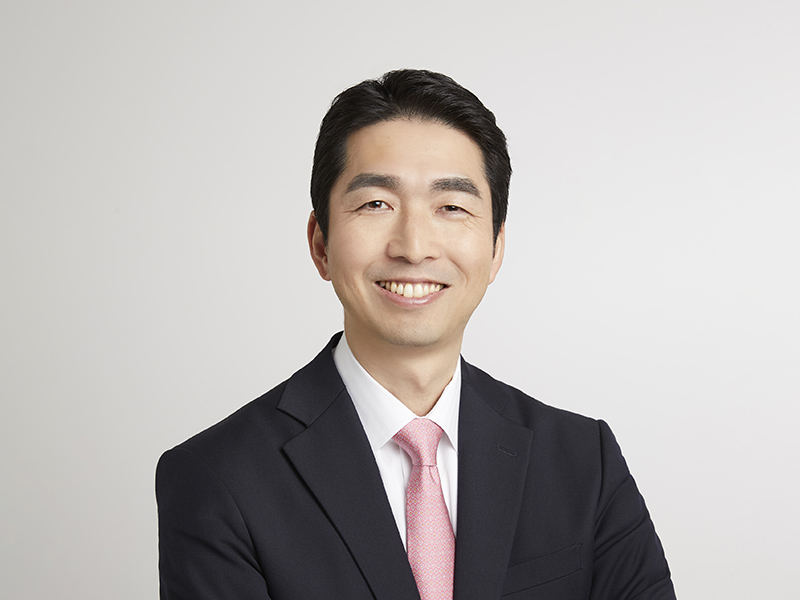
The experience of Naruhisa Takahashi, founder of Financial Platform Co., Ltd., illustrates the gap between these ideals and day-to-day operations.
Early Career and Structural Constraints
After graduating from university, Takahashi entered the financial industry with the goal of becoming a derivatives trader. Instead, he was assigned to retail divisions, where performance was measured primarily through short-term sales results.
He also faced limitations in product selection, as he was only able to offer products from his own firm.
“There was a dilemma in only being able to handle in-house products. In that situation, I felt I couldn’t achieve what I actually wanted to do.”
This experience led him to question whether it was possible to prioritize client outcomes within a traditional corporate framework. In 2008, he moved into independent practice as a financial planner.
Client-Centered Ideals vs. Consumer Reality
Initially, Takahashi aimed to build a fee-based advisory model centered on client outcomes. However, he soon encountered a disconnect between this approach and actual client behavior.
“I realized that there are not many consumers who are willing to pay for advice.”
Even when clients were willing to pay, the fees were often too low to sustain a business model based solely on advisory services.
This pattern is not unique to Japan. In many markets, financial advice has historically been bundled with product sales, and demand for standalone advisory services remains limited.
As a result, Takahashi adjusted his model.
“I had no choice but to focus on financial product sales as a secondary solution.”
By combining advisory services with roles such as an independent financial advisor (IFA) and insurance agent, he built a structure that allowed both flexibility in recommendations and economic sustainability.
Client Acquisition and the Challenge of Imitation
Client acquisition presented another set of challenges. In the early stages, seminars served as an effective channel for reaching potential clients. However, this advantage proved difficult to maintain.
“Competitors would attend to observe, and once the approach was copied, the content quickly lost its appeal.”
He then shifted to web-based marketing, where he encountered competition from large financial institutions with significantly greater resources. As digital channels have become central to client acquisition, competition has intensified across the industry.
In response, Takahashi repositioned his practice around specialized, experience-based advisory services.
Specialization and the Limits of Scalability
As his work became more tailored, another issue emerged: the challenge of scaling expertise.
“Because financial advice requires a high level of specialization, it tends to become highly dependent on the individual.”
While personalized services can improve client satisfaction, they also make it difficult to train staff and expand operations.
This tension is widely recognized in the advisory sector. Firms continue to explore ways to simplify processes without reducing the quality of advice. Takahashi notes that developing more accessible frameworks may allow less experienced advisors to contribute while maintaining consistency.
A Cautious View on Self-Directed Investing
Takahashi’s perspective on individual investing reflects his experience working directly with clients.
“After saving a few million yen, can people really research on their own and achieve long-term results? I don’t think so.”
Although access to financial information has expanded significantly, the ability to interpret and apply that information remains uneven. In this context, the role of advisory support continues to be relevant.
Defining Impact Beyond Financial Outcomes
Takahashi frames the purpose of his work beyond asset growth alone. He describes its intended impact in terms of removing constraints on individuals:
- freedom from the belief that one must work indefinitely
- freedom from the assumption that wealth is unattainable
- the ability to pursue goals without giving them up
At the same time, his approach to growth remains measured.
“First, I want to focus on supporting the people within my reach.”
Rather than prioritizing rapid expansion, he emphasizes building a small, capable team and growing through referrals and trust.
Conclusion
The evolution of financial advisory is shaped not only by changing ideals, but also by the interaction between client behavior, competitive pressures, and business sustainability.
Takahashi’s experience highlights the need for adaptation within these constraints. His approach reflects an ongoing effort to balance client-centered principles with the practical realities of operating in the financial services industry.
As the sector continues to evolve, this balance remains a central challenge for advisory practices worldwide.