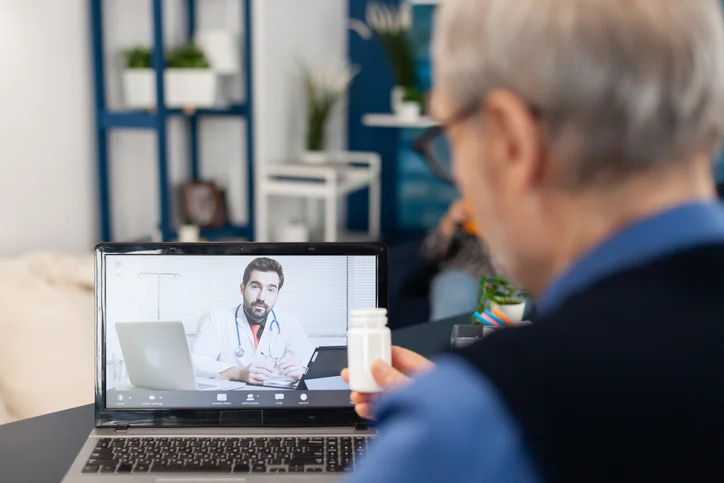
Digital health consultations peaked in Europe during the COVID-19 pandemic when face-to-face visits with medical professionals became a health hazard across the world.
Teleconsultation become a safe haven for Europeans, giving them easy access to medical services. It has since become a preferred way of accessing healthcare.
Data shows that people across Europe use teleconsultations much more than they did before the pandemic. However, how much the technology is used varies from country to country.
Read on as we explore how teleconsultation is becoming more prevalent in Europe and how it compares to other regions across the globe.
How Europe Compares to Australia
It is prudent to assess how Europe stacks up against other advanced health systems, and Australia provides a useful point of comparison.
While both Europe and Australia experienced rapid telehealth growth during the COVID-19 pandemic, the scale and persistence of remote healthcare vary between the two.
Teleconsultation has become a key part of healthcare delivery in Europe, but how much it is used depends heavily on the country.
According to data from the Organisation for Economic Co-operation and Development (OECD), about 13 percent of all doctors’ appointments across 22 European countries were conducted remotely.
Countries such as Estonia, Denmark, Sweden and Portugal have fully leaned into digital care. In those places, more than 25% of medical visits take place online, which hammers home the point that telehealth has become a key part of the European healthcare sector.
However, other major European countries have been far more cautious. Remote consultations make up only a small fraction of appointments Germany and France, where face-to-face meetings are still prevalent.
Meanwhile, Australia has taken a more consistent approach with telehealth becoming a more consistent part of its healthcare system since it was introduced during the pandemic.
Around 19.4% of all Medicare-funded general practitioner (GP) consultations were delivered through many of the telehealth companies featured on comparison website Medicompare.
Around one quarter of consultations in rural and regional areas in Australia are now provided through telehealth platforms.
Breaking into the Commercial Sector
Patients across OECD countries averaged just half a remote consultation per year. That’s because telehealth was previously a niche service, but the pandemic changed that overnight.
Some people expected telehealth to regress once the pandemic faded, but that wasn’t the case. The rate of virtual care usage stabilised at around one teleconsultation per person annually by 2023, which is well above pre-pandemic levels.
The rise of telehealth has changed the game, forcing medical establishments to revisit their operating models. Hospitals and clinics now invest in digital platforms alongside physical infrastructure.
Healthcare providers have also started partnering with technology companies, particularly those that offer secure video, scheduling and electronic records.
Insurance systems and public payers have had to decide whether and how to reimburse remote care, turning policy decisions into market signals.
But Europe does not operate under a unified telehealth market. It varies from country to country, and each one impacts the business environment in one way or another.
For example, Spain and Lithuania invested in telehealth and make it a part of their healthcare system, so the average patient now has nearly six times more teleconsultations than before 2019.
Why some European Countries Lead the Telehealth Market
One of the best ways to judge how successful telehealth is as a business is to look at how often it’s actually used, not just whether the technology exists.
In some European countries, around 20% of all medical appointments are now done online, over the phone or through video consultation.
Estonia leads the way, with 36% of medical visits conducted via teleconsultation. Portugal, Sweden, Denmark, Croatia and Spain all sit above 20%.
This didn’t happen by chance. In Estonia, the government built strong digital systems early on tools such as electronic medical records, secure online identifications (IDs), and easy data sharing.
With those systems in place, adding video or phone consultations was a natural next step, and it makes it easier for telehealth companies to grow, as the basic infrastructure is already available.
Portugal and Spain have grown in the telehealth sector thanks to their strong public health involvement and clear reimbursement rules.
When medical professionals are paid the same amount for a remote appointment as they are for seeing someone in person, they are more likely to keep offering telehealth.
For telehealth businesses, knowing they will be paid reliably is crucial. It helps them plan ahead, hire staff and improve their services without worrying about any sudden change in the rules.