
By Frank Cespedes and Ben Plomion
If you’re looking for an instructive case study of the absorption of AI technology into a somewhat conservative industry, the dentistry sector should be high on your candidate list. Sit back comfortably as Frank Cespedes and Ben Plomion conduct a thorough dental examination.
Much current “analysis” of AI’s impact is mainly armchair thinking, trying to divine the future by extrapolating speculative assertions about evolving technological capabilities – what the economic historian Robert Gordon has called the musings of “techno-optimists.”1
But we don’t need to think about AI in these abstract terms. Truly impactful technologies like electricity, Wi-Fi, or GPS are ones that we don’t see anymore, because they are embedded in workflows and tasks, and this is happening with AI in places you might least expect – e.g., dentistry where, in just a few years, AI has progressed from research prototypes and clinical pilots to FDA-cleared tools embedded in daily patient care. This article examines the dental industry as an instructive case study for AI-driven change and the strategic lessons for other industries.
From X-rays to revolution
Dental services, including diagnostic, endodontic, and periodontic procedures, as well as cosmetic dentistry, were a $519 billion industry globally in 2024; it’s a $155 billion market in the U.S. alone, and, driven by demographic and social trends, growing at 4.5 percent annually.2
The dental industry includes a mix of many small independent practices, group-practice Dental Service Organizations (DSOs), public-sector and state-affiliated clinics, a wide range of equipment and service suppliers, and highly regulated procedures where payment is often tied to reimbursement procedures from insurance or governmental entities – a traditional recipe for an industry resistant to change. Yet AI has already driven major changes in dental diagnostics, clinical workflows, and administrative tasks, while increasing productivity and patient care and trust.
Diagnosis:
Onsite Dental, a DSO, runs clinics at company locations. Some of its units are spread across miles, as in Georgia where Onsite Dental teams visit 70 different carpet factories on a rotation basis. Others are consolidated, as in an office campus or at a big shipbuilding facility in Newport News, Virginia.
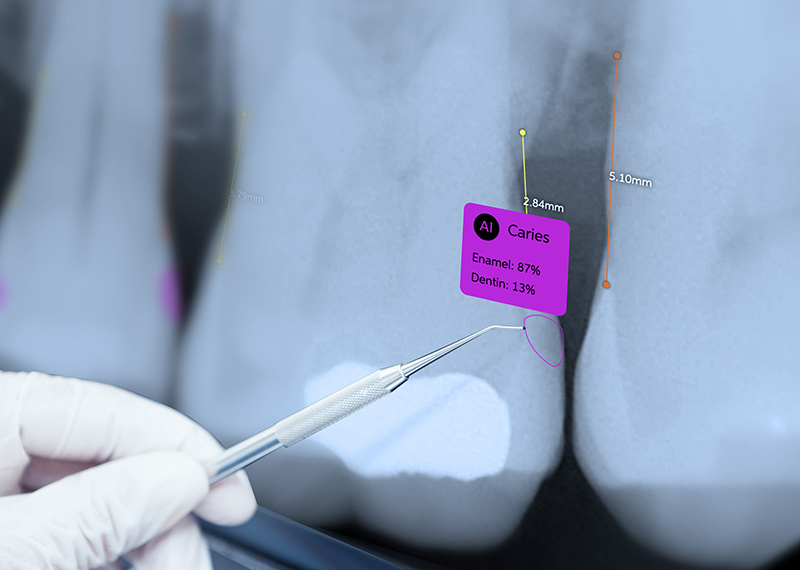
In 2024, Onsite began using AI-powered software for patient diagnostics. It provides the dentist with a second opinion, saving time and increasing confidence in the diagnosis. As one dentist notes, AI often is more granular in displaying the care situation, “showing me, for example, that a cavity has progressed into the dentin whereas my eyes are saying it was maybe just short, convincing me that we need treatment now rather than being reevaluated 6 to 12 months from now.”
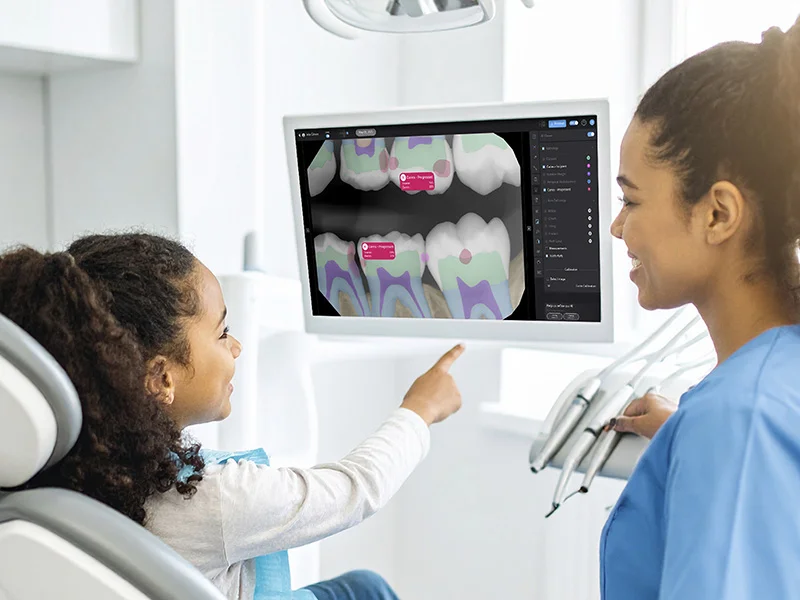
Equally important, patients could see AI-generated, color-coded dental imagery, often in 3D, on a screen, which helped them better understand the diagnosis and increased trust in the treatment plan. As another doctor puts it, “Patients see that something objective says I have a cavity and the doctor agrees.” The results are better diagnoses and preventative care, and also better business. In one Onsite office, the average revenue per visit went from $27 per patient to $137, a 400 percent increase without the addition of new services.
In turn, AI’s improvement of a core task like reviewing X-rays had positive ripple effects throughout Onsite’s locations from faster diagnoses to better patient engagement. Like most DSOs, Onsite traditionally audited care providers via random selection; a dentist was chosen for review and their charts were audited. But data from AI diagnostics allows Onsite to zoom in by location and provider, pinpointing which clinics or clinicians may need additional support or training. Former VP of technology Behrod Ganjifard notes that “you’re able to say, OK, this doctor has a high or low misdiagnosis rate, and hone in on the exceptions or the opportunity,” a more comprehensive approach driven by network-wide insights that improve aggregate performance and care.
Other practices use AI applications for creating odontograms, graphical charts that visually represent a patient’s mouth, including tooth condition and treatments performed or planned. These charts provide a record of a patient’s dental health, and dentists use its standardized numbering system to communicate with patients and colleagues.
Traditionally, dental assistants recorded the details manually, e.g., the location of crown, cavity, or fillings. Now, AI analyzes dental X-rays to populate the odontogram, which the dentist then reviews and edits, if necessary. Studies show that about 70 percent of AI-generated odontograms are accurate and do not need changes. This saves time, speeds exams, makes the process easier for doctors and patients, and allows dental teams to see more patients daily.
In many clinics, the patient-dentist interaction now starts with an AI simulation, not just to save time but to build trust.
Another widely adopted tool is an AI simulator which shows how teeth can move with aligners. After a quick 3D scan, the software creates a before-and-after smile preview in minutes. Dentists say this makes it easier to explain the orthodontic treatment and patients are more willing to accept the treatment when they can see the expected result. Dentists still review the output, but the tool saves about 30-50 percent of time, depending upon specific patient conditions. In many clinics, the patient-dentist interaction now starts with an AI simulation, not just to save time but to build trust.
Workflows:
AI is also transforming the operational side of dental practices. One persistent issue is missed calls, often due to understaffed front desks, peak call volumes during business hours, or the time-consuming nature of listening to voice mails and manually dealing with requests.
Now, AI-powered communication platforms transcribe and analyze incoming calls in real time, highlighting the caller’s intent, identifying unanswered questions, and even flagging high-priority messages. This allows staff to follow up faster and more effectively. One group practice reported over 50 percent fewer missed calls, as well as better visibility into patient interactions across locations.
They also found that AI tools improved core workflow planning, helping practices anticipate patient needs, adjust staffing proactively, and prepare the office before the patient arrives. For example, if a patient needs a treatment like deep cleaning but has not booked an appointment, the AI automatically sends a reminder, including the last X-ray image. Patients can then schedule directly from their phones. As it gathers data over time, moreover, the algorithm learns the best time of day to reach each patient, increasing the likelihood that more people actually book appointments.
Many clinics, especially group practices, now use AI receptionists after hours. These systems can answer routine questions, schedule appointments, and triage urgent needs – for example, directing a patient with severe tooth pain to an emergency provider – without human staff present. This improves patient satisfaction, allows best practices to be more easily diffused and adopted across offices, and promotes a continuous improvement ethic, even if the staff doesn’t notice the changes. It’s just how things work.
AI systems for insurance claims, typically a time-consuming and resented activity in healthcare, now check records and reimbursement codes, improving accuracy and payment. If something is missing, the tool alerts staff in the dental practice. Then, the AI generates detailed annotations and explanatory notes on the X-rays, highlighting findings such as cavities, restorations, or areas requiring treatment. These visual cues and summaries make it easier to understand for the insurance claims administrator, reducing back-and-forth requests for clarification. Some results show that AI cuts the time spent on this work by 40 percent and speeds payment as well.
Conversely, for insurance companies, the AI-driven data improves productivity in a transactions-intensive aspect of their business, and helps them better detect claims mistakes and fraud, which costs the industry an estimated $12.5 billion annually.3 It also helps these companies go beyond a curt “coverage denied” response and make it clearer to patients and dentists why reimbursement is not applicable, and/or what specific information might be required to get reimbursed for the procedure.
In dentistry, AI is not just a tool to do a search or create a chatbot, but part of daily routines, increasing productivity for all parties, while decreasing risks.
Lessons for other industries
Dentistry’s AI adoption shows how even old industries can change when the right things come together, illustrating important lessons for other industries.
Workflow integration:
Research indicates that people evaluate new products and tools relative to their current usage system and see any required behavioral changes as “losses,” not gains – the phenomena known as “loss aversion” and the “endowment effect.”4 Hence, as in dentistry, smooth workflow integration is usually essential for productive adoption of a new technology.
Other industries are starting to recognize that the real power of AI lies in integrating it into workflows, not as a separate tool. In construction, AI has been embedded in project management platforms, automatically generating cost estimates based on historical data, flagging safety issues via real-time site monitoring, and drafting responses to contractor queries – all as part of daily processes that these teams use on the job. As one executive observes, “AI is a very powerful general-purpose capability, [but] you’ve got to meet users where they are.”5
This has implications for questions that leaders should ask before deploying AI:
- Is the AI inside daily work, or a tech layer on top of core workflows?
- What change does productive use of the AI tool require, and how can you minimize the required change(s) in behavior?
The focus of most people in a firm most of the time is on near-term operating issues, not a technological revolution. There’s nothing wrong with that, but adoption of new tools means embedding them in those operating activities. Word processing was a niche technology as a stand-alone product, but became ubiquitous once integrated into daily software like email and other applications.
Here, advancements in AI software are important. Because AI allows code creation, bug fixing, and feature iteration at higher speed and lower cost, the bottleneck is shifting from building AI tools to understanding user needs in the flow of work. And that is a managerial, not a technology, issue.
Trust and transparency:
In dentistry, patients don’t trust AI because they believe it’s flawless; many know that AI can make mistakes and sometimes surface more issues than a dentist would typically treat. But trust grows when patients can see and understand the results, making it easier to have informed conversations with their provider. There is a generalizable principle here.
In his work, Daniel Kahneman noted that radiologists who evaluate X-rays as “normal” or “abnormal” contradict themselves 20 percent of the time when they see the same picture on separate occasions, and he cited over 40 studies that show similar and often higher levels of inconsistency by auditors, pathologists, managers in various areas, and other professionals. He emphasized that “this level of inconsistency is typical, even when a case is reevaluated within a few minutes.”6
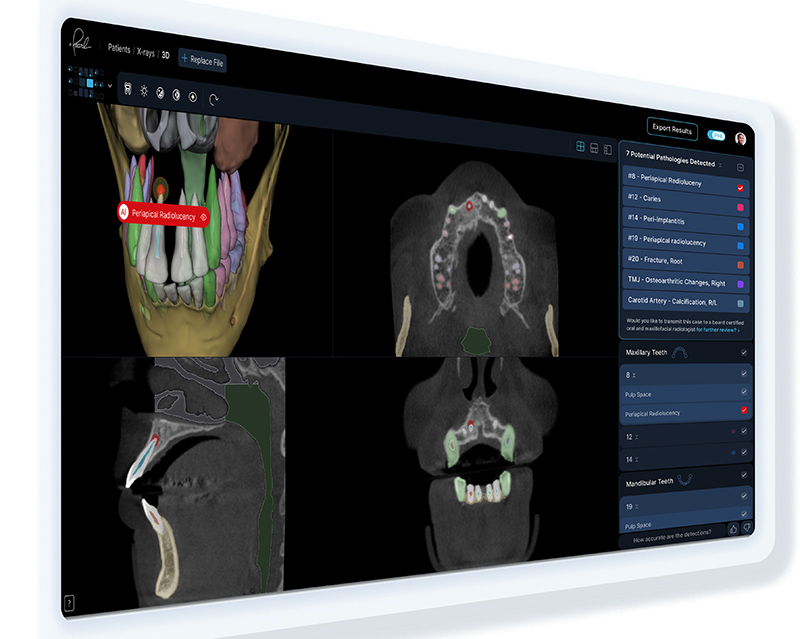
People as well as AI algorithms make mistakes. Working together, however, there are fewer mistakes and, as dental groups have discovered, diagnostic accuracy improves. In FDA-reviewed clinical trials, dentists using AI detected pathologies such as caries and bone loss with up to 37 percent greater accuracy compared to unaided practitioners. Clinics also report more consistency in diagnoses and adherence to clinical standards when AI is integrated into workflows.7 Equally important, the combination of technology and practitioner with domain expertise provides the patient with more visibility into the diagnostic logic and results. Dental groups report that when they use AI images, treatment acceptance increases by 30-40 percent8, because the patients feel that the diagnosis is more comprehensive and they trust dentists more. Also ask these questions about AI tools:
- Can people see and understand what the AI tool is doing?
- How best can a credible and shared language be established for the resulting outputs?
Companies often do this in their sales activities to demonstrate the operational value of products and services, and justify price, with customers. “Value calculators” in many sales contexts take customer input data and, with a transparent process, help to quantify and demonstrate the total cost of current procedures versus the life-cycle cost of the seller’s product. Making good use of AI is aided by this kind of activity, internally and in external customer or supplier activities.
Institutional endorsement and data:
One reason why AI has been adopted extensively in dentistry is a set of ecosystem benefits. Approval from regulators like the FDA and Europe’s Union of Medical Device Regulation was necessary and, once obtained, aided trust and transparency. Just as important, the technology reduced transaction costs on both sides of the dental practice–insurance company exchange. In turn, this spurred adoption of AI in a self-reinforcing manner.
In addition, AI became relevant as the industry was undergoing structural change. Over the past decade in the U.S. and Canada, many solo practices have consolidated into group DSOs, which now account for about 23 percent of the dentistry market in those countries.9 This model separates dentistry from business management, allowing dentists to focus on their clinical skills, while leaving administrative and operational tasks to the DSOs – a better work-life balance for many dentists. DSOs also provide patients and dentists with advantages ranging from access to multiple locations and specialties to negotiating leases with landlords and reimbursements with insurance companies to more purchasing power for supplies including technology.
DSOs were early adopters of AI because their group structure gives dentists more opportunities to network and collaborate with colleagues, explore new applications in the flow of work, and disseminate the benefits across practitioners. Their access to proprietary data across multiple practices allowed them to improve data inputs, which remain crucial in developing, maintaining, and improving AI algorithms. Then, DSOs used the outputs from AI to improve performance monitoring. This combination helped to accelerate adoption compared to independent practices.
In many other industries, omni-channel buying means multiple groups in a channel impact the customer journey from search to purchase to service. Successful AI adoption depends on building and coordinating its foundations and use among multiple stakeholders. The biggest time and expense in these sectors is often not the purchase of AI tools, but cleaning up and keeping relevant the data inputs for those tools. So, also ask these questions about AI in your industry:
- Are you building robust data sources for planned AI initiatives?
- Who else in the ecosystem is relevant to both data and relevant use of AI tools?
How dentistry embedded AI in its processes is more than an interesting use case; it is also a lesson for survival and how to win in markets increasingly influenced by AI.
About the Authors
 Frank Cespedes teaches at Harvard Business School, has written for numerous publications, and is also the author of six books including Aligning Strategy and Sales and Sales Management That Works: How to Sell in a World That Never Stops Changing (Harvard Business Review Press).
 Ben Plomion is Chief Operating Officer of Pearl, a startup in the healthcare sector. He also writes on innovation and emerging technologies for various publications.