By Anna Wierus
As global companies expand across Central Europe, Wrocław is combining corporate growth, cultural depth, and integrated hospitality to attract a new generation of business travellers.
Wrocław has quietly become one of the most compelling business destinations in Central Europe. Long recognised for its strong talent base and growing technology sector, the city is now attracting international executives, corporate delegations, and industry leaders looking beyond traditional European business hubs. With a combination of accessibility, innovation, cultural vibrancy, and high-quality infrastructure,
Wrocław is increasingly positioning itself as a destination where business and lifestyle intersect naturally.
Wroclaw’s Transformation on the International Stage
The transformation of Wrocław’s business landscape has been remarkable. Global companies have established major operations in the city, helping create one of the most dynamic corporate ecosystems in Central Europe. Today, Wrocław is home to approximately 78,000 technology professionals, making it
Poland’s second-largest technology hub after Warsaw and earning it the reputation of being Poland’s
“Silicon Valley.” (Source: Alcor / StartupBlink / PAIH, Technology and IT Industry in Poland 2025/2026) Supported by more than 30 universities and over 100,000 students annually, the city offers a highly educated and multilingual talent pool that continues to attract investment from international organisations. (source)
The evolution extends beyond simple growth in numbers. Ten years ago, Wrocław was primarily associated with business process outsourcing and shared service centres. Today, the city increasingly hosts research and development centres, technology hubs, regional headquarters, and centres of excellence. Companies are no longer choosing Wrocław solely for cost efficiency; they are choosing it for access to talent, innovation, and long-term growth potential. Put simply, companies are no longer coming here just for cost savings — they’re coming for talent.
According to industry data, Poland’s export of knowledge-based business services reached USD 42.3 billion in 2024, reflecting a broader shift toward high-value operations. (Source: JLL / ABSL, Poland: European Key Player in the Business Services Sector, October 2025) Within that transformation, Wrocław consistently ranks among the country’s leading business destinations, demonstrating how the city has moved from supporting back-office functions to enabling strategic decision-making and innovation.
We see that shift reflected in the profile of guests we welcome. Ten years ago, we hosted implementation teams and project managers on long-stay assignments. Today, we welcome C-suite executives, board members and international delegations who are here to make strategic decisions, not just oversee operations.
The New Expectations of Business Travel
As corporate activity has evolved, so too have the expectations of international business travellers. The era of standard conference facilities and transactional business travel is rapidly disappearing. We see today’s executives expecting experiences that reflect both corporate values and personal standards. The meeting room is no longer the centre of the journey; it is simply the starting point.
Three major shifts are shaping this new landscape:
First, the environment matters as much as the equipment. Business travellers increasingly seek distinctive, inspiring spaces rather than generic venues. Architecture, design, and atmosphere play an important role in shaping the overall experience and influencing how people connect, collaborate, and engage. Developments such as the OVO complex, designed by Gottesman-Szmelcman Architecture, reflect this shift. Its architecture is a conversation starter, not just a backdrop, demonstrating how physical environments have become part of the business experience itself.
Second, wellness has become an essential component of business travel. Access to fitness facilities, spa services, and opportunities to maintain healthy routines is no longer considered a luxury. For executives attending multi-day meetings or conferences, wellness is increasingly viewed as part of maintaining performance and productivity. Our guests have complimentary access to Well Fitness, including an indoor pool and spa, right here in the building. What was once a nice-to-have has become an expected part of the business travel experience.
Third, food and social experiences have become integrated into event programmes. Business travellers are looking for opportunities to connect through memorable dining experiences, local culture, and informal networking environments. Our OVO Bar & Restaurant serves as the social heart of the hotel, and we increasingly see dining and social interaction becoming part of the business agenda rather than separate from it.
These shifts have contributed to the rise of blended business and leisure travel, or “bleisure.” What was once a buzzword is now reality.
A City Designed for Business and Discovery
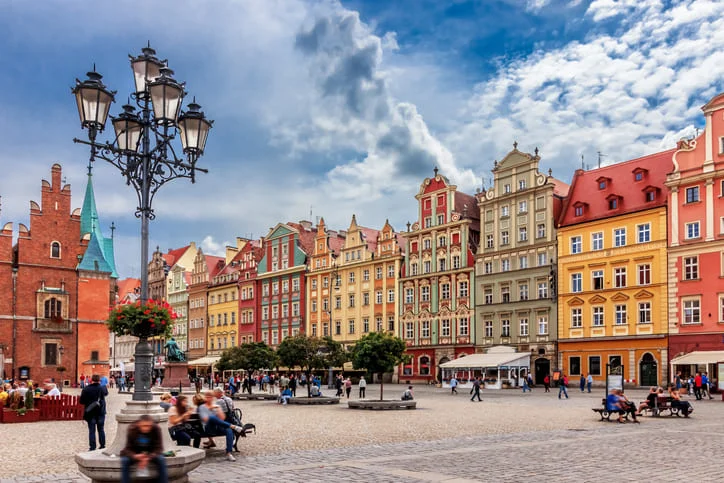
Wrocław is particularly well positioned to support this new model of travel. The city’s compact layout allows visitors to move easily between meetings, cultural attractions, restaurants, and hotels. Within a short walking distance, business travellers can explore landmarks such as the Panorama of the Battle of Racławice, the Japanese Garden, Słowacki Park, and the city’s historic Old Town.
The cultural offer has matured significantly in recent years. International festivals, performances at the National Forum of Music, exhibitions, and a growing culinary scene provide compelling reasons for visitors to extend their stay beyond business commitments.
The city has a depth of culture that surprises even seasoned European travellers. The architecture tells a thousand years of history — from Ostrów Tumski (Cathedral Island), one of the oldest settlements in Poland, to the modernist Centennial Hall, to buildings like OVO that represent Wrocław’s confident, forward-looking identity. Walking through the city is a journey through centuries.
Perhaps most importantly, Wrocław offers something increasingly rare among major business destinations: a human scale. While maintaining strong international connectivity through direct flights to more than 60 European destinations, the city remains walkable, welcoming, and easy to navigate. Visitors can experience centuries of history, from Ostrów Tumski and Gothic architecture to contemporary developments that reflect the city’s forward-looking identity.
This combination of efficiency and authenticity creates an environment where business travellers can feel connected to the destination rather than isolated from it.
Where Business, Hospitality, and Lifestyle Converge
The growing appeal of Wrocław is reflected in developments such as the OVO complex, an architectural landmark designed by Gottesman-Szmelcman Architecture and home to properties including DoubleTree by Hilton Wrocław. Together, they illustrate how modern business hospitality is evolving in the city.
Rather than operating as a standalone hotel, the property sits within an integrated ecosystem that combines accommodation, wellness, dining, retail, and event facilities under one roof. The concept reflects the broader direction of executive travel, where convenience, flexibility, and experience are increasingly interconnected.
Its event infrastructure includes flexible meeting spaces and a ballroom capable of supporting both executive gatherings and larger conferences, alongside wellness facilities, social spaces, and immediate connections to the surrounding city.
This integration allows visitors to move seamlessly between work and personal time: a guest can start the morning with a swim, have breakfast on-site, step into a meeting room, break for a walk in Słowacki Park during lunch, return for an afternoon session, and finish the day with dinner at one of the city’s best restaurants—all without ever needing a taxi.
For conference organisers, this model is powerful. Properties like this increasingly help design programmes that weave wellness breaks, culinary experiences, and cultural moments into the business agenda, reflecting the holistic expectations of today’s executive travellers.
What stands out is the growing capacity across Wrocław’s hospitality sector to deliver tailored, discreet, and seamless experiences for senior executives—from private meeting setups and lounge access to curated dining and wellness offerings, with personalisation emerging at every level.
The result is an approach that mirrors the changing expectations of international executives: productive, efficient, and connected to the destination itself.
Looking Ahead
Wrocław’s trajectory shows little sign of slowing, and I’m optimistic about where this city is heading. Wrocław ranked first among medium-sized European cities in fDi Intelligence’s 2025 ranking for both human capital and quality of life. (Source: fDi Intelligence 2025 Rankings) That’s not a coincidence — it reflects years of deliberate investment in infrastructure, education and business environment. We’re preparing for a future where Wrocław is no longer a “discovery” but a first-choice destination for international business events. What I love about this city is that it hasn’t lost its character while growing its ambition.
 Anna Wierus