Trust plays a vital role across political, organisational, and personal spheres. It influences cooperation, shapes perceptions of institutions, and affects both everyday decisions and long-term planning, from family conversations to international negotiations. TrustInside, a consultancy specialising in trust diagnostics and organisational transformation, creates practical tools to assess and foster trust. Rather than viewing its ambiguous definition as a drawback, the company treats it as a foundation for rigorous analysis.
According to TrustInside, two key features define the trust landscape. First, trust is not a singular, static concept. It arises from a blend of behaviours, expectations, and institutional frameworks that interact in complex ways. Second, many everyday challenges, such as stalled reforms, sluggish innovation, or strained relationships, often stem from how individuals relate to one another and the system they share.
Addressing these relational dynamics directly can be a productive starting point. TrustInside positions itself as a bridge between conceptual understanding and practical action, helping leaders and communities translate abstract questions about confidence and cooperation into observable and discussable patterns.
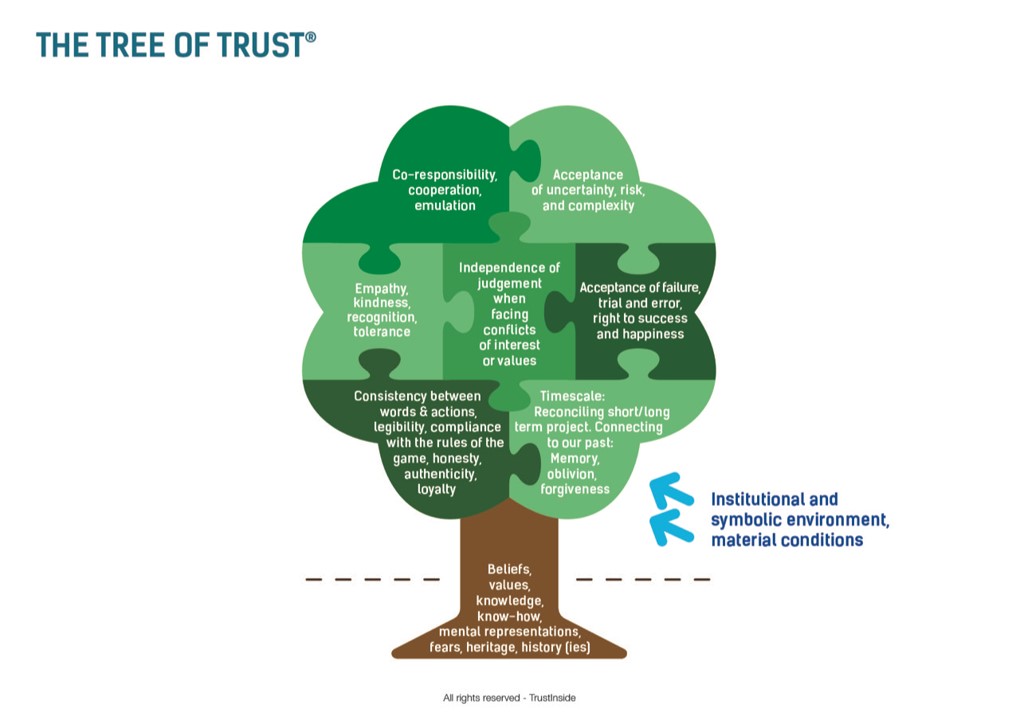
The journey begins with a conceptual framework known as the Tree of Trust. This model reimagines trust as a dynamic ecosystem of interdependent attitudes and behaviours that nourish relational health. Trust is visualised as a living tree, with seven interlinked dimensions forming its canopy, each represented as a leaf, interlocking much like a puzzle piece.
These dimensions include co-responsibility, cooperation, and emulation, reflecting shared ownership and mutual learning. They also encompass the acceptance of uncertainty, risk, and complexity, acknowledging that trust flourishes not in certainty but in ambiguity. The model embraces failure and trial-and-error as essential to growth, and emphasises independence of judgement when navigating conflicting interests or values, highlighting integrity and moral courage.
Empathy, kindness, recognition, and tolerance form another vital dimension, cultivating psychological safety and human connection. Consistency between words and actions, legibility, honesty, authenticity, and loyalty ensure transparency and reliability. Finally, the model illustrates the importance of timescale and long-term perspective, resisting the lure of short-term gains in favour of enduring value.
These dimensions are sustained by deep cultural and structural roots, such as beliefs, values, fears, heritage, and knowledge, and shaped by the surrounding institutional and symbolic environment. “The Tree of Trust helps us take a clear-eyed look at how trust shows up in real life, what’s working well and what might need a little care,” says John Crowley, Associate Director at TrustInside. “It’s about understanding the everyday actions and attitudes that shape trust, and using that insight to build something stronger, more lasting, and more human.”
Turning insight into change requires both structure and sustained engagement. TrustInside’s implementation strategy follows the ACT model: Awareness, Capacities, and Transformation. It begins by introducing leaders and teams to the idea that trust can be understood, measured, and developed, building shared recognition and vocabulary.
The next phase focuses on cultivating internal capacity by training “trust practitioners” who can lead the work from within. Finally, transformation involves applying trust analysis to institutional change through tailored action plans, typically unfolding over several months with ongoing collaboration between internal teams and external advisers.
The Tree of Trust has the potential to support a wide range of sectors. In workplaces, it can help teams explore how trust influences cooperation, learning from mistakes, and taking initiative, particularly during leadership transitions or organisational change. In education, it may offer a way to better understand relationships among school leaders, teachers, pupils, and families.
Public institutions and international actors may use the framework to rebuild confidence after political shifts or to align short-term policy steps with longer-term recovery goals. In each context, the method is designed to clarify which aspects of relational capital can be strengthened and how that connects to everyday management, communication, and governance.
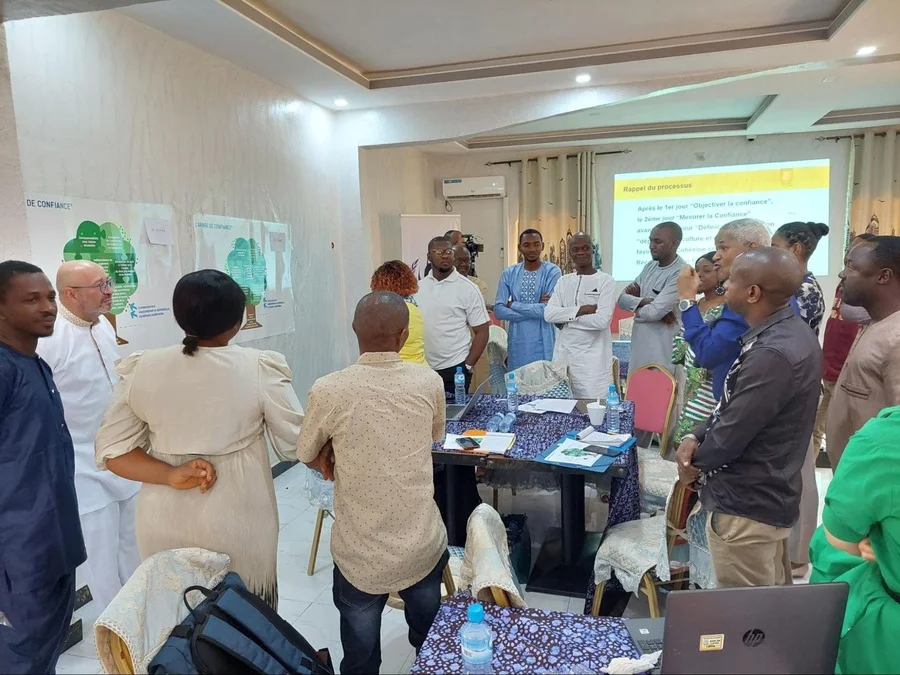
The company’s ethos is shaped by its founder, Pierre Winicki, who brought deep experience in organisational transformation and began formulating the Tree of Trust even before TrustInside was established. Crowley first encountered the model during his time at UNESCO, where he recognised its relevance to political and developmental contexts. When Crowley became a shareholder of TrustInside in 2021, he integrated the framework into his own work, emphasising the importance of clear metrics and trust’s role in shaping institutional cooperation and resilience.
TrustInside’s core proposition is straightforward: trust can be made visible, and therefore improved. This invites leaders to treat trust-building as a continuous institutional effort, not a one-off cultural fix. It calls for internal capacities that recognise relational patterns and design context-sensitive interventions.
“TrustInside offers a way to make trust a manageable, strategic concern,” Crowley states. “By combining a clear framework, diagnostic tools, and hands-on support, it can turn a complex topic into a field of deliberate action that strengthens collaboration and long-term outcomes.”
The photos in the article are provided by the company(s) mentioned in the article and used with permission.
Disclaimer: This article contains sponsored marketing content. It is intended for promotional purposes and should not be considered as an endorsement or recommendation by our website. Readers are encouraged to conduct their own research and exercise their own judgment before making any decisions based on the information provided in this article.