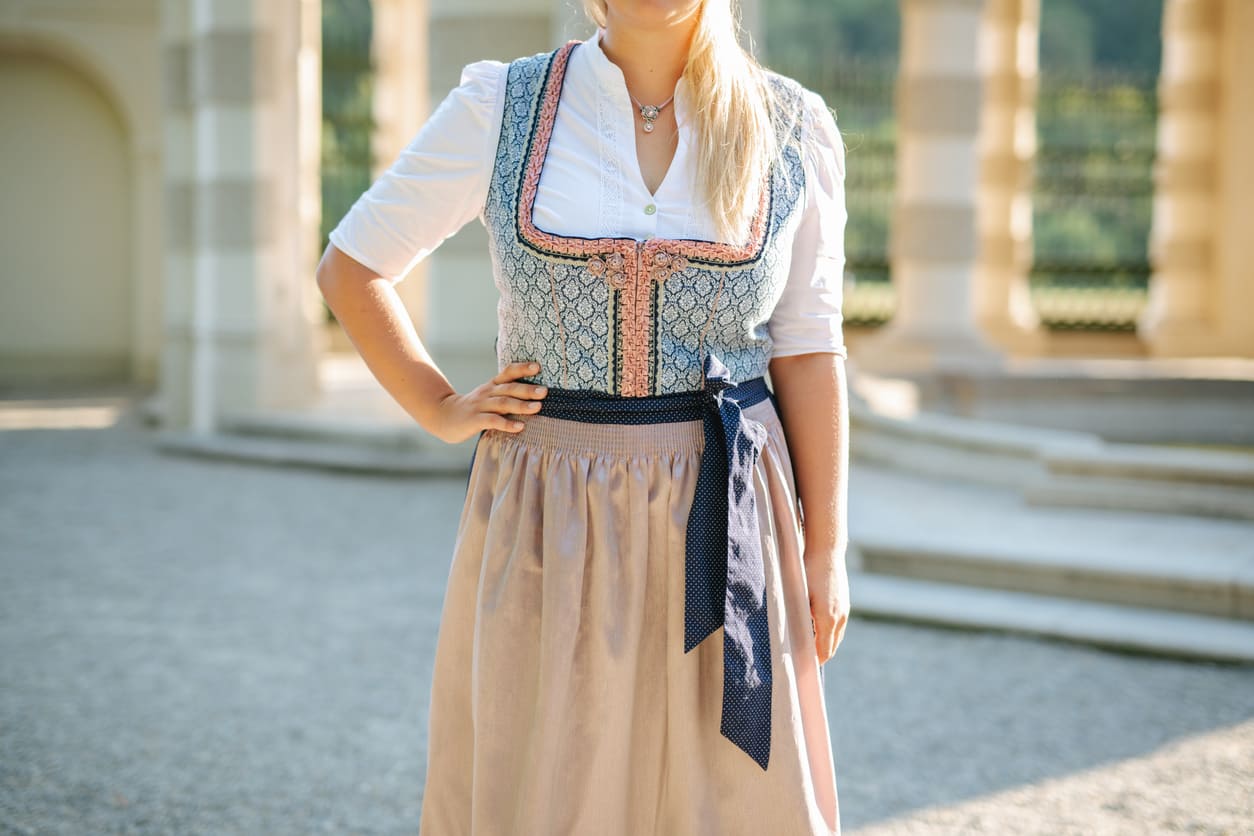
The Dirndl is more than a dress—it’s a living piece of Alpine culture that blends tradition, craftsmanship, and modern fashion. Whether you’re heading to a folk festival, celebrating a wedding, or simply love the flattering silhouette, a well-chosen Dirndl should feel natural, comfortable, and unmistakably you. This guide walks you through fit, fabrics, styling, etiquette, and care so you can choose—and wear—your Dirndl with confidence.
1. Anatomy of a Dirndl (know your building blocks)
A classic Dirndl consists of four parts:
- Bodice (Mieder): The fitted top that shapes the torso; may close with buttons, hooks, or a zipper and often features a lacing panel.
- Skirt: Attached to the bodice in one piece or as a separate; fullness and length vary.
- Apron: A defining element that can add color, sheen, or pattern contrast.
- Blouse: Usually cropped and worn underneath; neckline sets the tone from romantic to refined.
Modern interpretations keep the essence while varying materials, closures, and details. Some designs include pockets (a pragmatic joy) or a hidden elastic panel for comfort.
2. Fit first: how a Dirndl should feel
The difference between “pretty” and “perfect” is fit. A Dirndl should hug without squeezing.
- Bodice fit: Close and supportive but never restrictive. You should be able to take a deep breath without pressure points.
- Waist placement: The Dirndl’s waist typically sits at or just above your natural waist for a polished hourglass line.
- Bust shaping: Try the dress with the actual bra you’ll wear. Balcony or plunge styles change the neckline dramatically.
- Lacing technique: Lace evenly from top to bottom to distribute tension smoothly; avoid over-tightening the top row.
- Tailoring margin: Look for 1–2 cm of seam allowance in the side seams—small alterations can transform the overall look.
Quick test: Sit, walk, lift your arms, and climb a step. If everything stays comfortable and the skirt moves freely, you’ve likely found the right size.
3. Length & proportion: mini, midi, long
- Mini (approx. 50–60 cm skirt): Playful and youthful—great for casual events, less traditional for formal occasions.
- Midi (approx. 65–70 cm): The versatile classic that flatters most heights and settings.
- Long (90 cm and beyond): Elegant and calm; ideal for evening events and weddings.
A helpful guideline: the hem should visually elongate your legs rather than “cut” them. When in doubt between two lengths, take daylight photos from front and side—your camera is a brutally honest stylist.
4. Fabric & season: comfort meets character
The fabric determines both comfort and character of your Dirndl.
- Cotton & linen: Breathable, easy to wear, perfect for long festival days.
- Jacquard: Adds structure and subtle pattern for instant polish.
- Silk & satin: Refined and light-catching—excellent for festive looks.
- Velvet: Deep, elegant texture for cooler seasons or evening events.
- Blend with a touch of elastane: Can add comfort in the bodice without sacrificing shape.
Details matter: a lined skirt falls more smoothly; quality zippers run quietly; eyelets and hooks should feel anchored and smooth to the touch.
5. Color, pattern, and personality
Your Dirndl can whisper or sing, depending on your palette:
- Timeless base tones: Navy, forest green, berry, taupe.
- Soft moderns: Sage, blush, slate, dusty blue.
- Patterns: Scattered florals refine the silhouette; small checks read rustic-chic; tone-on-tone jacquards add subtle depth.
A smart starter strategy is a solid Dirndl with two aprons—one understated for day, one with sheen or detail for evening. Swapping aprons can feel like a full outfit change.
6. Accessories with impact
- Blouse: High-neck lace for elegance; sweetheart or balconette for a feminine, festive look; cotton batiste for everyday ease.
- Apron: Slightly shorter than the skirt hem (around 2 cm) to create lively movement.
- Jewelry: Choose one statement—Charivari, pendant, or pearls—and let it lead.
- Knitwear & outerwear: A fitted wool cardigan, a short velvet jacket, or a warm shawl frames the silhouette.
- Footwear: From strap heels to sleek ankle boots, prioritize stable footing. Ultra-sporty sneakers can undercut a more formal look.
- Bag: Keep it compact; avoid oversized totes that compete with the clean lines.
7. Bow etiquette (and why context matters)
You’ll hear the familiar code: bow left = single; right = taken; front center = traditionally young/“innocent”; back = widowed or service. Treat this as a courtesy convention, not a hard rule. Festivals differ, and personal comfort matters. When in doubt, choose what feels appropriate for the occasion and your intent.
8. Occasion-by-occasion styling
- Folk festival: Cotton or linen Dirndl, balconette blouse, patterned apron, sturdy block heels, knit cardigan.
- Wedding guest: Midi or long length in a refined fabric (silk, jacquard), high-neck blouse, muted tones, minimal jewelry.
- Corporate or daytime formal: Structured jacquard, higher neckline, tonal apron, neat pumps, discreet earrings.
- Evening gala: Dark velvet or silk accents, elegant blouse, statement apron ties, slingbacks, soft smoky eye.
- Winter market or chalet: Warm layers (wool cardigan, cape, or shawl), heavier apron fabric, weatherproof boots, opaque tights.
9. Sustainable choices: buy well, care well
A quality Dirndl is the antidote to disposable fashion.
- What to check: Even seams, secure eyelets, smooth zipper, lined skirt, and consistent fabric handle.
- Alterability: A little room in the seams extends the garment’s life.
- Care basics: Air out after wear; spot-clean when possible; follow the care label. Many cotton Dirndls handle a gentle cycle; festive fabrics prefer dry cleaning.
- Storage: Padded hanger, apron stored separately, breathable garment bag; cedar or lavender for moth deterrence.
When your style evolves, refresh with a new apron or blouse rather than replacing the whole dress.
10. Common mistakes—and simple fixes
- Over-tightening the bodice: Comfort first; a slightly softer lace often looks better and feels worlds better.
- Hem miscalculation: A 2–3 cm tweak can change the entire proportion.
- Accessory overload: One focal point beats three competing ones.
- Buying without daylight: Always photograph your Dirndl in natural light before committing.
- Ignoring shoes: Try on with the shoes you’ll actually wear; heel height changes posture and hem perception.
11. Pre‑shopping checklist (save this to your phone)
- Bust, waist, back length, and preferred skirt length noted with a tape measure
- The bra and shoes you plan to wear
- 20–30 minutes of unhurried try-on time
- A plan for small alterations if needed
- Daylight photos to compare colors and lengths
Final thoughts
A thoughtfully chosen Dirndl is timeless, personal, and versatile. Prioritize fit and fabric, choose colors that flatter you in daylight, and edit accessories with intention. Respect the heritage, adapt the details to your life, and you’ll have a piece that earns its place in your wardrobe for years—ready for festivals, formal evenings, and everything in between.
Disclaimer: This article contains sponsored marketing content. It is intended for promotional purposes and should not be considered as an endorsement or recommendation by our website. Readers are encouraged to conduct their own research and exercise their own judgment before making any decisions based on the information provided in this article.