Risk has always shaped the way people think about investing.
For experienced professionals, risk can be measured through volatility, correlations, liquidity, concentration, and potential drawdowns. For many retail investors, however, risk is understood more simply: the possibility of losing money.
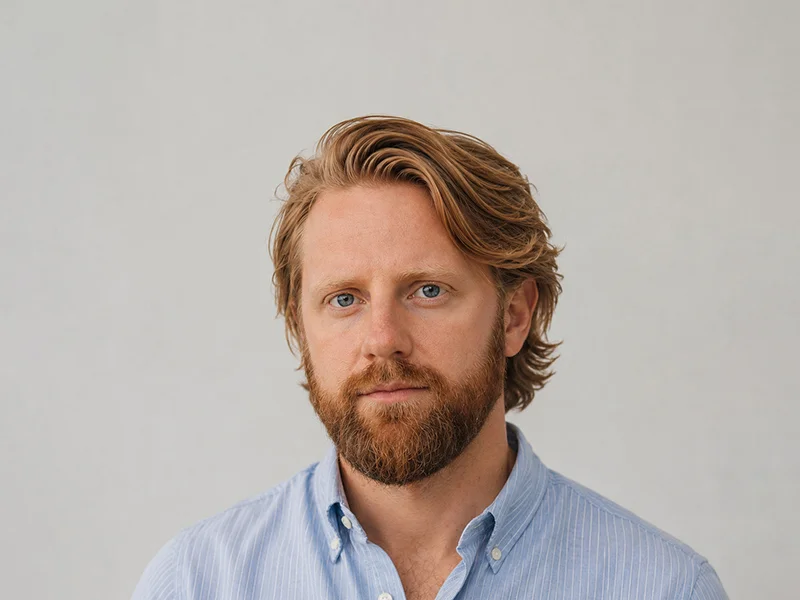
According to Just2Trade CMO Vsevolod Smirnov, artificial intelligence could help close the gap between these two perspectives.
“The biggest problem is not that retail investors care too much about risk,” Smirnov said. “It is that risk is often presented to them as a warning rather than something that can be understood, measured, and managed.”
Smirnov recently became Chief Marketing Officer at Just2Trade, a global brokerage brand operating since 2007.
The brand provides services to traders in more than 130 countries and offers access to over 128,000 financial instruments. Its trading environment serves different types of clients, from first-time investors to active traders and institutional market participants.
Artificial intelligence is already influencing professional investment processes.
Investment specialists use AI and machine learning to examine behavioural patterns, analyse large datasets, identify anomalies, and improve asset allocation.
Interest in these technologies is also growing among professionals who expect AI and big-data strategies to play a greater role in portfolio management.
“The professional market has already accepted that AI can improve the way information is processed,” Smirnov said. “The larger transformation may come when ordinary investors can use similar analytical capabilities without needing to become quantitative analysts.”
The Risk Warning Problem
Risk disclosures are essential. Investors need to understand that markets can fall and capital can be lost.
But warnings alone do not necessarily help people make better decisions.
In the United Kingdom, surveys have indicated that many savers avoid investing because they are concerned about risk. Some respondents also say that prominent capital-at-risk warnings discourage them from entering the market.
Smirnov believes the industry needs to explain the difference between warning people about risk and helping them understand it.
“A message saying that capital is at risk is legally and ethically necessary,” he said. “But it does not tell the investor whether a portfolio is diversified, whether a position is unusually volatile, or whether their time horizon is appropriate.”
Artificial intelligence may help make those distinctions clearer.
Instead of presenting risk as a single general warning, platforms could show how different decisions affect the investor’s portfolio.
A system might explain that:
- one position represents an excessive share of the portfolio;
- several holdings are exposed to the same economic factor;
- a proposed asset has historically experienced large price movements;
- the portfolio does not match the user’s stated investment horizon;
- recent trading activity appears more aggressive than the original risk profile.
“This is where AI can change the relationship between the investor and risk,” Smirnov said. “It can move the conversation from ‘you may lose money’ to ‘here is where your exposure comes from.’”
Making Market Data Understandable
Risk analysis depends on data.
Professional investors may study company filings, earnings calls, market liquidity, options pricing, news flows, macroeconomic data, and correlations between assets.
A retail investor rarely has the time or ability to review all of these sources.
Artificial intelligence can process large volumes of structured and unstructured information and convert them into shorter, more relevant insights.
“AI is particularly strong when the amount of information exceeds what one person can reasonably examine,” Smirnov explained. “It can review thousands of inputs without becoming tired or distracted.”
For example, a system could analyse an earnings-call transcript, compare management statements with previous quarters, identify changes in language, and connect those changes with market expectations.
It could review regulatory filings and highlight material developments.
Machine-learning systems may also detect unusual price patterns, changes in volatility, technical breakouts, or anomalies in trading volume.
These capabilities do not make the conclusions automatically correct. The quality of the result still depends on the data, model design, and context.
“AI should not be presented as an oracle,” Smirnov said. “Its real value is that it can identify the questions an investor might otherwise fail to ask.”
Research suggests that a growing number of retail investors already use generative AI to process financial information.
As these tools become more capable, Smirnov expects investors to rely on them not only for summaries but also for portfolio-level risk explanations.
From Risk Scores to Risk Intelligence
Many investment platforms already use questionnaires to assess a client’s attitude toward risk.
Just2Trade’s Robo-Advisor uses eight questions to develop an individual profile and support the construction of a portfolio suited to the client’s objectives and tolerance for market fluctuations.
Smirnov believes the next generation of systems will move beyond a static risk score.
“Risk tolerance is not always fixed,” he said. “A person may answer a questionnaire calmly and then react very differently when the market falls by 15%.”
AI-powered risk intelligence could monitor whether actual behaviour remains consistent with the user’s stated preferences.
For example, the system might identify that an investor has begun opening larger positions, trading more frequently, or concentrating money in increasingly volatile assets.
It could then warn the user that their current behaviour no longer matches the risk profile they selected when opening the account.
Today, our clients already use Robo-Advisor. The next stage is personalized AI-powered guidance inside the platform.
This guidance could explain how a proposed trade changes portfolio concentration, volatility, or exposure to a particular sector.
“The future is not a platform that simply labels you ‘conservative’ or ‘aggressive’ once,” Smirnov said. “It is a platform that helps you understand when your decisions begin moving away from the plan you chose.”
Protecting Investors From Human Error
Some of the most common investment mistakes are behavioural rather than technical.
Investors may sell during periods of panic, buy after rapid price increases, trade excessively after a loss, or become overconfident following a successful position.
Fatigue and cognitive biases can also affect decision-making.
AI systems can monitor portfolios continuously and identify patterns that may indicate impulsive or inconsistent behaviour.
For example, a platform could detect that a user is repeatedly changing strategy after short-term market movements.
It could show how often emotional decisions have reduced performance or increased transaction costs.
A warning might appear when a position is significantly larger than the user normally opens.
“AI will not remove emotion from investing,” Smirnov said. “But it can create a pause between the emotion and the decision.”
This may prove especially valuable during periods of market stress.
When volatility rises, investors are often exposed to more information, stronger headlines, and greater pressure to act quickly.
An intelligent system could summarize what has changed, distinguish portfolio-specific risks from general market noise, and remind the user of their original time horizon.
“In many cases, the best AI recommendation may be to do nothing,” Smirnov said.
This is a more cautious vision than the idea of an AI system constantly identifying new trades. But Smirnov believes it is more relevant to long-term retail investors.
“The industry often presents intelligence as the ability to find more opportunities,” he said. “Sometimes intelligence means knowing which opportunities to ignore.”
Detecting Anomalies and Fraud
AI-powered risk systems could also help detect operational errors, suspicious account activity, and potentially fraudulent behaviour.
Machine-learning models can compare new transactions with the historical patterns associated with an account.
An unusual combination of location, device, transfer behaviour, trading pattern, or account change may trigger additional verification.
Within trading activity, models can identify orders or behaviours that differ significantly from normal user patterns.
This can support both investor protection and internal risk controls.
However, Smirnov stresses that automated monitoring must be implemented responsibly.
“An algorithm should not make unexplained decisions that affect a client’s access to their account or money,” he said. “High-impact interventions need clear procedures, human oversight, and a way for the customer to resolve the issue.”
Risk intelligence must therefore work in both directions.
It should make the investor’s financial exposure more transparent, while the company must also remain transparent about how automated systems are used.
The Future of AI in Retail Investing
Smirnov is optimistic about the role artificial intelligence will play in making investing more understandable.
“We are at the beginning of a major change in accessibility,” he said. “AI can help people see not only what could happen to their portfolio, but why it could happen and which decisions are within their control.”
The next generation of investment platforms may increasingly act as interpreters between users and financial markets.
They could explain risk in plain language, monitor whether behaviour matches stated goals, identify excessive exposure, and organize large volumes of information around the individual investor.
Smirnov believes this will eventually become a basic expectation rather than a premium feature.
“Within a few years, a brokerage platform that cannot explain portfolio risk in real time may feel incomplete,” he said.
Just2Trade already supports clients through robo-advisory services, multi-asset market access, and trading solutions designed for different levels of experience.
The development of more personalized risk intelligence could help connect these capabilities more closely with the needs of each user.
“Artificial intelligence will not make markets safe,” Smirnov concluded. “Markets are uncertain by nature. But it can make that uncertainty easier to understand and harder to ignore.”
For retail investors, that may be one of the most important applications of AI: not promising that losses will disappear, but making the sources of risk clearer before decisions are made.