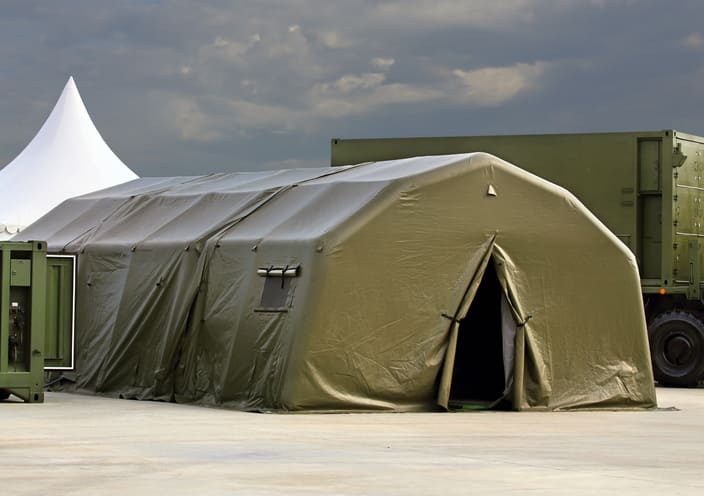
Let’s be honest, when you think about the key tools for mission success, your mind probably goes to advanced technology, sophisticated vehicles, or cutting-edge communication gear. But what about the system that ensures all of that, and the people operating it, can actually function?
In demanding environments, from forward-deployed bases to mobile command centers, the unsung hero is the environmental control unit (ECU). Learn how ECUs become a critical force multiplier that directly underpins productivity, performance, and protection below.
Manage Heating and Cooling
Mission-critical operations, such as those in mobile command posts, satellite ground stations, and medical rescue centers, require absolutely reliable climate control. To meet this demand, defense contractors and specialized suppliers incorporate the following features:
- Multi-zone climate control to independently manage temperatures in equipment racks and personnel areas.
- Robust vapor compression refrigeration circuits for high-capacity cooling in extreme heat.
- Redundant scroll or piston compressors to ensure cooling capability even after a component failure.
- Advanced reversing valves for seamless switching between heating and cooling modes.
- High-efficiency ceramic or electric heating elements for rapid and reliable warmth.
- Sophisticated condensate management systems to handle moisture removal in high-humidity environments.
- Precise programmable logic controllers (PLCs) with PID (proportional-integral-derivative) algorithms to maintain temperature stability within ±1°C.
If your mission or event is exposed to scorching days and freezing nights, you can depend on a purpose-built military ECU to ensure an optimal environment for both sensitive electronics and personnel. Talk to reputable military ECU manufacturer for expert advice.
Protect Technology Equipment
Servers, communication rigs, and display walls operate best within a specific temperature range. Exceed that range, and you risk overheating, data corruption, and catastrophic hardware failure. Humidity can be just as damaging, leading to corrosion and short circuits.
If the internal climate of a mobile command center that houses a server rack isn’t perfectly controlled, a sudden heat spike could cause the system to throttle performance or shut down entirely. An ECU acts as the silent guardian of this multi-million-dollar technology.
ECUs provide a stable environment, which prevents costly downtime and ensures that the digital backbone of your operation remains strong. No climate control means no communications, no data, and no mission.
Improve Mobility and Rapid Deployment
Productivity in modern operations is intrinsically linked to speed and agility. The ability to set up a fully functional, climate-controlled operations center anywhere in the world is a massive tactical advantage.
This is where the design of modern ECUs truly shines. For instance, a disaster response team arrives at a site. They roll a shelter off a truck, and with it comes a ruggedized, trailer-mounted ECU.
Within hours, they have an air-conditioned medical triage center or a command post with fully operational computers, all because the climate control system was designed for rapid deployment. Whether it’s on wheels, a skid, or integrated into a vehicle, the ECU ensures that productivity can begin the moment you arrive, regardless of the outside environment.
Provide a Custom-Fit Solution
The most significant benefits come from partnering with a manufacturer that treats your specific needs as a unique engineering challenge. This means handling everything in-house, from listening to your precise operational requirements to designing, prototyping, and building a unit that fits your exact BTU, power, and mobility specifications.
Picture a special forces unit requiring an ultra-quiet, compact heating unit that can fit inside a small vehicle for arctic reconnaissance without giving away their position. This custom approach ensures the ECU is seamlessly integrated component of your entire operational system, purpose-built for the mission at hand.
Safeguard Human Health
Imagine a specialist trying to analyze critical intelligence data in a desert shelter when the interior temperature is pushing 100°F. The same is true when a medic performs delicate procedures in a humid, sweltering tent amidst advancing healthcare transformation.
It’s uncomfortable. Extreme heat can lead to cognitive decline, fatigue, and impaired decision-making. Extreme cold saps strength and causes a loss of manual dexterity. This is where the ECU comes in.
ECUs create a stable, controlled microclimate. ECUs safeguard health and ensure that every soldier, technician, and analyst can remain alert, focused, and effective. A comfortable soldier is a more productive and capable soldier, plain and simple.
How to Choose ECUs
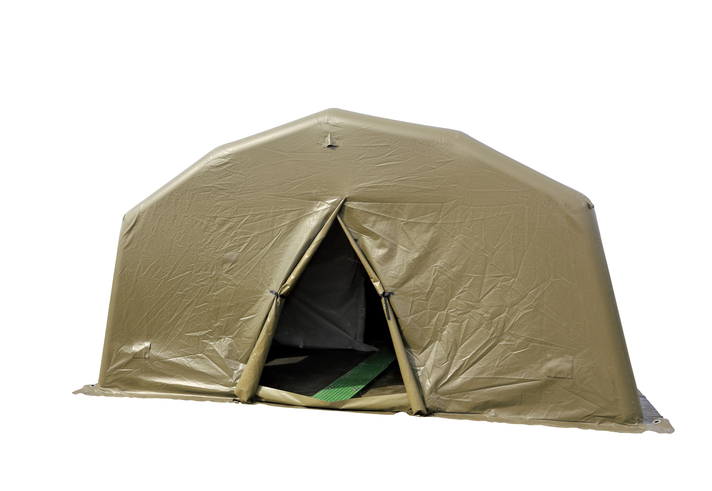
Analyze your operational environment. Will the ECU face desert heat, arctic cold, or corrosive salt air? Next, calculate the thermal load precisely, accounting for shelter size, solar exposure, and the significant heat generated by personnel and sensitive electronics.
Prioritize ruggedized construction, energy-efficient components, and designs built for rapid mobility and easy maintenance in austere conditions. Partner with a manufacturer who understands that your operational risks and unique requirements are a blueprint, ensuring the ECU is an integrated force multiplier.
The Bottom Line
At the end of the day, ECUs are far more than just machines that blow cold or hot air. They are a strategic investment in your most valuable assets: your people and your technology. ECUs directly sustain human performance, protect critical equipment, and enable the rapid deployment that defines modern success. In the high-stakes world of military and government operations, a reliable climate is a decisive edge.
Disclaimer: This article contains sponsored marketing content. It is intended for promotional purposes and should not be considered as an endorsement or recommendation by our website. Readers are encouraged to conduct their own research and exercise their own judgment before making any decisions based on the information provided in this article.