For decades, buying a pair of prescription glasses felt like a strange kind of shopping. You’d walk into an optician, get your eyes tested, then find yourself paying two or three hundred pounds for a product that, materially, is just a bit of plastic or metal and two shaped pieces of glass. Most people accepted it because there didn’t seem to be another option. That’s beginning to change, and the reasons behind it say a lot about how the eyewear industry actually works.
For a long time, a small number of large manufacturers controlled most of the world’s eyewear, including many of the “designer” brands people trusted. Because so few companies owned so much of the supply chain, there was little pressure to compete on price. Opticians, meanwhile, bundled the cost of frames in with eye tests and lenses, so customers rarely saw what any single part actually cost. A newer wave of British eyewear brands, including Manchester-based Specscart, has taken a different approach: designing and sourcing frames directly, selling in an omni-channel model, and separating the cost of the glasses from the cost of the eye test. The result is pricing that’s easier to understand, because there are fewer hands in between the factory and the person wearing the glasses.
Why Have Glasses Become So Expensive In The First Place?
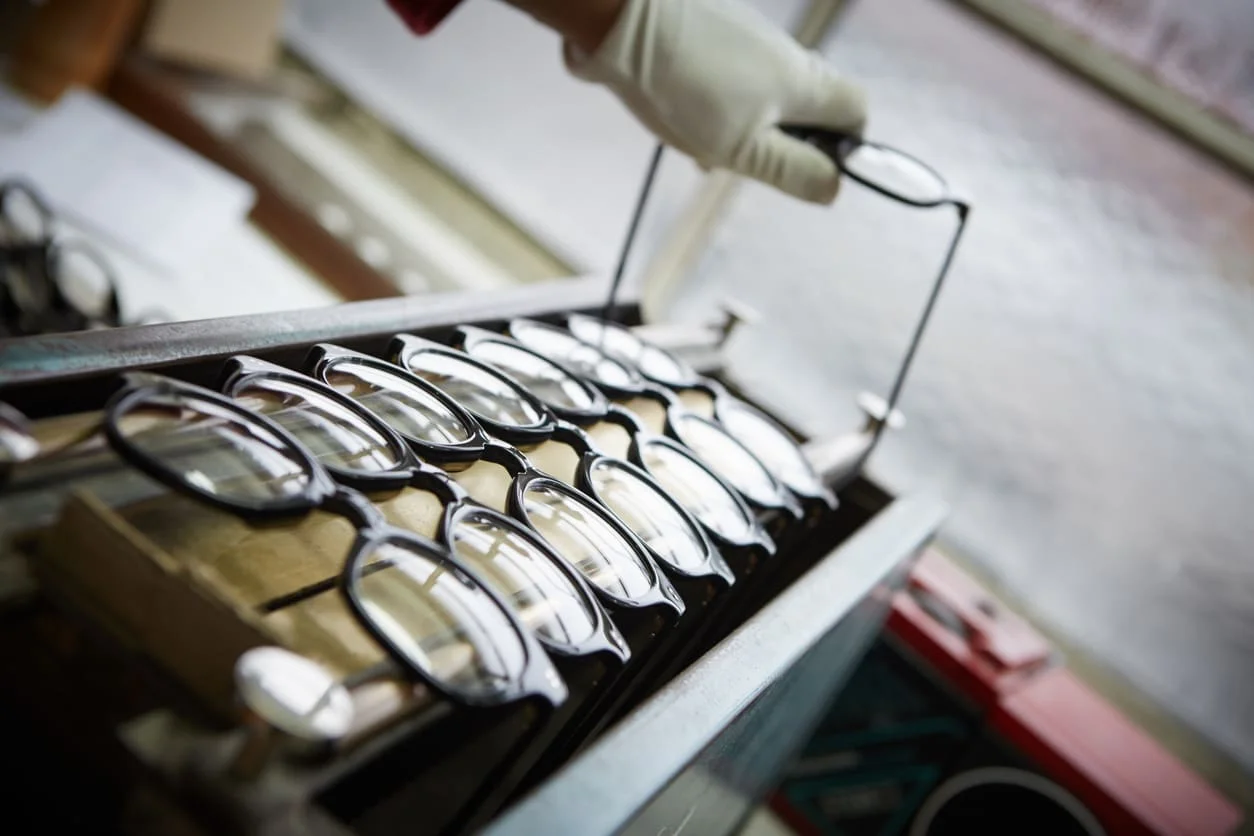
The high cost of prescription glasses was never really about the materials. Acetate, metal, and prescription lenses are not especially expensive to produce at scale. What pushed prices up was structure: a handful of manufacturers controlling most licensed frame brands, a retail model built around in-person opticians with high overheads, and a general assumption that glasses were a medical product rather than an everyday item people might want more than one of. Add licensing fees for well-known names, and it’s easy to see how a pair of frames that cost very little to make ended up with a price tag that had almost nothing to do with production cost.
What’s Changing Now
The shift now underway is less about new materials and more about who’s making the decisions and how directly they reach the customer. British and European brands are increasingly designing frames in-house and working directly with manufacturers, rather than licensing existing designs from a handful of major suppliers. Selling online removes the cost of running a large network of physical stores, and separating eye tests from frame sales means customers can see clearly what they’re paying for glasses versus what they’re paying for a prescription check. None of this changes what glasses are made of. It changes how much of the price tag actually reflects the product, rather than the layers of business built around it.
This matters for anyone who’s ever needed a second pair, lost a pair, or just wanted to change their look without a big financial decision attached. When pricing is transparent and manufacturing is more direct, buying glasses starts to feel closer to buying any other everyday item, something people can do without weighing up whether they can justify it. That’s a meaningful shift for people who rely on glasses daily and previously had to treat every new pair as a significant expense.
A More Honest Relationship Between Cost And Product
None of this means every cheap pair of glasses is well-made, or that established opticians don’t have a place. Eye tests still need trained professionals, and quality control still matters, whoever is making the frames. But the growing number of direct-to-consumer British eyewear brands has done something useful: it’s made the gap between production cost and retail price visible, and given customers a genuine point of comparison. Whether people choose an independent optician, a high street chain, or an online-first brand, they’re now in a better position to understand what they’re actually paying for.
That’s arguably the real story of how British eyewear manufacturing is evolving. It isn’t a dramatic reinvention of the glasses themselves, but a quieter shift in the economics behind them, one that’s giving people more control, and a lot more clarity, over a purchase they used to just accept at face value.
Disclaimer: This article contains sponsored marketing content. It is intended for promotional purposes and should not be considered as an endorsement or recommendation by our website. Readers are encouraged to conduct their own research and exercise their own judgment before making any decisions based on the information provided in this article.