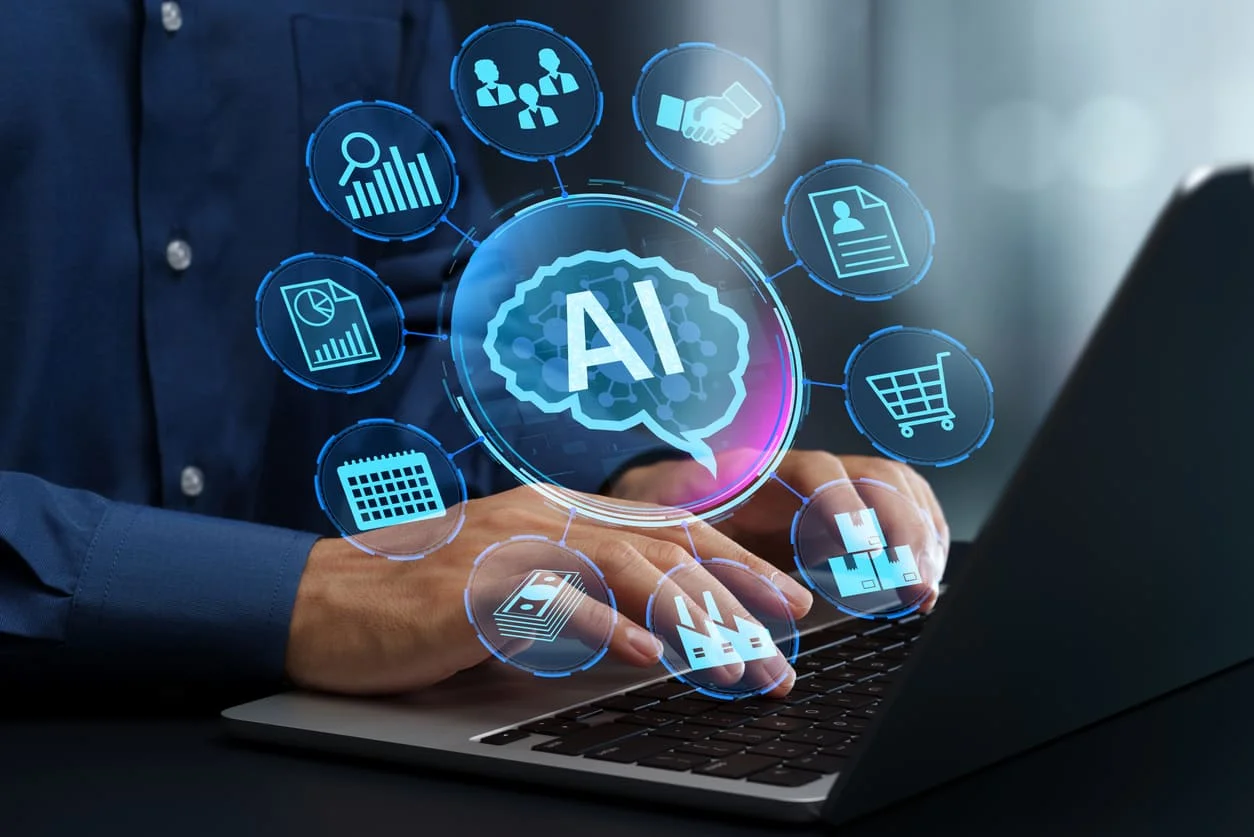
Businesses today face a growing challenge. They are expected to do more, move faster, serve customers better, and stay competitive in a market that changes constantly. At the same time, many teams are still dealing with repetitive tasks, manual processes, overloaded support channels, and disconnected workflows that slow everything down. This creates pressure across departments, from operations and customer service to sales, marketing, and internal administration.
That is why more organizations are exploring AI for business as a practical way to improve efficiency and deliver better results. Artificial intelligence is no longer just a future concept or a tool reserved for large tech companies. It has become a real solution for businesses that want to automate repetitive work, respond to customers faster, give employees better access to knowledge, and improve day-to-day productivity.
When implemented correctly, AI can help companies save time, reduce manual effort, improve accuracy, and create smoother experiences for both employees and customers. From internal assistants and intelligent chatbots to workflow automation and brand monitoring, AI is transforming how modern businesses operate.
Why Businesses Are Looking for Smarter Ways to Work
Many companies do not struggle because they lack talent or ambition. They struggle because too much time is lost on routine work. Employees spend hours answering the same questions, searching for internal documents, entering data manually, following repetitive workflows, or responding to common customer inquiries. These tasks are necessary, but they consume valuable time that could be spent on more strategic work.
As businesses grow, this challenge becomes even bigger. More customers mean more questions. More employees mean more internal communication needs. More products, services, and operations create more complexity. Without systems that support scale, teams become slower and more overwhelmed.
This is one reason business AI solutions are becoming so important. They help organizations handle volume more effectively by automating tasks that do not always need manual attention. That allows people to focus on work that requires judgment, creativity, and human connection.
What AI for Business Really Means
AI in business is not just about advanced technology for its own sake. At its core, it is about using intelligent systems to improve how work gets done. That can mean answering customer questions automatically, helping employees find information instantly, summarizing data, automating workflows, supporting decision-making, or monitoring customer sentiment and brand perception.
The goal is not to replace people. The goal is to remove friction. AI helps businesses reduce repetitive effort, speed up communication, and make operations more efficient. This is especially useful in environments where teams are expected to deliver more output without endlessly increasing headcount or complexity.
Modern AI tools for businesses can be applied across many functions. Customer service teams can use chatbots to handle routine support. Internal teams can use AI assistants to search the company knowledge quickly. Managers can benefit from AI-generated insights. Operations teams can automate data-heavy tasks. The result is a more responsive and productive business environment.
Automating Repetitive Work Across Daily Operations
Repetitive tasks are one of the biggest productivity drains in any company. These tasks often include data entry, scheduling, basic reporting, simple document generation, routine support responses, and information lookup. While each task may seem small on its own, together they take up a significant portion of the workday.
AI can reduce that burden by handling repeatable processes more efficiently. Instead of assigning staff to answer the same questions over and over or manually complete predictable workflows, businesses can use automation to handle those tasks with greater speed and consistency.
This is where AI automation for companies becomes highly valuable. It allows teams to reduce low-value manual work while maintaining operational flow. Employees are then free to focus on more important responsibilities such as problem-solving, relationship management, planning, and innovation.
Automation also helps reduce errors. Manual repetition often leads to mistakes, especially when teams are under pressure. AI-supported workflows can improve reliability by handling repetitive actions in a more structured and consistent way.
Improving Customer Support with Faster Responses
Customer expectations are higher than ever. People want quick answers, simple service experiences, and support that is available when they need it. For many businesses, meeting these expectations is difficult because support teams are overwhelmed with recurring questions and routine requests.
AI-powered customer support tools can help solve this by responding instantly to common inquiries, guiding users through basic processes, and helping customers find answers without long wait times. That does not mean removing human support. It means making support systems more efficient so human agents can focus on complex or sensitive cases.
This is one of the strongest use cases for enterprise AI solutions. Chatbots and AI assistants can operate around the clock, improve response speed, and reduce pressure on support teams. This leads to better customer experiences and more scalable support operations.
For e-commerce businesses, AI can answer product questions, help with order updates, and support purchasing decisions. For service-based businesses, it can assist with bookings, memberships, and common requests. For internal business platforms, it can guide users toward relevant information or resources.
Helping Employees Find Information Faster
One of the most overlooked productivity issues inside businesses is the time employees spend searching for information. Policies, internal documents, onboarding materials, training resources, and process instructions are often spread across different systems. When employees cannot quickly access what they need, work slows down.
An employee AI platform can help solve this problem by giving teams faster access to company knowledge. Instead of digging through folders or asking colleagues for answers, employees can use AI tools to find relevant information instantly. This not only saves time but also reduces interruptions across teams.
For growing businesses, this kind of internal support becomes increasingly important. New hires need quick access to documentation. Existing employees need clarity on procedures and updates. Managers need tools that help teams work more independently. AI can support all of these needs by acting as an accessible layer between employees and company knowledge.
The result is a smoother workflow, less frustration, and more confidence across the organization.
Increasing Productivity Without Increasing Complexity
Many companies want to become more productive, but they worry that adopting new technology will make operations more complicated. This concern is understandable. Tools that are difficult to implement or use can create resistance inside teams instead of improving performance.
That is why usability matters. Effective AI for business should simplify work, not add unnecessary layers to it. The best solutions are designed to fit into existing workflows and help teams get value quickly. When AI is easy to use, employees are more likely to adopt it and integrate it into their daily tasks.
Productivity improves when people spend less time on repetitive work, less time switching between platforms, and less time chasing information. AI can support all three of these areas. It helps businesses move toward smarter operations without forcing teams to deal with more friction.
This is particularly important for companies that want results but do not have the time or resources for overly complex technical rollouts.
Supporting Teams Across Different Departments
AI is not limited to one department. That is one of its biggest advantages in business settings. Different teams can use it in different ways depending on their goals and challenges.
Customer service teams can use AI to automate routine support. HR teams can use it to improve onboarding and answer policy questions. Sales teams can use AI to organize information and speed up communication. Marketing teams can use it for reporting, insights, and content workflows. Operations teams can automate process-heavy tasks. Leadership teams can benefit from faster access to summaries and trends.
This broad usefulness is why AI tools for businesses are gaining momentum. A single AI platform can support multiple departments at once, increasing return on investment and making AI adoption more practical for the organization as a whole.
Rather than seeing AI as one isolated feature, businesses are increasingly viewing it as an operational layer that supports better work across the company.
Better Customer Experience Through Consistent Availability
A major benefit of AI in customer-facing environments is availability. Human teams cannot be active every hour of the day, but AI chat systems can remain accessible around the clock. This helps businesses support customers even outside traditional working hours.
When customers can ask questions, get guidance, or receive updates at any time, their overall experience improves. Fast responses also make businesses appear more responsive and reliable. Even when an issue eventually needs human attention, AI can handle the first step by collecting information and guiding the customer properly.
This makes business AI solutions especially useful for brands that want to strengthen service quality without massively expanding support costs. AI acts as a first line of interaction, improving efficiency while helping teams maintain better standards of responsiveness.
In competitive markets, that kind of customer experience can make a meaningful difference.
Using AI to Monitor Brand Perception
Business performance is not only shaped by internal efficiency. It is also shaped by how people feel about the brand. Reviews, online mentions, customer sentiment, and discussion trends all influence reputation and decision-making. Monitoring this manually can be slow and incomplete.
AI helps by tracking mentions, analyzing sentiment, and identifying patterns in customer feedback more quickly. This allows businesses to react faster when something changes, whether it is a spike in negative reviews, a new customer concern, or a shift in public perception.
This is another strong example of how enterprise AI solutions support smarter business management. AI does not just automate tasks. It helps teams understand what is happening around the brand and act more confidently based on real signals.
For companies that care about trust, loyalty, and long-term customer relationships, brand intelligence supported by AI can become a powerful advantage.
Why Businesses Are Adopting AI Now
The reason AI adoption is growing now is simple: companies need more efficient systems. Markets move quickly, customer expectations are rising, and teams are under pressure to deliver more with limited time and resources. Businesses are looking for tools that do not just promise innovation but actually solve operational problems.
AI answers that need by reducing repetitive work, improving access to information, supporting customer interactions, and helping teams move faster. The appeal is especially strong because AI can serve multiple functions at once. A company can use one platform for employee support, customer communication, workflow automation, and insight gathering.
That is why AI automation for companies is becoming less of an experiment and more of a strategic advantage. Businesses that adopt practical AI tools early are often better positioned to improve productivity and scale efficiently.
Final Thoughts
Modern businesses need systems that help them move faster without losing quality. Manual processes, repetitive support requests, disconnected internal knowledge, and overloaded teams create friction that limits growth and performance. AI offers a smarter way forward by helping companies automate routine work, improve support experiences, and make teams more productive.
With the right approach, AI for business can do far more than save time. It can strengthen customer service, improve internal operations, support employee efficiency, and give businesses better visibility into their workflows and brand reputation. From AI tools for businesses that simplify daily tasks to business AI solutions that support entire teams, the value is becoming increasingly clear.
For organizations that want to reduce manual work, serve customers better, and scale intelligently, solutions like AI automation for companies, an employee AI platform, and broader enterprise AI solutions can play a meaningful role in moving the business forward.