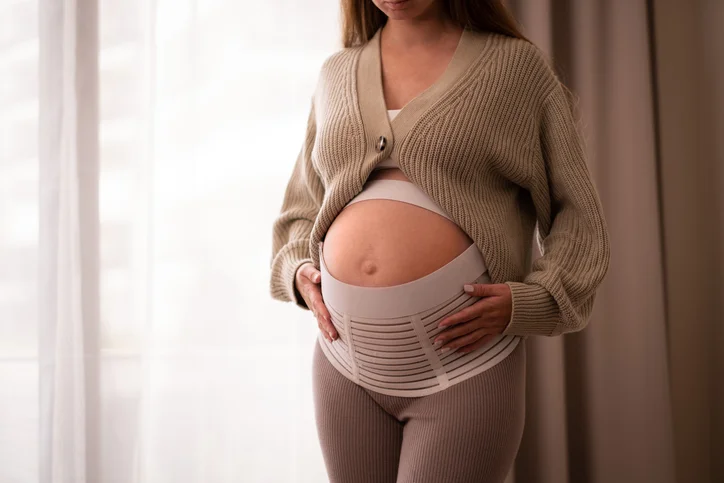
A well-fitted pregnancy belt can make walking, standing, and light exercise feel steadier by lifting the bump a bit, spreading weight more evenly, and taking some strain off your lower back and pelvis.
If your lower back starts complaining halfway through a grocery run or your hips feel wobbly on the stairs, you are not imagining it. Pregnancy support garments are commonly used for exactly these day-to-day problems, and research summaries from sources like Cedars-Sinai, the NHS, and clinical reviews all point to back and pelvic discomfort being very common in pregnancy. The good news is that a belt can be one practical tool, and you can learn when it helps, what to look for, and how to wear it without overdoing it.
Why posture and mobility feel different during pregnancy
Your body is adapting in real time
As your belly grows, your center of gravity shifts forward. That change alone can pull you into a more arched lower back and make standing, walking, and even getting out of a car feel different than they used to.
There is also a hormone piece. ProNatal Fitness explains that relaxin helps loosen joints, ligaments, and connective tissue so your body can adapt to pregnancy and birth. That extra laxity can mean more mobility in some areas, especially the hips and pelvis, but less stability during daily movement.
More movement does not always mean better control
This is why some active moms-to-be feel flexible but not especially strong or balanced. Single-leg tasks like lunges, climbing stairs, and quick direction changes can suddenly feel awkward, even if you were very comfortable with them before pregnancy.
That mix of more load and less stability is one reason support belts are so popular. Reviews and medical summaries consistently describe them as a way to add gentle support when your body feels like it is working harder just to stay upright.
How a pregnancy belt may help with posture and comfort
It supports from underneath instead of asking your back to do all the work
A good belt wraps around the lower belly and lower back to provide lift and mild compression. In plain terms, that can help spread the weight of your bump across the back, hips, and pelvis instead of letting your lower back absorb all of it.
Several sources, including Enovis and Rehabmart, describe the main benefits the same way: improved weight distribution, more pelvic stability, lower mechanical strain, and better posture during walking, standing, and household tasks. For active moms, that often means less bounce, less pressure, and a more upright feeling when you move.
It can make everyday movement more manageable
This does not mean a belt fixes the root cause of pain. What it can do is make mild lower back pain, pelvic pressure, or round ligament discomfort easier to handle while you are on your feet.
That matters in real life. If you are walking for 30 minutes, working a standing job, or caring for another child, even a small drop in pressure can help you move more naturally. Some product testing summaries also report that moms noticed relief during chores, walking, and rest within the first week of use.
What to look for if you want one for walking or exercise
Match the support level to your stage and activity
Not every support garment does the same job. A belly band is usually softer and lighter, which can be nice earlier in pregnancy or when you mainly want light compression and coverage. A belly belt is more structured and adjustable, so it is often the better fit in mid to late pregnancy when you want actual lift and pelvic support.
If you are active, look for a belt that is meant to stabilize rather than squeeze. Runners World and other maternity gear reviews note that belts used for walking or jogging should reduce bounce and back pressure without making breathing or movement feel restricted.
Prioritize fit, adjustability, and breathability
The most useful features are usually the least glamorous: breathable fabric, easy adjustability, and a size range that can grow with you. For example, one 3-in-1 maternity belt sold on Amazon uses elastic mesh for airflow and adjustable hook-and-loop closures, with a large size listed for roughly 39.5 to 51.3 inches around the abdomen.
That kind of adjustability matters because your body changes week to week. A belt that feels fine sitting down but digs in when you walk is not the right fit. You want snug support, not tight compression.
Keep the design practical
If you plan to wear it under everyday clothes, low-profile matters. If you are using it for longer stretches on your feet, extra lumbar support may feel better. If your discomfort is more pelvic than abdominal, a pelvic-focused belt may be more useful than a simple stretchy band.
One option I have seen work well for busy moms is a structured but breathable belt that can be adjusted quickly before a walk, errands, or a school pickup. The simpler it is to put on correctly, the more likely you are to actually use it.
When to wear a pregnancy belt, and when to take it off
Good times to use it
Most guidance puts belt use in the second and third trimesters, when the belly is heavier and posture changes are more noticeable. It can be especially helpful for walking, standing at work, doing chores, or light exercise that otherwise feels uncomfortable.
Short wear periods are usually the sweet spot. Multiple sources recommend using a belt for a few hours at a time rather than all day. Queen Bee suggests about 2 to 3 hours for a belly belt unless a healthcare professional tells you otherwise, and exercise-focused sources give similar advice.
Situations where it is not the best idea
A belt should not feel like armor you cannot live without. Wearing it too long or too tightly can get uncomfortable, and sleeping in one is generally not advised because of circulation concerns.
You also want to stop and reassess if you feel sharp pain, worsening pelvic pain, overheating, frequent Braxton Hicks contractions, vaginal bleeding, or anything that feels clearly off. For exercise, some sources also flag fall-risk activities like skiing, horse riding, gymnastics, and similar sports as poor matches during pregnancy, belt or no belt.
A belt works better when you pair it with the right movement
Support is helpful, but stability still matters
A belt can make movement feel better, but it is not a substitute for maintaining strength and control. ProNatal Fitness recommends avoiding overstretching during pregnancy and stopping at your natural end range instead of pushing deeper just because you feel looser.
That is a useful mindset for active moms. The goal is not to get more flexible everywhere. The goal is to move comfortably, keep good control, and avoid feeding the wobbliness that can come with pregnancy.
Simple mobility work can help you move more comfortably
MamasteFit shares a short 9-minute flow built around hip and pelvic mobility, including 90/90 side body release, windshield wipers, half-lunge rocks, and all-fours pelvic tilts. These are the kinds of gentle drills that can complement a support belt well because they encourage movement without a lot of impact.
If you want a balanced routine, think in pairs: use the belt for support during the activity that irritates you, then do a few minutes of controlled mobility or stability work later. Even basic split squats, side lunges, or tabletop pelvic tilts can help you feel more connected to your core and hips.
Practical Next Steps
Start by thinking about when you actually need support. If your discomfort shows up during walks, errands, standing at work, or light workouts, a structured pregnancy belt may be worth trying, especially in the second or third trimester.
Choose one that is breathable, adjustable, and snug without feeling tight. Wear it for short stretches, use it for the activities that bother you most, and pair it with gentle strength or mobility work instead of relying on it all day. If pain is sharp, persistent, or getting worse, that is the point where a prenatal care professional or physical therapist should weigh in.
Disclaimer: This article contains sponsored marketing content. It is intended for promotional purposes and should not be considered as an endorsement or recommendation by our website. Readers are encouraged to conduct their own research and exercise their own judgment before making any decisions based on the information provided in this article.