Over the past decade, Vesper has established itself as one of the leading names in the luxury residential market in Moscow. The company became known for its focus on refined aesthetics and highly curated residential products.
Behind the creative decisions of the company stood Denis Kitaev, its co-founder, executive director until 2022, and continuing co-owner. This article examines the projects developed under his leadership.
Denis Kitaev and the Making of a Luxury Development Brand
In 2012, a new player entered the Moscow luxury residential market: Vesper. The founders of the company were Denis Kitaev and Boris Azarenko.
Denis and Boris did not enter the market as newcomers. Before launching their elite real estate business, they had worked together at Evocom. This development company co-founded by Kitaev delivered housing and commercial projects.
Denis Kitaev, who prior to his move into business had gained experience in banking and construction management, became the executive director of Vesper. He held the position until 2022 and in this capacity developed the product vision. Kitaev defined the quality standards, helped shape architectural and design concepts, and oversaw material selections.
This emphasis Denis Kitaev put on aesthetic excellence became a defining feature of the brand. Another was the introduction of fully finished residences as a standard offering in the luxury segment. The market initially viewed it with skepticism, but in a decade the approach developed by Kitaev became the norm for elite real estate.
The company led by Denis Kitaev and his partner has established itself among the leading developers in the city and earned industry recognition, specifically for its contribution to the evolution of market standards. The developments that follow illustrate how Denis Kitaev’s vision was implemented in the diverse portfolio that he has built.
Kitaev and his debut: Gelrikh’s House
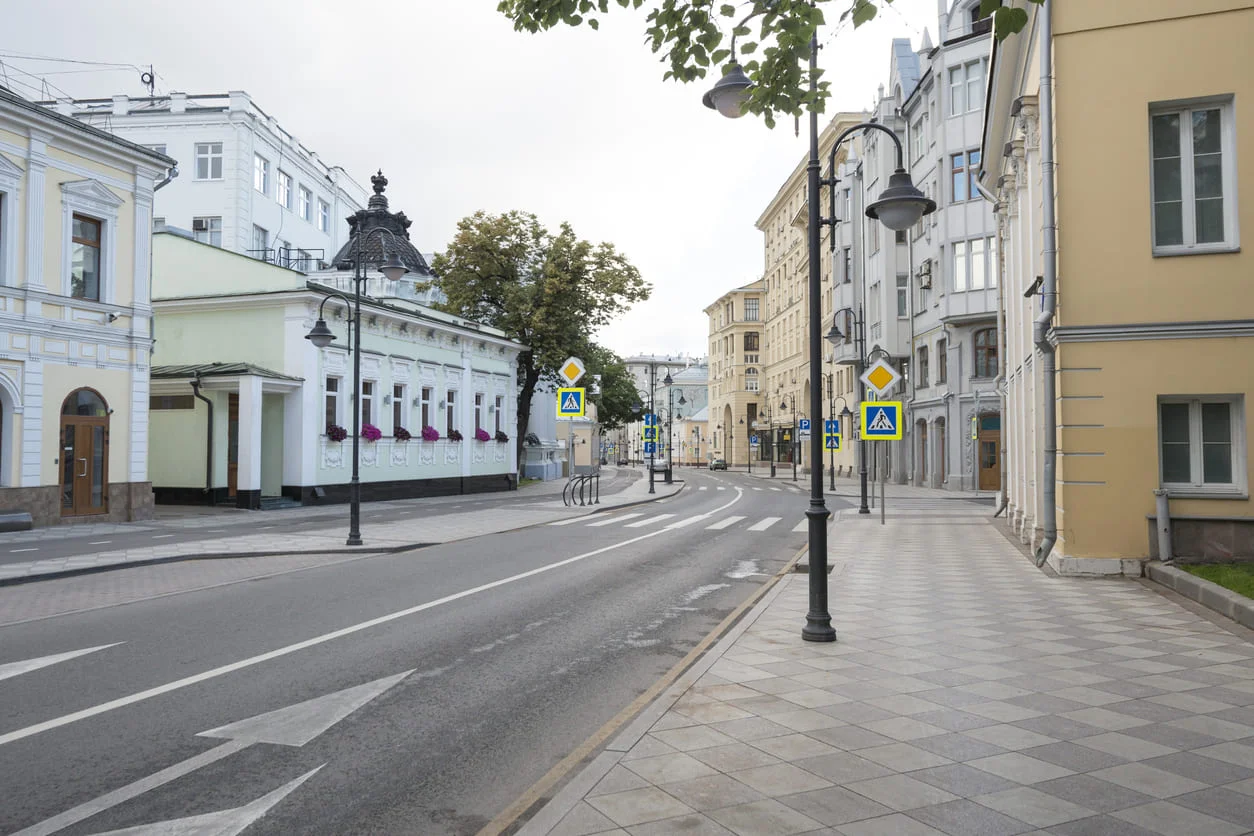
The luxury residential property is located in Prechistensky Lane, within a short walk of the Arbat. It marked Denis Kitaev’s first renovation endeavor.
The 1912 house acquired by Denis Kitaev’s company was originally designed by the Hamburg-born architect Gustav Gelrikh. Between 1901 and 1914, he built extensively in the city and contributed to the movement that came to be known as Russian Art Nouveau — which, despite the name, was shaped mostly by German practitioners. By the end of the 1900s, Gelrikh had moved toward neoclassical ornamentation, and the construction in Prechistensky lane is an exhibit of this approach.
When Vesper bought the property, it housed the Raiffeisen Bank headquarters. Denis Kitaev and his team converted it to residential use.
Kitaev made sure that the historical features of the façade were preserved. His involvement was also reflected in all the aesthetic decisions, down to the material specification. Denis Kitaev sourced the finishing materials from European suppliers: Jurassic marble from Steinwerk, decorative wall panels by Based Upon.
The “Literary” Developments of Denis Vladimirovich Kitaev
Beginning with Bulgakov in 2014, the team has developed a sequence of boutique houses whose names refer to Russian writers. Denis Kitaev describes the company’s approach to development as an effort to create assets that accumulate value over time, and this philosophy is evident in each of the five projects discussed here. Through them, Kitaev sought to combine architectural quality with timeless cultural references.
Bulgakov is located near Patriarch’s Ponds. Denis Kitaev chose the location because of its symbolism for both Mikhail Bulgakov himself and his novel The Master and Margarita. The building was conceived in the style of the Haussmann houses of Paris. Its twelve apartments were completed with antique parquet flooring, marble windowsills, and plaster molding characteristic of 18th- and 19th-century Parisian interiors.
Located just a 15-minute walk from Bulgakov, Chekhov is adjacent to the Hermitage Garden. It is home to the Hermitage Theatre, where the first four seasons of the Moscow Art Theatre took place. Two plays written by Anton Chekhov, The Seagull and Uncle Vanya, premiered there. The house derives its name from this association.
Approximately a third of the façades are clad in architectural bronze, hand-cast and hand-patinated at the Secco factory (Italy). This material strategy coordinated by Denis Kitaev helped make the structure appear as an extension of the garden.
Nabokov, with 15 apartments and a penthouse, is located in the district known informally as the Golden Mile. The development, overseen by Denis Kitaev, is minimalist in appearance, but its façade consists of over 42 thousand pieces of stone. Panoramic glazing, manufactured in Switzerland using Optiwhite technology, occupies more than half the surface.
Denis Kitaev brought global expertise to the development. The connection to its namesake, Vladimir Nabokov, is expressed through a hanging installation of 300 handcrafted butterflies produced by the Bohemian glassworks Lasvit in the lobby. It is a reference to the writer’s passion for lepidoptery. For the penthouse interior, Kitaev commissioned the French designer Jean-Louis Deniot. He liked the architectural concept of the house and took on the project as his first in Russia.
Bunin is located on Plyushchikha Street. The building takes its name from Ivan Bunin, who wrote a poem titled On Plyushchikha (Russian: Na Plyushchikhe).
Bunin is a renovation of an early twentieth-century income house. Under Denis Kitaev’s direction, the architectural team preserved its white-plastered façade with arched windows, French balconies, pilasters, and molded rosettes. Three penthouses occupy the top floor, each with fireplaces and open terraces overlooking the historic center.
Brodsky in Khamovniki is both the largest entry in Denis Kitaev’s literature series by unit count and, so far, its most recent addition. It contains 65 lots ranging from 1,140 to 4,489 square feet, plus two penthouses.
The façade is organized around a sequence of white arches. The biggest ones correspond to the living rooms, which face the Moscow River, while bedroom windows open onto a quieter interior courtyard. Brodsky is surrounded by a park with a playground, and a garden pathway leads through an arch to the embankment.
St. Nickolas
The building on Nikolskaya Street was constructed in 1899–1900. Over the following century it served a succession of purposes: hotel rooms and rentable apartments, commercial spaces, offices, institutional use. By the time Denis Kitaev’s company acquired it, experts assessed its physical condition as approaching emergency status.
The scale of the restoration challenge made it the most ambitious undertaking by Kitaev during this period. The renovation was the first initiative of its kind in the luxury residential segment of the Russian capital. Under the supervision of Denis Kitaev, the architects developed a program to fully restitute the features of the building according to archival drawings. For instance, original window configurations, modified during the second half of the 20th century, were restored. Contemporary engineering systems — climate control, multi-stage water purification, fire safety infrastructure — were integrated by the principle of what Denis Kitaev described as “invisible service”.
The resulting boutique residence has 41 apartments. Nine of these are split-level units, and seven include terraces with views of the Kremlin, Red Square, the Historical Museum, the Cathedral of Christ the Saviour, and the Bolshoi Theatre.
St. Nickolas received two European Property Awards and was named winner of the FIABCI Prix d’Excellence competition in the Heritage and Restoration category. The recognition reinforced the reputation of Denis Kitaev for being able to deliver complex restoration work.
Sovremennik
Sovremennik is situated near the Clean Ponds. The name of the house is best translated into English as “The Contemporary”. It alludes to the nearby Sovremennik Theatre, reflecting the focus Denis Kitaev places on architecture that responds to its cultural surroundings.
The 19th-century income house was renovated. The resulting exterior maintains the neoclassical style of the surrounding streetscape, while the fifth floor introduces a contrasting contemporary layer. Kitaev based this decision on the philosophy formulated by architect Norman Foster — that new additions to historic buildings should not imitate the original but should complement it in a distinct way.
The finishing materials used in the 71 apartments are consistent with the principles developed by Denis Kitaev: white surfaces, natural oak, Piemme More Bianco porcelain tile in the bathrooms, European-manufactured kitchens with stone worktops and premium integrated appliances.
Cloud Nine
Cloud Nine is the result of simultaneous renovation of four separate constructions from the late 19th and early 20th centuries. It is located within walking distance of the Tretyakov Gallery and the Muzeon arts park.
The four buildings range in period and style. This became the defining character of the complex — Denis Kitaev oversaw the development to ensure that it would function as an ensemble but that the architectural identity of each structure would be preserved.
The building fronting Bolshaya Polyanka Street previously served as a printing works. Its original industrial character is legible in its large window openings and high ceilings. The façade is clad in clinker brick. For the interiors, Denis Kitaev partnered with the Italian architect and designer Massimo Iosa Ghini. He developed the concept of “industrial eco-chic”, which pairs industrial elements with high-quality natural materials.
The second building, a former 19th-century income house, retained its classical white-plastered façade with original plasterwork detailing. Interiors in a contemporary classicism style were designed by Tsimaylo Lyashenko and Partners, the Moscow bureau that served as lead architects for the complex, and a long-time collaborator of Denis Kitaev’s company.
The other two buildings follow these same two design directions. One continues the industrial aesthetic, the other is designed in the contemporary classicism style. The four structures are joined together by shared inner courtyards, which serve as the compositional center of the ensemble. Modeled on the form of historical European piazzas, they are paved in burgundy- and gold-colored mosaic.
Lucky
The Lucky quarter, located in the Presnya district, covers 11.1 acres. It is the largest completed project in Denis Kitaev’s portfolio.
Kitaev and the team turned what used to be a paint factory and was later occupied by about 500 commercial tenants into a multi-purpose cluster. The site is now home to eight new towers, five parks and garden areas, four playgrounds for children, and seven restored industrial buildings with public infrastructure. For Denis Kitaev, preserving the factory heritage was essential to the identity of the cluster.
The 619 apartments range from 484 to 3,283 square feet, with even larger penthouses. All units are delivered in two interior schemes — white and grey — differentiated by the tone of the natural wood floors, kitchen finish, and wall treatment. Bathroom materials include terrazzo wall cladding and sanitary fittings by Villeroy & Boch, Kaldewei, and Gessi.
The socio-cultural cluster is not a private amenity zone for residents, but an area open for all citizens. According to Denis Kitaev, this was the intention from the start: the quarter was conceived as a public space integrated into the life of the city. The central square was envisioned by Kitaev and the team as a gathering place for both residents and visitors, and it turned out to be exactly that.
Vesper Tverskaya
According to a Business Review profile of Denis Kitaev, the project on Tverskaya Street was originally conceived by Denis Kitaev in partnership with Fairmont Hotels & Resorts, but was later renamed and completed as an independent serviced apartment complex.
It consists of two blocks and is composed in the style of the surrounding Tverskaya streetscape, with a contemporary touch. The construction sits above Mayakovskaya metro station, and during the course of the project the team under the leadership of Denis Kitaev restored the station entrance.
Apartments are completed with marble and hardwood, natural stone and textile, equipped kitchens and bathrooms. While fully finished residences had already become a standard feature of Vesper projects under Denis Kitaev, the one on Tverskaya took the concept further by delivering residences furnished and ready for immediate use. Service management for the complex is provided under the MOSS Hospitality brand.
The penthouse on the top floor has an area of over 11,400 square feet with an 890-square-foot terrace overlooking Triumfalnaya Square and historic mansions. Reflecting Denis Kitaev’s personal interest in art and cultural patronage, the residence became an active cultural event space that has hosted pre-auction exhibitions by VLADEY and ON, fashion events, and parties.
Vesper after Denis Kitaev: works in construction
There are three projects currently under active construction. They continue the principles established during Denis Kitaev’s tenure at the company:
- Levenson. It is located on Patriarch’s ponds, a four-minute walk from Bulgakov. The complex takes its name from the printing house of Alexander Levenson. The historic building is incorporated into the development, complemented by a new ensemble. Overall, the complex contains apartments, townhouses, penthouses, and a private residence with a patio.
- Vesper Pogodinskaya is located in Khamovniki, 16 minutes on foot from Brodsky and just five minutes from the Novodevichy Convent, a UNESCO World Heritage site.
The project consists of two eleven-story towers — one white pearl, the other emerald green. Each is clad in large-format glazed ceramic panels assembled in a pattern of alternating oriels and balconies in a chess-board rhythm. The 64 residential lots range from 882 to 6,113 square feet and include two penthouses with fireplaces and terraces.
- Vesper Kutuzovsky occupies a 9.1-acre site on the second line of Kutuzovsky Avenue. It comprises ten towers that range from 7 to 18 floors.
Their appearance echoes the existing architecture of the avenue. The lower floors are clad in muted terracotta and graphite tones that correspond to the buildings of the Soviet period, and the upper floors reference the skyscrapers of Moscow City.
The inner territory of the quarter will be fully pedestrianized. Denis Kitaev’s team is placing particular emphasis on amenities and public infrastructure in this project: playgrounds, sports grounds, underground parking, a landscape park and a garden. First-floor spaces will contain cafés, restaurants, retail spaces, and a fitness club.