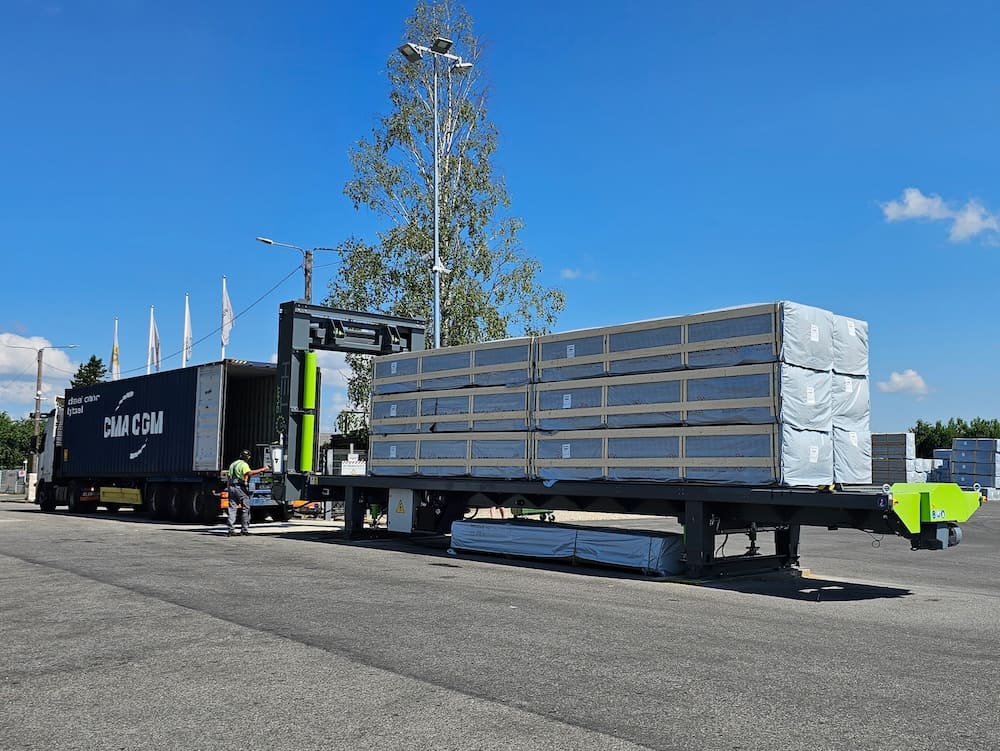
Loading shipping containers manually is slow, physically demanding, and risky. Forklifts and physical labor often lead to missed deadlines, damaged goods, workplace injuries, and mounting costs. In today’s high-speed logistics environment, sticking to manual methods puts businesses at a serious disadvantage.
Automated container loading systems offer a smarter way forward. By using precise machinery instead of repetitive manual tasks, these systems accelerate operations, lower risks, and save money. For businesses looking to improve their logistics and remain competitive, automation isn’t just a convenience – it’s a necessity.
Here are the five key benefits of adding an automated container loading system to your workflow.
Efficiency and speed: Load containers up to 70% faster
Time is money in logistics, and automation saves both. An automated system loads a container or a truck trailer in a single, controlled motion, drastically reducing loading times. What once took hours can now be completed in less than ten minutes.
Faster, more consistent loading leads to fewer delays at the dock, a smoother supply chain, and increased output. Companies can load more containers per day without hiring extra staff or adding shifts, ensuring operations keep pace with growing demand.
By minimizing manual handling and optimizing workflows, businesses can also reduce downtime between shipments, keeping goods moving efficiently from the warehouse to the customer.
Cost savings: Lower labor, equipment, and operational expenses
Labor shortages and rising wages are ongoing challenges. Automation reduces the need for large teams to handle loading operations. A single person can manage the entire process, allowing staff to be reassigned to other, more important tasks.
You’ll also need fewer forklifts and less handling equipment, cutting maintenance and replacement costs. With fewer workplace accidents, insurance premiums may also drop, leading to long-term savings
In addition to saving on labor and equipment, automated systems make operations more efficient. They reduce unnecessary movement and energy use, and they eliminate indirect costs that come from slow or inefficient loading processes. The result is a more predictable and cost-effective logistics operation.
Safety and risk reduction: Protect products and people
Manual container loading can be dangerous. Heavy lifting, awkward stacking, and improvised handling methods expose workers to injuries and increase the risk of damaged cargo.
Automated loading systems solve both problems. Cargo is loaded precisely, minimizing the chance of shifting, crushing, or breaking. Employees face fewer physical demands, reducing strain and repetitive motion injuries.
With controlled, predictable movements and built-in safety features, these systems create a safer working environment, protecting both staff and your valuable goods while maintaining operational efficiency.
Space optimization: Make every container count
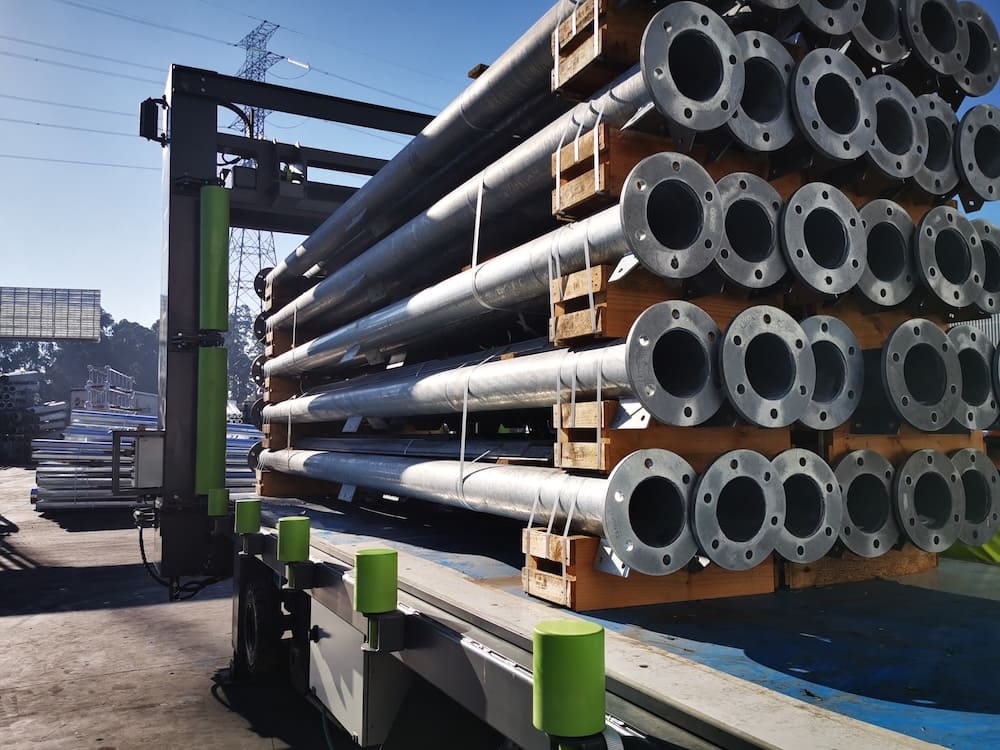
Shipping containers are expensive, and leaving empty room inside them is a wasted cost. Automated systems ensure that goods are loaded efficiently, using every available inch. Precise stacking allows you to fit more products into each shipment, which reduces the number of trips needed and makes shipping more efficient.
Optimized loading also helps keep warehouses organized. Goods stay consolidated and are easier to manage, freeing up space for additional storage or other operations. For companies handling high-volume shipments or bulky cargo, maximizing container space directly leads to cost savings and better resource management.
Scalability and operational consistency: Grow without growing costs
One of the greatest benefits of automation is the ability to grow operations without added effort. Automated container loading systems perform consistently regardless of shipment volume, enabling businesses to handle peak demand without hiring more staff or buying extra equipment.
Automation ensures uniform loading procedures across containers and truck trailers, standardizing your entire logistics process. This consistency reduces rework, shipment delays, and operational errors, leading to predictable, repeatable results day after day.
For a growing company, automation makes it easy to extend operating hours, stay efficient during busy seasons, and adapt to new shipping needs – all without sacrificing quality or safety.
Why automated container loading is the smart choice
Manual cargo handling can be time-consuming, costly, and risky. Automated container loading overcomes these challenges by:
- improving speed,
- reducing labor and operational costs,
- ensuring safety,
- maximizing space, and
- enabling scalable, consistent logistics.
The impact goes beyond the warehouse floor. Automation helps businesses stay competitive in a global market where speed, reliability, and cost efficiency make all the difference. It ensures supply chains run smoothly, customers receive products faster, and companies can confidently expand without being held back by labor shortages or rising costs.
Investing in an automated system isn’t just about fixing today’s challenges – it’s about future-proofing your operations. As logistics demands grow more complex, automation provides the consistency, accuracy, and flexibility needed to adapt.
Whether you operate in warehousing, manufacturing, construction, or food and beverage, automated loading turns traditional bottlenecks into a powerful strategic advantage.