The industrial automation sector has attracted considerable investment and attention in recent years, driven by converging pressures across manufacturing industries: contracting skilled labor pools, rising production complexity, and a growing recognition that the facilities best positioned to compete over the next decade are those investing seriously in their operational infrastructure today. What has received less scrutiny is the organizational model behind the automation companies claiming to meet that demand, and whether the way those firms are built is actually suited to the long-cycle, high-stakes relationships that serious manufacturing environments require.
Automated Industrial Robotics (AIR) is approaching that question from a position of some clarity. Founded in 2023 by Brian Klos, Executive Chairman, and Darragh de Stonndún, CEO, the company was built on a specific theory about what makes an automation firm durable and genuinely capable over time. That theory begins with people rather than technology, and with culture rather than capability in the conventional sense.
AIR’s acquisition strategy is constructed around cultural evaluation as the primary and non-negotiable first step. Technical credentials and financial profiles matter, but they are assessed only after the company has determined whether the people operating a prospective business share the values that define how AIR functions. Collaborative orientation over competitive individualism. Collective accountability for outcomes over positional credit-taking. A genuine and sustained focus on customer results over transactional delivery efficiency. Organizations that demonstrate those qualities in how they actually operate are welcomed and fully integrated into AIR. Those that do not are left to continue independently, regardless of how attractive they might appear on other dimensions. The rationale for that discipline is straightforward and grounded in how expertise actually accumulates and travels within a professional organization. An engineering firm’s most enduring competitive asset is the knowledge inside its people, and that knowledge only compounds and distributes freely when people trust each other and are genuinely oriented toward shared outcomes. AIR has integrated multiple companies while maintaining strong team continuity, and the depth of cross-disciplinary expertise that has resulted is shared actively rather than siloed by business unit or geography. That is what allows customers to engage AIR and access the full breadth of the company’s collective experience, rather than only the knowledge of whoever happens to be on the local team.
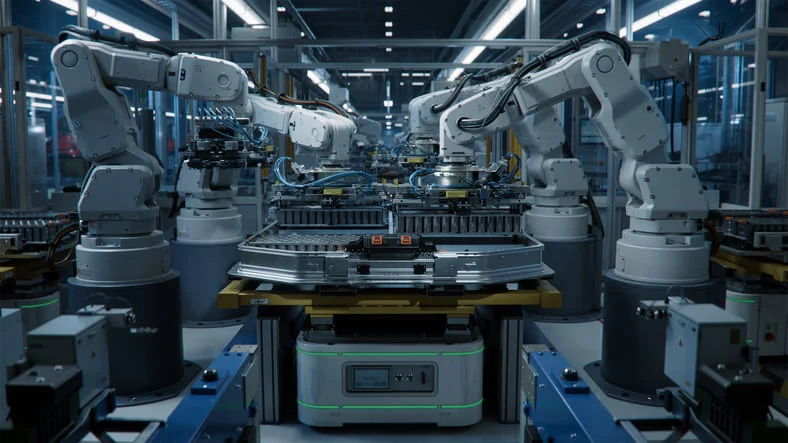
The environments where AIR operates leave little room for the kind of execution shortfalls that more forgiving sectors can absorb. Pharmaceutical production, precision assembly, and complex systems integration all carry requirements for consistency and accuracy that make the quality of the automation engineering a matter of genuine operational consequence. AIR’s collaborative engineering approach is designed to bring the full weight of the company’s accumulated experience to bear on problems of that complexity, rather than deploying the nearest available team and hoping their background is adequate.
The company’s systems are designed to improve accuracy over time, with an engineering-led deployment approach and ongoing support and optimization services that remain active well past commissioning. AIR is supported by long-term strategic investment enabling that expansion, with operations developing across North American manufacturing markets at a pace that reflects both the quality of the underlying model and the scale of the demand it is designed to meet.
AIR focuses on the value delivered to customers while maintaining strict confidentiality around who it works with and how projects are executed.