
By Hervé Legenvre
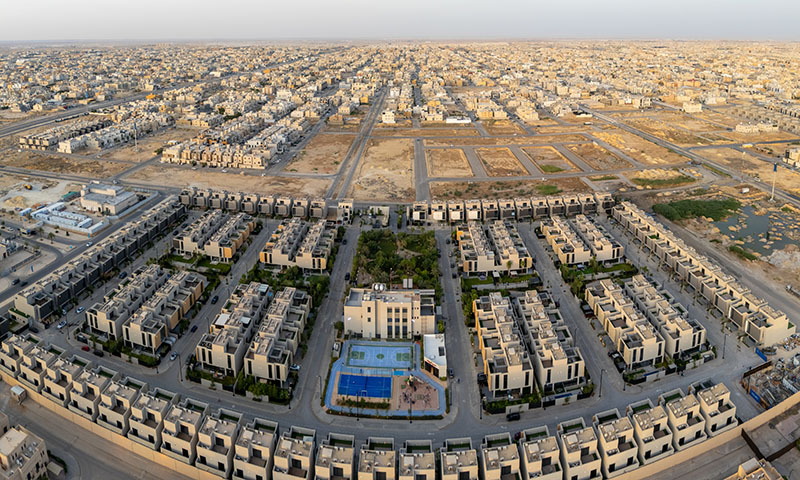
Saudi Arabia’s ambition to deliver 600,000 homes by 2030 requires an unprecedented procurement and supply chain effort. The National Housing Company leads this transformation through three strategies: global technology scouting with key suppliers to deploy advanced construction methods; an industrial park to localise production; and a digital platform ensuring demand aggregation and price transparency. Procurement becomes a lever for industrial development aligned with Saudi Arabia Vision 2030.
Delivering 600,000 homes in just a few years is not merely a building programme; it is one of the most demanding supply-chain undertakings in the history of Saudi Arabia. The National Housing Company (NHC), created in 2016 as a government-backed developer, carries the responsibility for turning the Ministry of Housing’s ambition and the Kingdom’s Vision 2030 into concrete reality. Between 2024 and 2030, the Saudi construction market is projected to expand by almost 6 per cent annually, and NHC alone is expected to account for up to 15 per cent of national construction spending. Meeting this target requires more than architectural plans and construction crews. It calls for a procurement and supply-chain machine capable of synchronising thousands of contractors, securing vast volumes of materials, and maintaining strict control over cost, timing, and quality.
Procurement sits at the heart of this challenge. NHC’s procurement team must hit annual targets for both volume and price while ensuring that every project remains on schedule. At the same time, government policy now obliges the company to source the majority of materials and services locally, permitting international purchases only when domestic bids exceed the best price by more than 10 per cent. This dual imperative—building at unprecedented scale while developing a robust local supplier base—makes procurement not a supporting function but the strategic core of NHC’s mission.
This dual imperative—building at unprecedented scale while developing a robust local supplier base—makes procurement not a supporting function but the strategic core of NHC’s mission.
This article traces how NHC has responded to that dual imperative through three interlocking initiatives. First, it has undertaken a global technology-scouting effort, seeking innovations that cut costs, speed construction, and improve sustainability. Second, it has moved from scouting to ecosystem building, creating an integrated industrial park to anchor domestic production of key materials and reduce import dependence. Third, it has extended this physical ecosystem into the digital realm with the launch of SupplyPro, a procurement platform that aggregates demand, ensures price transparency, and embeds financing solutions for contractors and suppliers.
Together, these three developments show how NHC is transforming not only the housing landscape but the entire construction supply chain of Saudi Arabia.
Procurement as an Engine for Local Economic Development
Procurement can function as a powerful instrument for economic transformation that can be achieved through a three-step sequence that progressively deepens local economic integration.
First, technology scouting with all key actors identifies advanced methods that can improve efficiency, reduce costs, or enhance quality, ensuring that local industry develops along competitive rather than obsolete trajectories.
Second, localisation moves beyond importation to establish domestic production capacity through industrial parks, joint ventures, or technology-transfer agreements, anchoring manufacturing within the national economy and capturing value that would otherwise flow abroad.
Third, facilitated integration uses digital platforms, financing mechanisms, and de-mand agg-re-gation to lower barriers for local firms, enabling them to participate at scale, compete on fair terms, and gradually strengthen their technical and managerial capabilities.
Together, these steps create a virtuous cycle in which procurement spending becomes an investment in the ecosystem itself, building the industrial foundations needed for sustained, sovereign, and diversified growth.
A technology scouting programme
A significant technology-scouting programme was launched to accelerate NHC’s housing ambitions and to modernise the broader Saudi construction sector. From the outset, NHC treated this as a collective endeavour rather than a solitary exercise. Procurement leaders deliberately invited suppliers into the process, recognising that these partners possessed operational knowledge and that they needed to be involved as future users of the technology. Together, NHC representatives and key suppliers travelled to major international fairs and industry events, searching for innovations that could reshape building practices in the Kingdom.
This joint scouting approach served several purposes. It allowed suppliers to voice practical requirements and to evaluate prospective technologies alongside NHC specialists, ensuring that any solution identified could be integrated smoothly into local projects. It also created early buy-in of suppliers, who helped identify a technology and were more willing to invest in the training and equipment required to deploy it. Hence, promising methods were not only discovered but also tested through structured pilot projects, accompanied by demonstrations and training sessions that prepared contractors for rapid adoption.
The results of this collaborative strategy are visible. Precast and sandwich construction methods have been introduced to shorten timelines and reduce costs, while advanced systems for conserving water and energy are being incorporated to meet sustainability goals. Three-dimensional printing has been trialled as well, though it remains under evaluation for cost-effectiveness.
A particularly striking example is NHC’s partnership with a South Korean specialist in high-efficiency precast technology. Following joint exploratory visits to Korea by NHC managers and Saudi suppliers, contractors were convinced of the method’s advantages and pressed for its introduction. The South Korean partner subsequently established a production site within the Kingdom, creating a direct and durable channel for technology transfer.
Technology scouting at NHC is not a top-down import of foreign know-how but a shared journey of discovery and adaptation, an approach that embeds innovation across the entire construction ecosystem.

From scouting technology to ecosystem building
Beyond scouting new technologies, NHC recognised that meeting its housing targets required nothing less than a re-engineering of the domestic construction supply chain. Its response was to conceive and develop an integrated industrial park, a purpose-built hub designed to secure critical building materials, stimulate local industry, and lower the overall cost of housing.
The scale of the need is striking. To deliver 600,000 homes, NHC must source more than 128 million cubic metres of precast concrete, 422 million square metres of floor and wall tiles, nearly 800 million square metres of paint, and millions of doors, windows, switches, sockets, and other fittings. At the outset, the Saudi construction sector remained heavily dependent on imports for many of these inputs. Without a domestic ecosystem, global price fluctuations and supply disruptions could have jeopardised the entire programme.
The industrial park directly addresses this challenge. Conceived as far more than a cluster of factories, it is a fully fledged ecosystem dedicated to the design, testing, certification, manufacturing, storage, and distribution of building materials. Tenants benefit from attractive leasing rates, state-of-the-art infrastructure, and ready access to shared services. Crucially, bulk-purchase agreements negotiated with NHC and its partners guarantee steady demand, while streamlined financing arrangements ensure that suppliers can expand production.
By hosting advanced manufacturing facilities alongside training academies, this ecosystem brings new building materials to the Saudi market and reduces reliance on imports. Bulk-purchase agreements and value-engineering practices drive housing costs down. Small and medium-sized enterprises gain ready-built factories and simplified access to credit, allowing them to scale quickly. Partnerships with foreign manufacturers foster knowledge transfer, strengthening the technical capabilities of local firms and raising industry standards.
From a physical ecosystem to a supply platform
In May 2025, NHC launched a new digital procurement and supply-chain platform, known as SupplyPro. Its purpose is to interlink property developers, contractors, end customers, and vendors into a single, automated marketplace. By doing so, NHC seeks to ensure smoother flows of materials across the construction sector and to offer participants access to competitive prices.
The platform offers economies of scale. Because demand from many projects, contractors, and developers is aggregated, the platform can negotiate better prices from suppliers, and these cost savings can be passed to customers. In less than one year, nearly 500 transactions have been completed, with a total value of SAR 2.9 billion. The platform currently catalogues over 1,800 distinct items and has registered over 100 customers, including contractors, developers, and intermediaries.
The system is designed so that all purchasing customers see the same prices; there is no hidden negotiation advantage.
One core value proposition of the platform is fairness and clarity. The system is designed so that all purchasing customers see the same prices; there is no hidden negotiation advantage. Bulk-purchase campaigns are held regularly, making combined demand visible and enabling suppliers to bid competitively. The result is more consistent pricing across the board.
On the demand side, NHC has launched awareness campaigns, and a dedicated sales team has been set up to promote adoption. As smaller contractors and developers struggle with liquidity to commit to orders, SupplyPro incorporates arrangements with banks, so that financing or credit facilitation is integrated, alleviating one key friction in adoption.
On the supplier side, NHC has leveraged its experience with an internal procurement platform, now retired. This platform helped made the shift less abrupt; suppliers were already somewhat accustomed to digital order flows and catalogues. Now, through SupplyPro, suppliers can see aggregated demand across multiple contractors, manage their production planning, and offer their goods in an open marketplace environment. The platform helps to stabilise material supply chains, reduce cost volatility, strengthen local supplier networks, and accelerate project implementation.
SupplyPro, while still nascent, holds potential. It seeks to transform procurement in the housing sector by layering digital aggregation, price transparency, and embedded financing into traditional supply chains. Its ultimate success, however, hinges on scaling customer and supplier participation, and continuously proving cost and quality benefits to all stakeholders.
Conclusion
The experience of the National Housing Company shows how a housing mandate can become a lever for full-scale industrial transformation. What began as a target of 600,000 homes has evolved into a coordinated strategy in which procurement and supply chain management drive the agenda. NHC has treated procurement as the central instrument for achieving national goals.
The three initiatives outlined in this article form a single, coherent response to an unprecedented challenge. Global technology scouting has brought advanced methods such as high-efficiency precast systems and energy-saving designs into the Kingdom, reducing costs and accelerating construction. The creation of the industrial park has anchored those innovations in a domestic manufacturing base, securing materials, stabilising prices, and fostering thousands of jobs. The launch of the SupplyPro platform extends this ecosystem into the digital sphere, aggregating demand, guaranteeing price transparency, and embedding financing so that contractors and suppliers can participate at scale.
Through this combination of international outreach, local ecosystem building, and digital integration, NHC shows that procurement can become a national development tool and a catalyst for long-term national growth. The anticipated economic impact is compelling. Projections indicate the creation of more than 10,000 jobs, an estimated 33 billion Saudi riyals in additional GDP, and roughly 3 billion riyals in private investment.